The Illusion of Blood: Discerning the True Nature of Battle
"And they said, This is blood: the kings are surely slain, and they have smitten one another: now therefore, Moab, to the spoil." - 2 Kings 3:23

In 2 Kings 3:23, we encounter a scene of confusion and misinterpretation: "And they said, This is blood: the kings are surely slain, and they have smitten one another: now therefore, Moab, to the spoil." Here, the kings of Israel and Judah have joined forces against Moab but are caught in dire uncertain circumstances. As they approach the battlefield, they are met with what appears to be evidence of severe conflict. The sight of blood leads them to believe that their enemies have destroyed each other in the fray.
In many ways, this passage encapsulates profound biblical truths that resonate with our everyday lives. Let us delve into this verse and draw out lessons that apply to our spiritual journey.
**1. The Danger of Assumptions**
The Israelites assumed that the blood they saw was the result of a brutal clash between the Moabite kings. However, their first impression did not align with the reality of the situation. We, too, often fall prey to making quick judgments based on appearances. In our lives, we may witness circumstances that lead us to assume that God is absent, that our enemies are victorious, or that we are abandoned in our struggles. In this story, the blood they thought represented victory was, in fact, a deception. An important reminder emerges from this—it is vital to seek clarity and wisdom from God before drawing conclusions about our battles.
**2. Understanding Spiritual Battles**
The battle against Moab symbolizes the spiritual warfare we encounter daily. The temptation to interpret happenings through the lens of immediate observation can lead us down a path of misunderstanding and defeat. Ephesians 6:12 reminds us, "For we wrestle not against flesh and blood, but against principalities, against powers, against the rulers of the darkness of this world, against spiritual wickedness in high places." The blood that the Israelites observed was a prompt to remind them that the true enemy is often not seen. Instead of rushing to conclusions, we must take our concerns to the Lord in prayer, allowing Him to illuminate the true state of affairs in our lives.
**3. The Impulse to Exploit**
The Israelites took immediate advantage of their assumption; they perceived an opportunity for wealth with cries of "to the spoil." This speaks to our human inclination to capitalize on perceived weakness or misfortune. As Christians, we are called to rise above a mindset focused only on gain. Jesus taught us the principle of servanthood and self-sacrifice. When we win battles in our lives, let us do so with grace and the spirit of generosity, recognizing that all blessings are given to us for a purpose greater than our own benefit. Our primary focus should not be our personal gain but manifesting the love of Christ to others, especially those we deem as our enemies.
**4. Clarity Through Faith**
As we ponder the Israelites' situation, we see that they were misled by their perceptions. Yet, later on, the truth is unveiled—a divine intervention leading to unexpected victory. When we encounter confusion in our lives, we can seek clarity through faith. James 1:5 encourages us, "If any of you lack wisdom, let him ask of God, that giveth to all men liberally, and upbraideth not; and it shall be given him." In a world of mixed signals, our guide is the Lord's word, which brings clarity amidst chaos.
**Conclusion**
As we meditate on 2 Kings 3:23, let us remember that God's perspective is always higher than ours. The evaluations we make based on our limited understanding can often lead to incorrect assumptions. We are reminded to seek His wisdom, to understand the dynamics at play in our struggles, and to act with humility even in perceived triumphs. May we walk with the discernment necessary to see beyond the blood and recognize the true battles that await us, armed with faith and guided by His glorious truths.
Want to reflect more on 2 Kings 3:23?
Continue your spiritual journey with Bible Chat — an AI-powered tool for exploring God's Word through conversation. Ask questions, discover connections, and deepen your understanding.
Get Our Apps


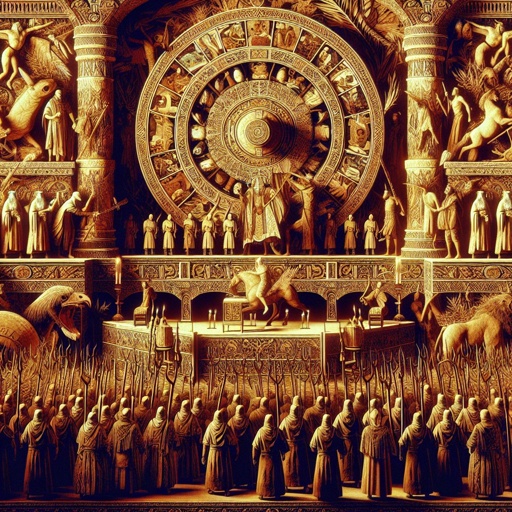
2 Kings 3:23 Artwork

2 Kings 3:23 - "And they said, This is blood: the kings are surely slain, and they have smitten one another: now therefore, Moab, to the spoil."

"And they said, This is blood: the kings are surely slain, and they have smitten one another: now therefore, Moab, to the spoil." - 2 Kings 3:23

2 Kings 23:23 - "But in the eighteenth year of king Josiah, wherein this passover was holden to the LORD in Jerusalem."

2 Kings 3:15

2 Kings 3:15

2 Kings 3:15

2 Kings 3:16-19

2 Kings 8:23 - "And the rest of the acts of Joram, and all that he did, are they not written in the book of the chronicles of the kings of Judah?"
2 Kings 23:22 - "Surely there was not holden such a passover from the days of the judges that judged Israel, nor in all the days of the kings of Israel, nor of the kings of Judah;"

2 Kings 23:28 - "Now the rest of the acts of Josiah, and all that he did, are they not written in the book of the chronicles of the kings of Judah?"

2 Kings 23:3 - "¶ And the king stood by a pillar, and made a covenant before the LORD, to walk after the LORD, and to keep his commandments and his testimonies and his statutes with all their heart and all their soul, to perform the words of this covenant that were written in this book. And all the people stood to the covenant."

2 Kings 23:1 - "And the king sent, and they gathered unto him all the elders of Judah and of Jerusalem."

2 Kings 21:23 - "¶ And the servants of Amon conspired against him, and slew the king in his own house."

2 Kings 9:23 - "And Joram turned his hands, and fled, and said to Ahaziah, There is treachery, O Ahaziah."

1 Kings 3:23 - "Then said the king, The one saith, This is my son that liveth, and thy son is the dead: and the other saith, Nay; but thy son is the dead, and my son is the living."

"But in the eighteenth year of king Josiah, wherein this passover was holden to the LORD in Jerusalem." - 2 Kings 23:23

2 Kings 3:10 - "And the king of Israel said, Alas! that the LORD hath called these three kings together, to deliver them into the hand of Moab!"

2 Kings 23:37 - "And he did that which was evil in the sight of the LORD, according to all that his fathers had done."

2 Kings 23:32 - "And he did that which was evil in the sight of the LORD, according to all that his fathers had done."

2 Kings 23:11 - "And he took away the horses that the kings of Judah had given to the sun, at the entering in of the house of the LORD, by the chamber of Nathan-melech the chamberlain, which was in the suburbs, and burned the chariots of the sun with fire."

2 Kings 23:21 - "¶ And the king commanded all the people, saying, Keep the passover unto the LORD your God, as it is written in the book of this covenant."

2 Kings 23:7 - "And he brake down the houses of the sodomites, that were by the house of the LORD, where the women wove hangings for the grove."

2 Kings 3:6 - "¶ And king Jehoram went out of Samaria the same time, and numbered all Israel."

2 Chronicles 9:23 - "¶ And all the kings of the earth sought the presence of Solomon, to hear his wisdom, that God had put in his heart."

2 Kings 15:23 - "¶ In the fiftieth year of Azariah king of Judah Pekahiah the son of Menahem began to reign over Israel in Samaria, and reigned two years."

2 Kings 3:16 - "And he said, Thus saith the LORD, Make this valley full of ditches."

2 Kings 23:9 - "Nevertheless the priests of the high places came not up to the altar of the LORD in Jerusalem, but they did eat of the unleavened bread among their brethren."

2 Kings 23:14 - "And he brake in pieces the images, and cut down the groves, and filled their places with the bones of men." The image should not depict explicit or offensive content but be symbolic.

Soothing the Soul: The Gospel of Gentle Care 1 Kings 19:3-8; 1 Samuel 16:14-23

2 Kings 3:3 - "Nevertheless he cleaved unto the sins of Jeroboam the son of Nebat, which made Israel to sin; he departed not therefrom."