The Fall of Jerusalem: A Reflection on Judgment and Restoration
"And the king of Babylon smote them, and slew them at Riblah in the land of Hamath. So Judah was carried away out of their land." - 2 Kings 25:21

In 2 Kings 25:21, we read a stark and sobering conclusion to the tumultuous history of Judah: "And the king of Babylon smote them, and slew them at Riblah in the land of Hamath. So Judah was carried away out of their land." This verse encapsulates not just a moment of military defeat, but also a profound spiritual reality—a divine judgment rendered against a people that had turned away from their covenant with God.
To understand the significance of this moment, we must delve into the broader narrative of the kings of Judah leading up to this judgment. The monarchy began with hope under King David and Solomon, but as the years passed, the kings grew increasingly corrupt, worshipping idols, forsaking the commandments of God, and leading the people astray. The prophetic voices—forewarnings from prophets like Jeremiah and Isaiah—spoke of impending doom if they did not repent and return to the Lord. In essence, the fate of Judah functioned as a living testament to the covenant relationship between God and His people, demonstrating that blessings are contingent upon obedience and faithfulness.
As we reflect on this verse, we are reminded that the consequences of our actions can lead to irreversible outcomes. The phrase "and the king of Babylon smote them" highlights a decisive moment of God's judgment while simultaneously shedding light on His sovereignty over nations and rulers. Babylon, a symbol of worldly power and dominance, becomes an instrument of God's will, illustrating that even the mightiest nations are under His authority. This serves as a stark reminder that God is not only concerned with individual behaviors but also with the communal dynamics of nations and societies. The downfall of Judah reminds us that collective disobedience can lead to collective consequences and that justice may come in ways we least expect.
Furthermore, the phrase "So Judah was carried away out of their land" resonates deeply with loss and exile. To be taken from one's land is to be stripped of one’s identity and heritage, to feel the weight of not belonging. The land of Judah was not merely a geographical location; it was the sacred space where God’s presence dwelt among His people. It was the land promised to Abraham, a symbol of hope and divine provision. Being uprooted from this land signified a complete severance from God's promises and heritage. In our own lives, we may experience moments when we feel similarly exiled—whether through personal sin, societal issues, or the universal consequences of humanity's brokenness. In these times, we must remember that exile is often a result of our own choices, yet it is also a call to return to reliance on God and to seek His mercy and restoration.
Yet, we must not despair as we meditate on this solemn scripture. The themes of judgment and exile thread throughout the biblical narrative; however, they ultimately lead to reconciliation and hope. The same God who judged Judah is the God who promises restoration. The prophets foretold a returning of exiles and the rebuilding of Jerusalem. In Jeremiah 29:11, God declares, "For I know the thoughts that I think toward you, saith the Lord, thoughts of peace, and not of evil, to give you an expected end.” As believers, we live in the hope of that promise, recognizing that God’s plans transcend our failures and missteps.
In this deep reflection on 2 Kings 25:21, let us not only contemplate the gravity of judgment but also our own fidelity to God. Are we living as faithful witnesses, or are we turning our backs on the covenant relationship that God desires with us? In every moment of judgment, may we find the seed of hope that calls us back into relationship with Him. Though we may face consequences for our actions, we are reminded of the faithfulness of our God—a God who restores the broken and lifts up the fallen. Let us turn our hearts back to Him, allowing His mercy to reign in our lives.
Want to reflect more on 2 Kings 25:21?
Continue your spiritual journey with Bible Chat — an AI-powered tool for exploring God's Word through conversation. Ask questions, discover connections, and deepen your understanding.
Get Our Apps


2 Kings 25:21 Artwork

2 Kings 25:21 - "And the king of Babylon smote them, and slew them at Riblah in the land of Hamath. So Judah was carried away out of their land."

"And the king of Babylon smote them, and slew them at Riblah in the land of Hamath. So Judah was carried away out of their land." - 2 Kings 25:21

2 Kings 21:25 - "Now the rest of the acts of Amon which he did, are they not written in the book of the chronicles of the kings of Judah?"

"Now the rest of the acts of Amon which he did, are they not written in the book of the chronicles of the kings of Judah?" - 2 Kings 21:25

2 Kings 2:21

2 Kings 25:2 - "And the city was besieged unto the eleventh year of king Zedekiah."

2 Kings 25:1 show King Nebuchadnezzar in war zone

2 Kings 25:28 - "And he spake kindly to him, and set his throne above the throne of the kings that were with him in Babylon;"

2 Kings 15:21 - "¶ And the rest of the acts of Menahem, and all that he did, are they not written in the book of the chronicles of the kings of Israel?"

2 Kings 2:25 - "And he went from thence to mount Carmel, and from thence he returned to Samaria."

1 Kings 21:25 - "¶ But there was none like unto Ahab, which did sell himself to work wickedness in the sight of the LORD, whom Jezebel his wife stirred up."

2 Kings 25:1 show King Nebuchadnezzar and the army and the Temple

2 Kings 25:12 - "But the captain of the guard left of the poor of the land to be vinedressers and husbandmen."

Proverbs 25:2 - "It is the glory of God to conceal a thing: but the honour of kings is to search out a matter."

2 Kings 25:20 - "And Nebuzar-adan captain of the guard took these, and brought them to the king of Babylon to Riblah:"

2 Kings 21:10 - "¶ And the LORD spake by his servants the prophets, saying,"

2 Kings 21:21 - "And he walked in all the way that his father walked in, and served the idols that his father served, and worshipped them:"

Jehoiachin is released from Babylonian jail 2 kings 25: 27
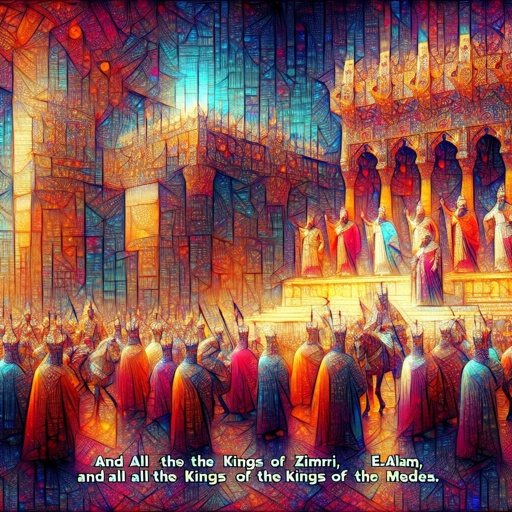
Jeremiah 25:25 - "And all the kings of Zimri, and all the kings of Elam, and all the kings of the Medes,"

"And the city was besieged unto the eleventh year of king Zedekiah." - 2 Kings 25:2

2 Kings 25:3 - "And on the ninth day of the fourth month the famine prevailed in the city, and there was no bread for the people of the land."

2 Kings 11:21 - "Seven years old was Jehoash when he began to reign."

2 Kings 21:17 - "¶ Now the rest of the acts of Manasseh, and all that he did, and his sin that he sinned, are they not written in the book of the chronicles of the kings of Judah?"

2 Kings 25:6 - "So they took the king, and brought him up to the king of Babylon to Riblah; and they gave judgment upon him."

2 Kings 21:23 - "¶ And the servants of Amon conspired against him, and slew the king in his own house."

2 Kings 25:14 - "And the pots, and the shovels, and the snuffers, and the spoons, and all the vessels of brass wherewith they ministered, took they away."

1 Kings 2:25 - "And king Solomon sent by the hand of Benaiah the son of Jehoiada; and he fell upon him that he died."

2 Kings 25:10 - "And all the army of the Chaldees, that were with the captain of the guard, brake down the walls of Jerusalem round about."

2 Kings 25:18 - "¶ And the captain of the guard took Seraiah the chief priest, and Zephaniah the second priest, and the three keepers of the door:"

2 Kings 25:15 - "And the firepans, and the bowls, and such things as were of gold, in gold, and of silver, in silver, the captain of the guard took away."