The Shattering of Sacredness: Reflection on 2 Kings 25:13
"And the pillars of brass that were in the house of the LORD, and the bases, and the brasen sea that was in the house of the LORD, did the Chaldees break in pieces, and carried the brass of them to Babylon." - 2 Kings 25:13
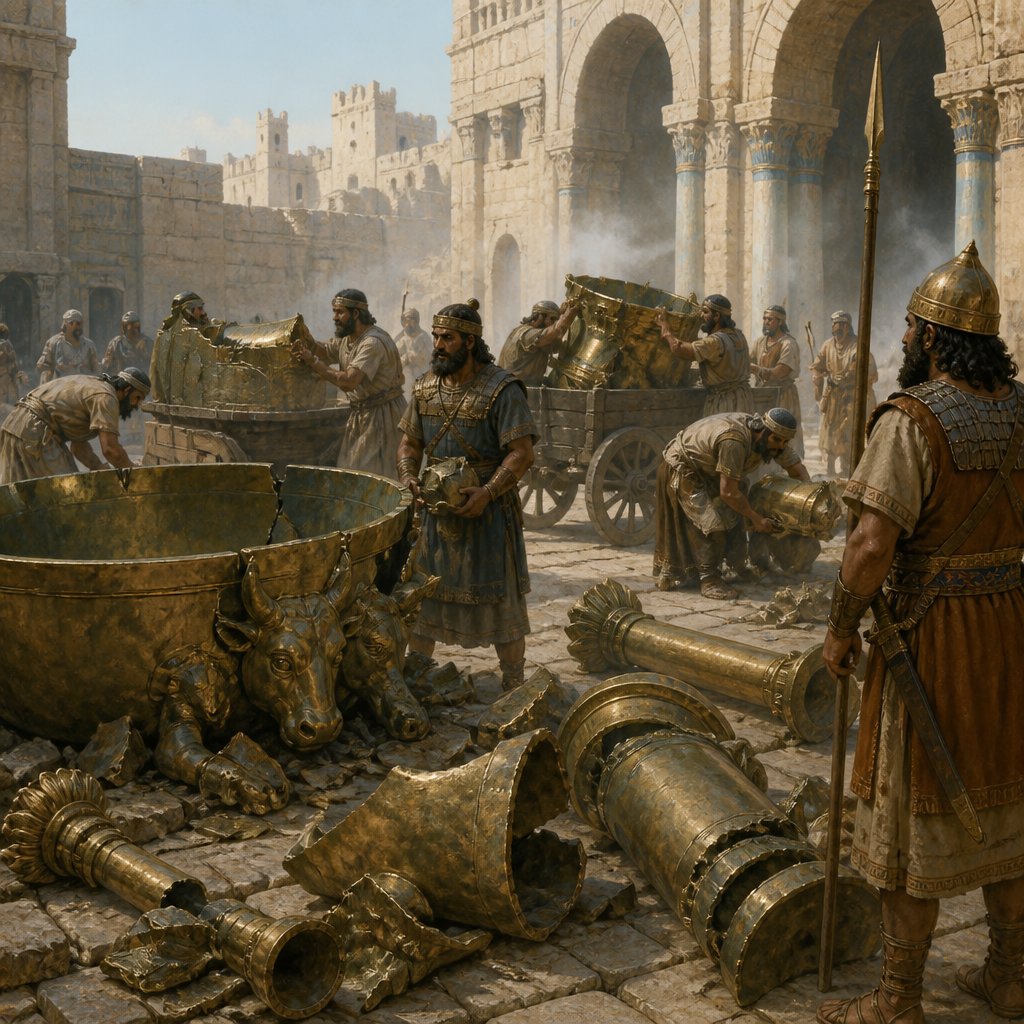
In the somber pages of history captured in 2 Kings 25:13, we encounter a moment that encapsulates the tragedy of loss and the weight of consequences—both for the nation of Israel and for the sanctity of the worship of Yahweh. The King James Version declares, "And the pillars of brass that were in the house of the LORD, and the bases, and the brasen sea that was in the house of the LORD, did the Chaldees break in pieces, and carried the brass of them to Babylon." This verse invites us into the heart of a spiritual crisis that resonates deeply with our lives today.
To understand the gravity of what is unfolding, we must first reflect on the significance of the temple’s materials, particularly those made of brass. Brass, in the ancient world, was not merely a functional metal; it carried theological and cultural weight. The pillars, bases, and the brasen sea represented the glory of God—a physical manifestation of His presence among His people. They were integral to the worship practices established by the Lord, standing as symbols of His might, holiness, and the covenant relationship formed with Israel.
Yet, here we find the Chaldeans, representing the forces of oppression and judgment, dismantling sacred objects that were intended to glorify God and assist in worship. The act of breaking these symbols of divinity and carrying them away is profoundly significant. It marks a pivotal moment in the journey of Israel—a moment reflecting failure, forsakenness, and the dire consequences of turning away from the Lord. The shattered brass and the wrecked temple encapsulate a more profound spiritual truth: the departure from holiness ultimately leads to vulnerability and desolation.
As we reflect on this act of desecration, we are invited to confront our relationship with God and the sacred in our lives. What are the ‘brass pillars’ in our hearts and homes? What do we hold sacred, and how is that reflected in the way we live? Just as Israel’s neglect of God led to their downfall, we too can inadvertently allow the things of this world to take precedence over the eternal truths of God.
The Chaldean destruction of the temple serves as a poignant reminder of the fragility of our spiritual lives. It teaches us about the imperative of protecting our spiritual fervor against the encroachments of secularism, distractions, and sin. Perhaps we find ourselves, just like ancient Israel, guilty of negligence or complacency. The worship practices, personal devotion habits, or communal gatherings that once held significant importance may now be overshadowed by the mundane and the profane.
Yet, on the other side of destruction, there is always the hope of restoration. The history of Israel is cyclical—forming, breaking, and ultimately redeeming. God’s heart toward His people, though wrathful in judgment, is always bent toward grace and restoration. We may find our own ‘brass’ shattered, lying in fragments before us, but it is important to remember that God can take our brokenness and resurrect something new—just as He eventually rebuilt the temple after exile.
As we ponder this weighty passage, let us search our hearts. Are we allowing our own spiritual lives to be dismantled by the forces swirling around us? Or will we take the opportunity presented in the rubble to cry out to God for healing, for a return to true worship? May we choose today to restore our commitment to God, fortifying the ‘brass pillars’ of faith in our lives so that His glory may not be merely etched in history but pulsating actively in our hearts today. In our brokenness, may we pursue the One who is able to rebuild and heal, putting our hope not in the fading trumpets of brass, but in the living Christ who is our eternal salvation.
Want to reflect more on 2 Kings 25:13?
Continue your spiritual journey with Bible Chat — an AI-powered tool for exploring God's Word through conversation. Ask questions, discover connections, and deepen your understanding.
Get Our Apps


2 Kings 25:13 Artwork

2 Kings 25:13 - "And the pillars of brass that were in the house of the LORD, and the bases, and the brasen sea that was in the house of the LORD, did the Chaldees break in pieces, and carried the brass of them to Babylon."
"And the pillars of brass that were in the house of the LORD, and the bases, and the brasen sea that was in the house of the LORD, did the Chaldees break in pieces, and carried the brass of them to Babylon." - 2 Kings 25:13

2 Kings 25:2 - "And the city was besieged unto the eleventh year of king Zedekiah."

2 Kings 25:1 show King Nebuchadnezzar in war zone

2 Kings 13:13 - "And Joash slept with his fathers; and Jeroboam sat upon his throne: and Joash was buried in Samaria with the kings of Israel."

2 Kings 21:25 - "Now the rest of the acts of Amon which he did, are they not written in the book of the chronicles of the kings of Judah?"

2 Kings 13:25 - "And Jehoash the son of Jehoahaz took again out of the hand of Ben-hadad the son of Hazael the cities, which he had taken out of the hand of Jehoahaz his father by war. Three times did Joash beat him, and recovered the cities of Israel."

2 Kings 25:28 - "And he spake kindly to him, and set his throne above the throne of the kings that were with him in Babylon;"

2 Kings 2:25 - "And he went from thence to mount Carmel, and from thence he returned to Samaria."

2 Kings 25:1 show King Nebuchadnezzar and the army and the Temple

2 Kings 25:12 - "But the captain of the guard left of the poor of the land to be vinedressers and husbandmen."

Proverbs 25:2 - "It is the glory of God to conceal a thing: but the honour of kings is to search out a matter."

2 Kings 25:20 - "And Nebuzar-adan captain of the guard took these, and brought them to the king of Babylon to Riblah:"

Jehoiachin is released from Babylonian jail 2 kings 25: 27

1 Kings 13:25 - "And, behold, men passed by, and saw the carcase cast in the way, and the lion standing by the carcase: and they came and told it in the city where the old prophet dwelt."
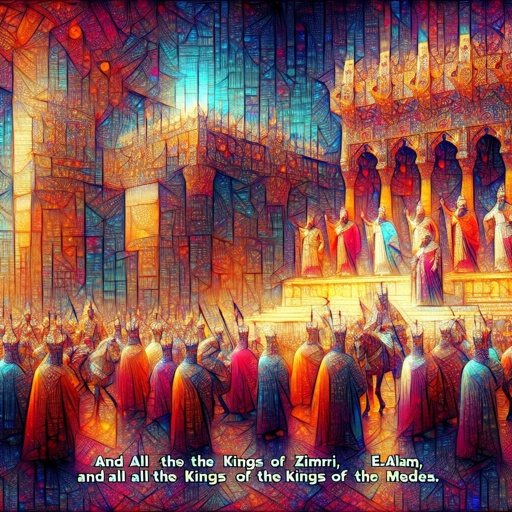
Jeremiah 25:25 - "And all the kings of Zimri, and all the kings of Elam, and all the kings of the Medes,"

"And the city was besieged unto the eleventh year of king Zedekiah." - 2 Kings 25:2

2 Kings 25:3 - "And on the ninth day of the fourth month the famine prevailed in the city, and there was no bread for the people of the land."

2 Kings 25:6 - "So they took the king, and brought him up to the king of Babylon to Riblah; and they gave judgment upon him."

2 Kings 25:14 - "And the pots, and the shovels, and the snuffers, and the spoons, and all the vessels of brass wherewith they ministered, took they away."

1 Kings 2:25 - "And king Solomon sent by the hand of Benaiah the son of Jehoiada; and he fell upon him that he died."

2 Kings 13:22 - "¶ But Hazael king of Syria oppressed Israel all the days of Jehoahaz."

2 Kings 25:10 - "And all the army of the Chaldees, that were with the captain of the guard, brake down the walls of Jerusalem round about."

2 Kings 25:18 - "¶ And the captain of the guard took Seraiah the chief priest, and Zephaniah the second priest, and the three keepers of the door:"

2 Kings 25:15 - "And the firepans, and the bowls, and such things as were of gold, in gold, and of silver, in silver, the captain of the guard took away."

2 Chronicles 25:26 - "Now the rest of the acts of Amaziah, first and last, behold, are they not written in the book of the kings of Judah and Israel?"

2 Kings 13:8 - "¶ Now the rest of the acts of Jehoahaz, and all that he did, and his might, are they not written in the book of the chronicles of the kings of Israel?"

2 Kings 8:25 - "¶ In the twelfth year of Joram the son of Ahab king of Israel did Ahaziah the son of Jehoram king of Judah begin to reign."

2 Kings 25:26 - "And all the people, both small and great, and the captains of the armies, arose, and came to Egypt: for they were afraid of the Chaldees."

2 Kings 25:30 - "And his allowance was a continual allowance given him of the king, a daily rate for every day, all the days of his life."