Divine Sovereignty in the Midst of Change
"¶ And the king of Babylon made Mattaniah his father's brother king in his stead, and changed his name to Zedekiah." - 2 Kings 24:17

In 2 Kings 24:17, we read, "And the king of Babylon made Mattaniah his father's brother king in his stead, and changed his name to Zedekiah." This verse is a simple recounting of a political maneuver, but within its brief words lies a profound truth about God’s sovereignty, the dynamics of leadership, and the human heart.
To put this verse into context, we find ourselves during a tumultuous time in the history of Israel. King Jehoiachin had been taken captive by Nebuchadnezzar, the king of Babylon, during a siege that not only symbolized the fall of Jerusalem but also the culmination of God’s judgment against Israel for their idolatry and unfaithfulness. Jehoiachin's capture signifies the end of an era, but it also marks the start of a new chapter that will introduce Zedekiah, originally known as Mattaniah.
The act of changing Mattaniah’s name to Zedekiah can be interpreted to mean ‘the Lord is righteous,’ which serves as a stark reminder of the underlying truth that regardless of human actions, God remains present and sovereign. It is a name that is laden with meaning and expectation. Zedekiah's reign becomes a crucial point for understanding the remaining acts of God with respect to the nation of Israel.
When we reflect on the significance of name changes in the Bible, we remember how names often signify a new identity or calling. Just as Abram was renamed Abraham to signify his role as a father of nations, and Jacob became Israel to mark his transformative encounter with God, Zedekiah’s name change reminds us that even in dire circumstances, God has a purpose. It is a divine signal that even amidst captivity and turmoil, God's story unfolds:
His sovereignty reaches beyond our comprehension; He knows the end from the beginning. However, Zedekiah's story also reflects a deep truth about human nature. Given power by a foreign king, Zedekiah has a decision to make: will he cling to the righteousness that his name embodies, or will he succumb to the pressures that surround him? His initial position of privilege did not guarantee adherence to God's laws; quite the opposite. It becomes a poignant reflection on how power and authority can test the character of an individual.
What does this teach us today? It reminds us that our circumstances, no matter how dire, are often under God’s control. God raises leaders and brings them down as He sees fit, ensuring the fulfillment of His plans for His people. Zedekiah, like us, faced a choice between faithfulness and compromise. In times of change, believers are called not only to trust in God's overarching plan but also to remain vigilant over our hearts and actions.
Zedekiah’s reign is indicative of a leadership that wields the power entrusted to him poorly. He allowed his fear and the influence of those around him to dictate his decisions, leading ultimately to the downfall of Jerusalem. Such a narrative serves as an exhortation for us today. As God’s people, we must be careful how we use the influence given to us, whether in small interactions or significant leadership roles.
In our own lives, we may not be kings, but we hold spheres of influence in our families, workplaces, and communities. Let us reflect on who we are called to be in Christ—righteous, just, and faithful. As we witness the changes around us, both in our personal lives and globally, we can take heart that change does not negate God’s sovereignty.
Therefore, my friends, let this verse encourage you to embrace the seasons of change with faith and the wisdom to lead well in your own domain, ensuring that, like Zedekiah’s name suggests, we embody the righteousness of the Lord in every aspect of our lives. He has not left us to navigate this journey alone; rather, He walks with us, urging us back to His righteousness in every decision we face.
Want to reflect more on 2 Kings 24:17?
Continue your spiritual journey with Bible Chat — an AI-powered tool for exploring God's Word through conversation. Ask questions, discover connections, and deepen your understanding.
Get Our Apps


2 Kings 24:17 Artwork

2 Kings 24:17 - "¶ And the king of Babylon made Mattaniah his father's brother king in his stead, and changed his name to Zedekiah."

"¶ And the king of Babylon made Mattaniah his father's brother king in his stead, and changed his name to Zedekiah." - 2 Kings 24:17
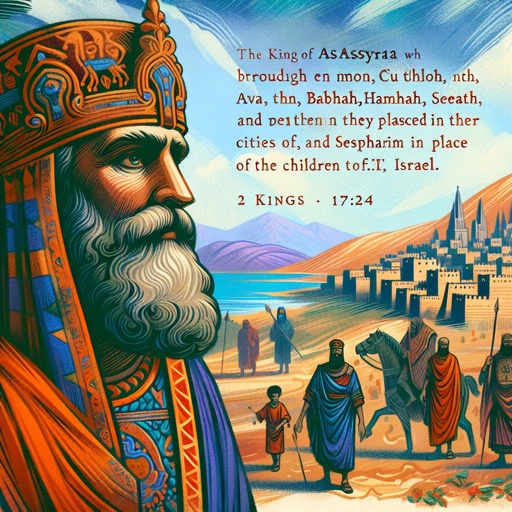
2 Kings 17:24 - "¶ And the king of Assyria brought men from Babylon, and from Cuthah, and from Ava, and from Hamath, and from Sepharvaim, and placed them in the cities of Samaria instead of the children of Israel: and they possessed Samaria, and dwelt in the cities thereof."

2 kings 6:24

2 Kings 17:2 - "And he did that which was evil in the sight of the LORD, but not as the kings of Israel that were before him."

2 Kings 19:17 - "Of a truth, LORD, the kings of Assyria have destroyed the nations and their lands,"

1 Kings 17:24 - "¶ And the woman said to Elijah, Now by this I know that thou art a man of God, and that the word of the LORD in thy mouth is truth."

2 Kings 24:5 - "¶ Now the rest of the acts of Jehoiakim, and all that he did, are they not written in the book of the chronicles of the kings of Judah?"

2 Kings 24:10 - "¶ At that time the servants of Nebuchadnezzar king of Babylon came up against Jerusalem, and the city was besieged."

2 Kings 24:11 - "And Nebuchadnezzar king of Babylon came against the city, and his servants did besiege it."

1 Kings 17:2 - "And the word of the LORD came unto him, saying,"

Genesis 14:17–24 tells the story of a meeting between Abram and two kings. Returning as the victor after having defeated the eastern kings and recapturing all their plunder, Abram is met by the king of Sodom and by Melchizedek, the mysterious king of Salem.

2 Kings 17:40 - "Howbeit they did not hearken, but they did after their former manner."

2 Kings 24:6 - "So Jehoiakim slept with his fathers: and Jehoiachin his son reigned in his stead."

2 Kings 24:1 - "In his days Nebuchadnezzar king of Babylon came up, and Jehoiakim became his servant three years: then he turned and rebelled against him."

2 Kings 13:24 - "So Hazael king of Syria died; and Ben-hadad his son reigned in his stead."

2 Kings 17:8 - "And walked in the statutes of the heathen, whom the LORD cast out from before the children of Israel, and of the kings of Israel, which they had made."

2 Kings 21:17 - "¶ Now the rest of the acts of Manasseh, and all that he did, and his sin that he sinned, are they not written in the book of the chronicles of the kings of Judah?"

2 Samuel 17:24 - "Then David came to Mahanaim. And Absalom passed over Jordan, he and all the men of Israel with him."

2 Kings 24:9 - "And he did that which was evil in the sight of the LORD, according to all that his father had done."

2 Kings 24:19 - "And he did that which was evil in the sight of the LORD, according to all that Jehoiakim had done."

2 Chronicles 24:17 - "Now after the death of Jehoiada came the princes of Judah, and made obeisance to the king. Then the king hearkened unto them."

2 Kings 17:17 - "And they caused their sons and their daughters to pass through the fire, and used divination and enchantments, and sold themselves to do evil in the sight of the LORD, to provoke him to anger."

"And he did that which was evil in the sight of the LORD, but not as the kings of Israel that were before him." - 2 Kings 17:2

"Of a truth, LORD, the kings of Assyria have destroyed the nations and their lands," - 2 Kings 19:17

2 Kings 6:24 - "¶ And it came to pass after this, that Ben-hadad king of Syria gathered all his host, and went up, and besieged Samaria."

2 Kings 17:19 - "Also Judah kept not the commandments of the LORD their God, but walked in the statutes of Israel which they made."

2 Kings 17:5 - "¶ Then the king of Assyria came up throughout all the land, and went up to Samaria, and besieged it three years."

2 Kings 24:4 - "And also for the innocent blood that he shed: for he filled Jerusalem with innocent blood; which the LORD would not pardon."

2 Kings 17:22 - "For the children of Israel walked in all the sins of Jeroboam which he did; they departed not from them;"