The Call to True Worship: Understanding 2 Kings 23:9
"Nevertheless the priests of the high places came not up to the altar of the LORD in Jerusalem, but they did eat of the unleavened bread among their brethren." - 2 Kings 23:9

In a world often fraught with distractions and temptations, 2 Kings 23:9 serves as a profound reminder of the imperative to worship God sincerely and with a clear focus. The verse reads: "Nevertheless the priests of the high places came not up to the altar of the LORD in Jerusalem, but they did eat of the unleavened bread among their brethren." This passage from the King James Version presents a significant insight into the condition of the hearts of the priests during King Josiah’s reign.
To fully grasp the meaning of this verse, we need to explore both its historical context and its theological implications. King Josiah, a pivotal figure in the history of Judah, initiated extensive religious reforms aimed at restoring true worship of Yahweh. His discovery of the Book of the Law ignited a passionate campaign against idolatry and syncretism, practices that had long undermined the spiritual integrity of the nation. The altars in high places had been established by previous kings as a compromise to appease the people’s desires and practices. These altars often led to corrupted forms of worship and a drift from the foundational covenant agreement between God and His people.
The priests mentioned in this verse had a critical role in the spiritual life of Israel. They were set apart to serve God and mediate between Him and the people, yet we see an alarming dichotomy. While the priests of the high places had gathered bread and maintained some form of fellowship with their fellow Israelites, they were not fulfilling their highest calling. They failed to ascend to the altar of the LORD in Jerusalem, the place designated for worship and sacrifice—the very center of Israel’s spiritual life.
This verse encapsulates a profound spiritual principle: being in proximity to the rituals and community of faith does not equate to genuine worship. The priests were eating unleavened bread among their brethren, suggesting participation in community feasts but lacking the fullness of communion with God. They were in a place where offerings and sacrifices should have been made but chose to stay at a distance.
In our modern context, this speaks volumes about how we approach our worship and relationship with God. It poses a critical question: Are we engaging in the rituals of faith—attending church services, participating in community gatherings, or partaking in communal meals—while neglecting the deeper call to come fully to the altar of worship and surrender? The presence of God is not confined to the physical spaces we visit but is contingent upon the posture of our hearts.
Worship is not merely an act or a song; it is an attitude of the heart. True worship requires us to ascend from our complacency and to earnestly seek the face of God. It requires sacrifice and often means leaving behind what is comfortable or familiar to embrace the transformative experience that comes from genuine engagement with God’s presence.
In the New Testament, Jesus emphasized this principle in John 4:24 when He stated, "God is a Spirit: and they that worship him must worship him in spirit and in truth." Our worship must reflect the truth of our relationship with God and not simply adhere to traditional practices or societal expectations. Genuine worship will compel us to confront our idols, our high places, and to return to the altar—the place of sacrifice, repentance, and renewal.
As we reflect on 2 Kings 23:9, let it encourage us to assess our own worship practices. Are we drawn to the presence of God? Or have we settled for participation without passion? Let us not be like the priests of high places who, though still among God’s people, missed the very heart of worship. Instead, may we, with open hearts, come to the altar of the LORD, fully surrendering our lives in true worship to Him.
Want to reflect more on 2 Kings 23:9?
Continue your spiritual journey with Bible Chat — an AI-powered tool for exploring God's Word through conversation. Ask questions, discover connections, and deepen your understanding.
Get Our Apps


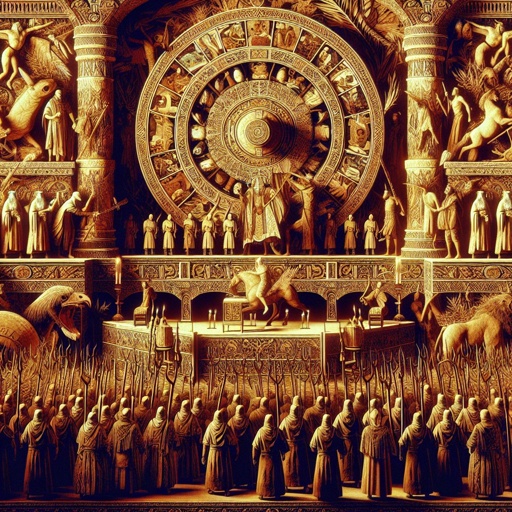
2 Kings 23:9 Artwork

2 Kings 23:9 - "Nevertheless the priests of the high places came not up to the altar of the LORD in Jerusalem, but they did eat of the unleavened bread among their brethren."

"Nevertheless the priests of the high places came not up to the altar of the LORD in Jerusalem, but they did eat of the unleavened bread among their brethren." - 2 Kings 23:9

2 Kings 9:23 - "And Joram turned his hands, and fled, and said to Ahaziah, There is treachery, O Ahaziah."

2 Chronicles 9:23 - "¶ And all the kings of the earth sought the presence of Solomon, to hear his wisdom, that God had put in his heart."

2 Kings 23:23 - "But in the eighteenth year of king Josiah, wherein this passover was holden to the LORD in Jerusalem."

"And Joram turned his hands, and fled, and said to Ahaziah, There is treachery, O Ahaziah." - 2 Kings 9:23

2 Kings 8:23 - "And the rest of the acts of Joram, and all that he did, are they not written in the book of the chronicles of the kings of Judah?"
2 Kings 23:22 - "Surely there was not holden such a passover from the days of the judges that judged Israel, nor in all the days of the kings of Israel, nor of the kings of Judah;"

2 Kings 23:28 - "Now the rest of the acts of Josiah, and all that he did, are they not written in the book of the chronicles of the kings of Judah?"

2 Kings 3:23 - "And they said, This is blood: the kings are surely slain, and they have smitten one another: now therefore, Moab, to the spoil."

2 Kings 23:1 - "And the king sent, and they gathered unto him all the elders of Judah and of Jerusalem."

"¶ And all the kings of the earth sought the presence of Solomon, to hear his wisdom, that God had put in his heart." - 2 Chronicles 9:23

2 Kings 21:23 - "¶ And the servants of Amon conspired against him, and slew the king in his own house."

2 kings 9:34-36

1 Kings 9:23 - "These were the chief of the officers that were over Solomon's work, five hundred and fifty, which bare rule over the people that wrought in the work."

"But in the eighteenth year of king Josiah, wherein this passover was holden to the LORD in Jerusalem." - 2 Kings 23:23

2 Chronicles 9:22 - "And king Solomon passed all the kings of the earth in riches and wisdom."

2 Kings 9:9 - "And I will make the house of Ahab like the house of Jeroboam the son of Nebat, and like the house of Baasha the son of Ahijah:"

2 Kings 23:37 - "And he did that which was evil in the sight of the LORD, according to all that his fathers had done."

2 Kings 23:32 - "And he did that which was evil in the sight of the LORD, according to all that his fathers had done."

2 Kings 23:11 - "And he took away the horses that the kings of Judah had given to the sun, at the entering in of the house of the LORD, by the chamber of Nathan-melech the chamberlain, which was in the suburbs, and burned the chariots of the sun with fire."

2 Kings 23:21 - "¶ And the king commanded all the people, saying, Keep the passover unto the LORD your God, as it is written in the book of this covenant."

2 Kings 23:7 - "And he brake down the houses of the sodomites, that were by the house of the LORD, where the women wove hangings for the grove."

2 Kings 15:23 - "¶ In the fiftieth year of Azariah king of Judah Pekahiah the son of Menahem began to reign over Israel in Samaria, and reigned two years."

2 Kings 23:14 - "And he brake in pieces the images, and cut down the groves, and filled their places with the bones of men." The image should not depict explicit or offensive content but be symbolic.

2 Kings 9:4 - "¶ So the young man, even the young man the prophet, went to Ramoth-gilead."

2 Kings 9:29 - "And in the eleventh year of Joram the son of Ahab began Ahaziah to reign over Judah."

Generate Image of Valley of Hinnom With 2 kings 23 verse 10 quoeted within it

2 Kings 23:20 - "And he slew all the priests of the high places that were there upon the altars, and burned men's bones upon them, and returned to Jerusalem."

"And the rest of the acts of Joram, and all that he did, are they not written in the book of the chronicles of the kings of Judah?" - 2 Kings 8:23