The Reign of Jehoahaz: A Lesson in Short-lived Leadership
"¶ Jehoahaz was twenty and three years old when he began to reign; and he reigned three months in Jerusalem. And his mother's name was Hamutal, the daughter of Jeremiah of Libnah." - 2 Kings 23:31
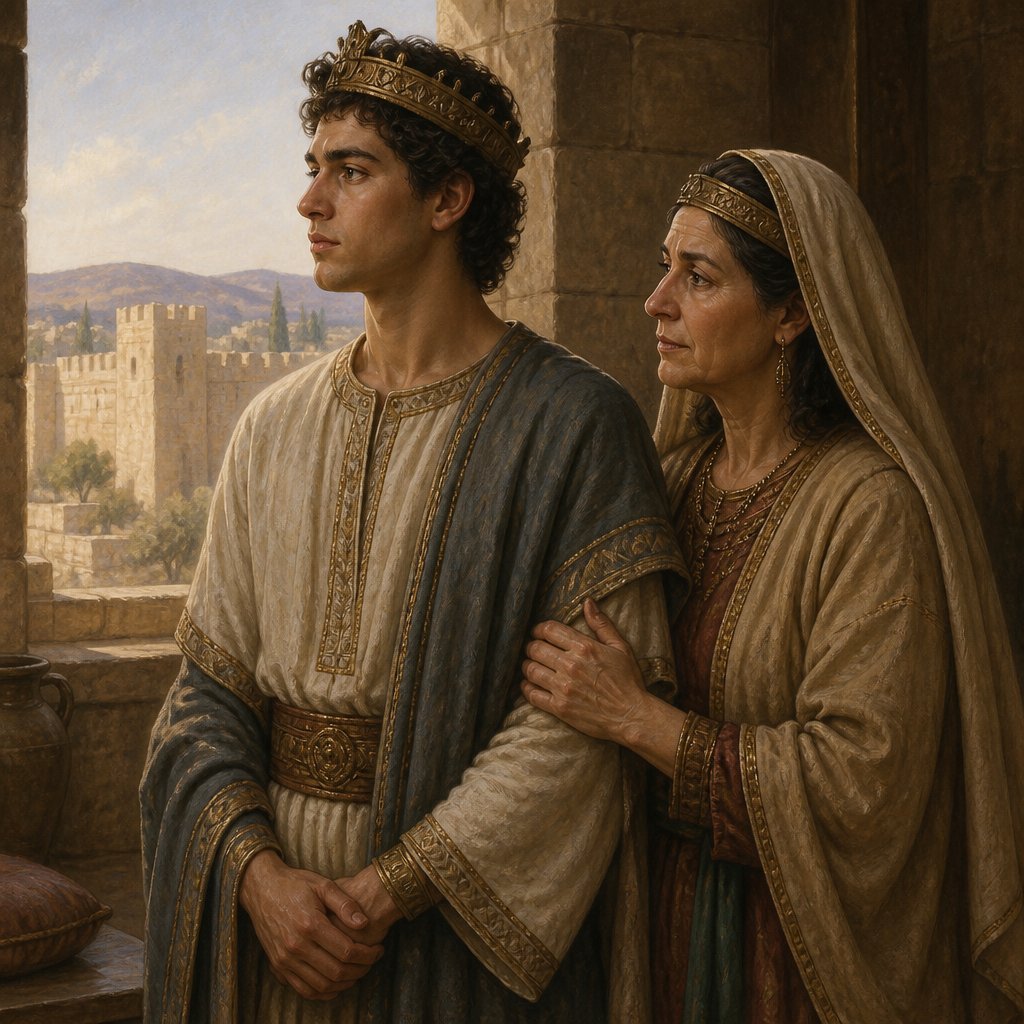
As we delve into the brief reign of King Jehoahaz of Judah, a pivotal subject can be extracted from 2 Kings 23:31, which states, "Jehoahaz was twenty and three years old when he began to reign; and he reigned three months in Jerusalem. And his mother's name was Hamutal, the daughter of Jeremiah of Libnah." On the surface, Jehoahaz's story may seem trivial, but its implications resonate deeply within the realms of leadership, legacy, and the pursuit of godliness.
Jehoahaz became king at a young age. At just twenty-three years old, he ascended the throne, likely filled with the fervor and eagerness that often accompany youth. His reign, however, was alarmingly brief—only three months long—an indication that many forces were at play both within and outside of his governance. This fleeting moment in history prompts us to reflect on the nature of his leadership and the broader themes of divine providence and human agency.
In his short tenure, Jehoahaz's actions were measured against the backdrop of Judah's prior kings and the moral and spiritual state of the kingdom. It is vital to understand that during the preceding years, Judah had oscillated under various reigns, often favoring idolatry and disobedience to God's covenant. Jehoahaz inherited a precarious legacy built on compromise and vulnerability.
What could have happened during those three short months? To fully grasp the significance of this period, we must acknowledge the spiritual condition of the people he ruled. Throughout the biblical narrative, leadership is intimately tied to the people's faithfulness. A king's heart often reflects the collective heart of a nation. In the case of Jehoahaz, he was not able to steer Judah toward righteousness; instead, historical records indicate that he continued in the sinful ways that had characterized the leadership before him, specifically, a disregard for the Lord's commandments.
The brevity of Jehoahaz’s rule can serve as a cautionary tale for aspiring leaders today. The leadership attributes that made a good king in the eyes of God were not present in this young ruler. Wisdom, righteousness, and adherence to God’s laws are essential to leaving a lasting legacy. As the Bible repeatedly illustrates, faithfulness to God is paramount, not just for personal righteousness but for the well-being of an entire nation.
Additionally, Jehoahaz's lineage, mentioned through his mother, Hamutal, does offer a glimpse into the familial influences that shape us. The mention of Hamutal may infer a legacy of influence—was she a guiding force in his life? The metaphorical ‘mother’ here can represent various aspects of society and upbringing. It serves as a reminder that our environments, our families, and our communities hold significant sway over our decisions and paths.
The question that looms is: what can we learn from Jehoahaz’s minor yet telling installment as king? Firstly, it underscores the importance of steadfastness in faith and moral integrity in positions of influence. Secondly, it illustrates the transient nature of earthly power; the most glorious reign can abruptly come to a close if it does not align with divine purposes. Ultimately, Jehoahaz's reign was a part of God's ongoing plan for His people, demonstrating both judgment against unfaithfulness and the hope for a future king who would once again draw the hearts of Israel and Judah back to God.
In reflection, let us seek the wisdom that aligns with God's ways. Whether we hold positions of leadership or influence in our homes, workplaces, or communities, let our legacies be molded by faithfulness and righteousness. Let us strive to lead in a manner that resonates with the values of the Kingdom of God and produces fruit that honors Him, lest we find ourselves recounting our reigns as mere footnotes in history.
Want to reflect more on 2 Kings 23:31?
Continue your spiritual journey with Bible Chat — an AI-powered tool for exploring God's Word through conversation. Ask questions, discover connections, and deepen your understanding.
Get Our Apps


2 Kings 23:31 Artwork

2 Kings 23:31 - "¶ Jehoahaz was twenty and three years old when he began to reign; and he reigned three months in Jerusalem. And his mother's name was Hamutal, the daughter of Jeremiah of Libnah."
"¶ Jehoahaz was twenty and three years old when he began to reign; and he reigned three months in Jerusalem. And his mother's name was Hamutal, the daughter of Jeremiah of Libnah." - 2 Kings 23:31

2 Samuel 23:31 - "Abi-albon the Arbathite, Azmaveth the Barhumite,"

2 Kings 23:23 - "But in the eighteenth year of king Josiah, wherein this passover was holden to the LORD in Jerusalem."
2 Kings 15:31 - "And the rest of the acts of Pekah, and all that he did, behold, they are written in the book of the chronicles of the kings of Israel."

2 Kings 8:23 - "And the rest of the acts of Joram, and all that he did, are they not written in the book of the chronicles of the kings of Judah?"
2 Kings 23:22 - "Surely there was not holden such a passover from the days of the judges that judged Israel, nor in all the days of the kings of Israel, nor of the kings of Judah;"

2 Kings 23:28 - "Now the rest of the acts of Josiah, and all that he did, are they not written in the book of the chronicles of the kings of Judah?"

2 Kings 3:23 - "And they said, This is blood: the kings are surely slain, and they have smitten one another: now therefore, Moab, to the spoil."

"Abi-albon the Arbathite, Azmaveth the Barhumite," - 2 Samuel 23:31

2 Kings 9:31 - "And as Jehu entered in at the gate, she said, Had Zimri peace, who slew his master?"

2 Kings 23:1 - "And the king sent, and they gathered unto him all the elders of Judah and of Jerusalem."

2 Kings 21:23 - "¶ And the servants of Amon conspired against him, and slew the king in his own house."

2 Kings 19:31 - "For out of Jerusalem shall go forth a remnant, and they that escape out of mount Zion: the zeal of the LORD of hosts shall do this."

2 Kings 9:23 - "And Joram turned his hands, and fled, and said to Ahaziah, There is treachery, O Ahaziah."

2 Kings 6:31 - "Then he said, God do so and more also to me, if the head of Elisha the son of Shaphat shall stand on him this day."

"But in the eighteenth year of king Josiah, wherein this passover was holden to the LORD in Jerusalem." - 2 Kings 23:23

"And the rest of the acts of Pekah, and all that he did, behold, they are written in the book of the chronicles of the kings of Israel." - 2 Kings 15:31

2 Kings 23:37 - "And he did that which was evil in the sight of the LORD, according to all that his fathers had done."

2 Kings 23:32 - "And he did that which was evil in the sight of the LORD, according to all that his fathers had done."

2 Kings 23:11 - "And he took away the horses that the kings of Judah had given to the sun, at the entering in of the house of the LORD, by the chamber of Nathan-melech the chamberlain, which was in the suburbs, and burned the chariots of the sun with fire."

2 Kings 23:21 - "¶ And the king commanded all the people, saying, Keep the passover unto the LORD your God, as it is written in the book of this covenant."

2 Kings 23:7 - "And he brake down the houses of the sodomites, that were by the house of the LORD, where the women wove hangings for the grove."

2 Kings 17:31 - "And the Avites made Nibhaz and Tartak, and the Sepharvites burnt their children in fire to Adrammelech and Anammelech, the gods of Sepharvaim." The image should not depict explicit or offensive content but be symbolic.

2 Chronicles 9:23 - "¶ And all the kings of the earth sought the presence of Solomon, to hear his wisdom, that God had put in his heart."

2 Kings 15:23 - "¶ In the fiftieth year of Azariah king of Judah Pekahiah the son of Menahem began to reign over Israel in Samaria, and reigned two years."

2 Kings 10:31 - "But Jehu took no heed to walk in the law of the LORD God of Israel with all his heart: for he departed not from the sins of Jeroboam, which made Israel to sin."

2 Kings 23:9 - "Nevertheless the priests of the high places came not up to the altar of the LORD in Jerusalem, but they did eat of the unleavened bread among their brethren."

2 Kings 23:14 - "And he brake in pieces the images, and cut down the groves, and filled their places with the bones of men." The image should not depict explicit or offensive content but be symbolic.

Proverbs 31:4 - "It is not for kings, O Lemuel, it is not for kings to drink wine; nor for princes strong drink:"