Righteous Reform: Lessons from King Josiah's Purge of Idolatry
"And all the houses also of the high places that were in the cities of Samaria, which the kings of Israel had made to provoke the LORD to anger, Josiah took away, and did to them according to all the acts that he had done in Beth-el." - 2 Kings 23:19
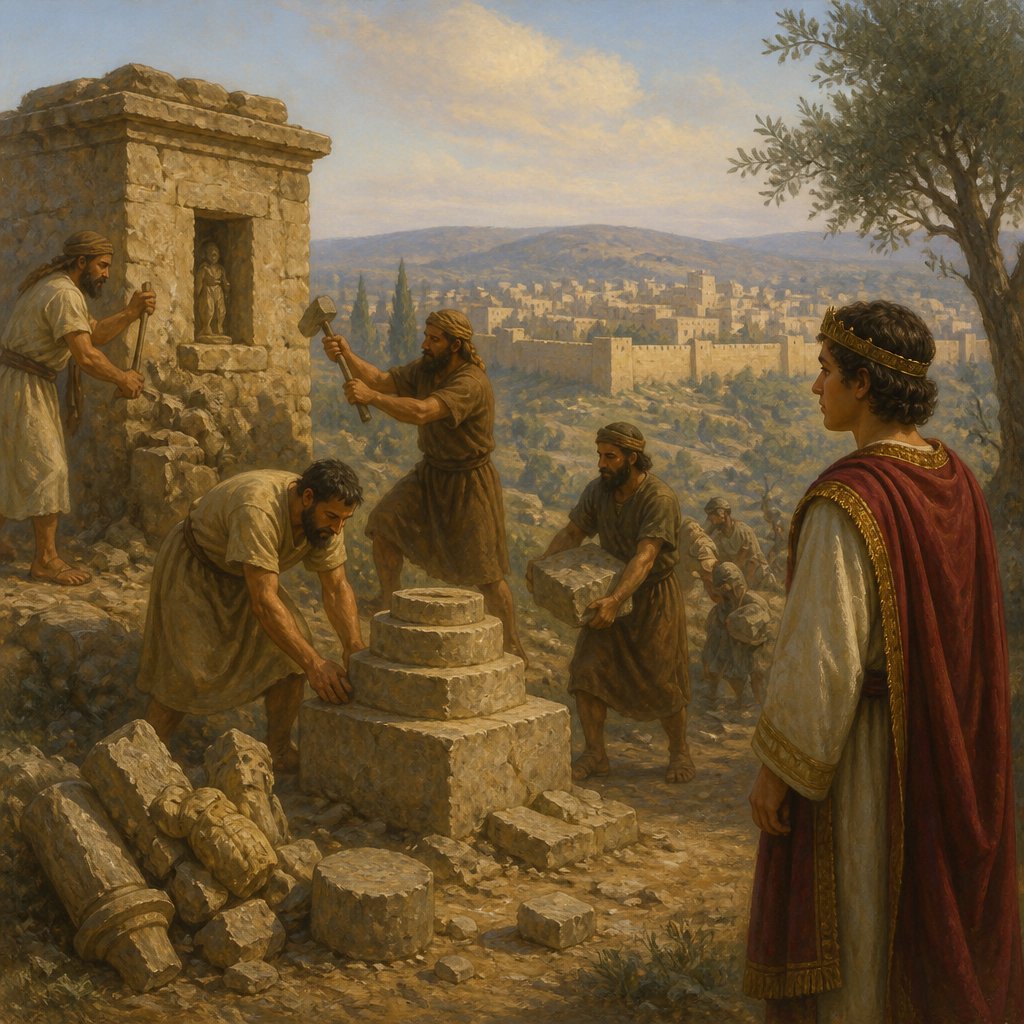
In 2 Kings 23:19 (KJV), we read, "And all the houses also of the high places that were in the cities of Samaria, which the kings of Israel had made to provoke the LORD to anger, Josiah took away, and did to them according to all the acts that he had done in Beth-el." This passage reveals a significant moment in the history of Israel—a moment marked by the righteous reform initiated by King Josiah, who became one of the most celebrated kings in Judah for his zealous actions to restore true worship to Yahweh.
King Josiah's reign came at a time when the Israelites had strayed far from their covenant relationship with God. The high places mentioned in our verse represented the cultural and spiritual brokenness of Israel. These were sites established for the worship of false gods, promoting practices that not only offended the LORD but also led many hearts astray from the true worship. These high places became symbols of disobedience, provoking the anger of the Almighty. Josiah's act of removing these high places underscores a central theme of scripture—the need for purification and restoration.
At the tender age of eight, Josiah ascended to the throne of Judah, and his journey would not be one of mere political maneuvering, but rather one of passionate obedience to God. Guided by the teachings of the Law discovered in the temple during a restoration project, Josiah was moved to action. His heart was stirred to return the people to a true understanding of God’s holiness and His demands for exclusive worship. He undertook to destroy every element that stood in defiance of the Lord's call upon His people. The high places of Samaria were no exception, as Josiah sought to eliminate anything that provoked God's anger.
This historical moment offers profound lessons for us today. Modern-day high places can manifest as anything that demands priority over our relationship with God—be it habits, distractions, relationships, or cultural pressures that lead us away from God’s truth. Just as Josiah took decisive action against idolatry, we too must examine our lives for modern idolatrous practices. What are those ‘high places’ in our hearts that need to be torn down? Are there idols of greed, lust, ambition, or even misplaced priorities that subtly provoke the Lord to anger? Like Josiah, we must be willing to take action against these elements that threaten our authenticity in Christ.
Moreover, Josiah's methods were not merely punitive; they were transformative. He undertook these actions with an understanding that true reformation begins within the heart. His cleansings aimed to purify not only the land but the people. In dismantling idolatry, he was restoring a sense of holiness and reverence for the God who delivered them from bondage and sin. It’s noteworthy that Josiah did not act out of a spirit of condemnation; rather, he called the nation back to a covenant relationship characterized by love and trust. His reforms were about inviting the people of God back to the richness of their heritage and identity.
In a world that often mirrors the spiritual apathy of ancient Israel, Josiah's passionate pursuit of God serves as a reminder of the transformative power of righteous reform. Let us consider our commitment to the Almighty, ensuring that every aspect of our lives aligns with His commands.
In our prayers, may we ask God to reveal our high places, and empower us to remove them. Let us strive to reflect the heart of Josiah—one that values covenant loyalty and desires the glory of God above all. As we tear down what provokes God’s displeasure, we reconvene towards the worship of the true and living God, fostering a deeper relationship with Him, much like Josiah invited the people back to the joy and truth of God’s presence.
Want to reflect more on 2 Kings 23:19?
Continue your spiritual journey with Bible Chat — an AI-powered tool for exploring God's Word through conversation. Ask questions, discover connections, and deepen your understanding.
Get Our Apps


2 Kings 23:19 Artwork

2 Kings 23:19 - "And all the houses also of the high places that were in the cities of Samaria, which the kings of Israel had made to provoke the LORD to anger, Josiah took away, and did to them according to all the acts that he had done in Beth-el."
"And all the houses also of the high places that were in the cities of Samaria, which the kings of Israel had made to provoke the LORD to anger, Josiah took away, and did to them according to all the acts that he had done in Beth-el." - 2 Kings 23:19

2 Kings 19:2

2 Kings 19:2

2 Kings 23:23 - "But in the eighteenth year of king Josiah, wherein this passover was holden to the LORD in Jerusalem."

2 Kings 19:2

2 Kings 19:17 - "Of a truth, LORD, the kings of Assyria have destroyed the nations and their lands,"

2 Kings 8:23 - "And the rest of the acts of Joram, and all that he did, are they not written in the book of the chronicles of the kings of Judah?"
2 Kings 23:22 - "Surely there was not holden such a passover from the days of the judges that judged Israel, nor in all the days of the kings of Israel, nor of the kings of Judah;"

2 Kings 12:19 - "¶ And the rest of the acts of Joash, and all that he did, are they not written in the book of the chronicles of the kings of Judah?"

2 Kings 23:28 - "Now the rest of the acts of Josiah, and all that he did, are they not written in the book of the chronicles of the kings of Judah?"

2 Kings 3:16-19

2 Kings 3:23 - "And they said, This is blood: the kings are surely slain, and they have smitten one another: now therefore, Moab, to the spoil."

2 Kings 16:19 - "¶ Now the rest of the acts of Ahaz which he did, are they not written in the book of the chronicles of the kings of Judah?"

2 Kings 19:5 - "So the servants of king Hezekiah came to Isaiah."

2 Kings 23:1 - "And the king sent, and they gathered unto him all the elders of Judah and of Jerusalem."

2 Kings 21:23 - "¶ And the servants of Amon conspired against him, and slew the king in his own house."

2 Kings 19:36 - "So Sennacherib king of Assyria departed, and went and returned, and dwelt at Nineveh."

2 Kings 19:23 - "By thy messengers thou hast reproached the Lord, and hast said, With the multitude of my chariots I am come up to the height of the mountains, to the sides of Lebanon, and will cut down the tall cedar trees thereof, and the choice fir trees thereof: and I will enter into the lodgings of his borders, and into the forest of his Carmel."

2 Kings 19:13 - "Where is the king of Hamath, and the king of Arpad, and the king of the city of Sepharvaim, of Hena, and Ivah?"

2 Samuel 19:23 - "Therefore the king said unto Shimei, Thou shalt not die. And the king sware unto him."

Soothing the Soul: The Gospel of Gentle Care 1 Kings 19:3-8; 1 Samuel 16:14-23

2 Kings 9:23 - "And Joram turned his hands, and fled, and said to Ahaziah, There is treachery, O Ahaziah."

Soothing the Soul: The Gospel of Gentle Care 1 Kings 19:3-8; 1 Samuel 16:14-23

"But in the eighteenth year of king Josiah, wherein this passover was holden to the LORD in Jerusalem." - 2 Kings 23:23

2 Kings 19:11 - "Behold, thou hast heard what the kings of Assyria have done to all lands, by destroying them utterly: and shalt thou be delivered?"

2 Samuel 23:19 - "Was he not most honourable of three? therefore he was their captain: howbeit he attained not unto the first three."

2 Chronicles 23:19 - "And he set the porters at the gates of the house of the LORD, that none which was unclean in any thing should enter in."

2 Kings 19:2 - "And he sent Eliakim, which was over the household, and Shebna the scribe, and the elders of the priests, covered with sackcloth, to Isaiah the prophet the son of Amoz."

2 Kings 23:37 - "And he did that which was evil in the sight of the LORD, according to all that his fathers had done."