The Danger of Unchecked Curiosity: A Lesson from Hezekiah
"¶ Then came Isaiah the prophet unto king Hezekiah, and said unto him, What said these men? and from whence came they unto thee? And Hezekiah said, They are come from a far country, even from Babylon." - 2 Kings 20:14
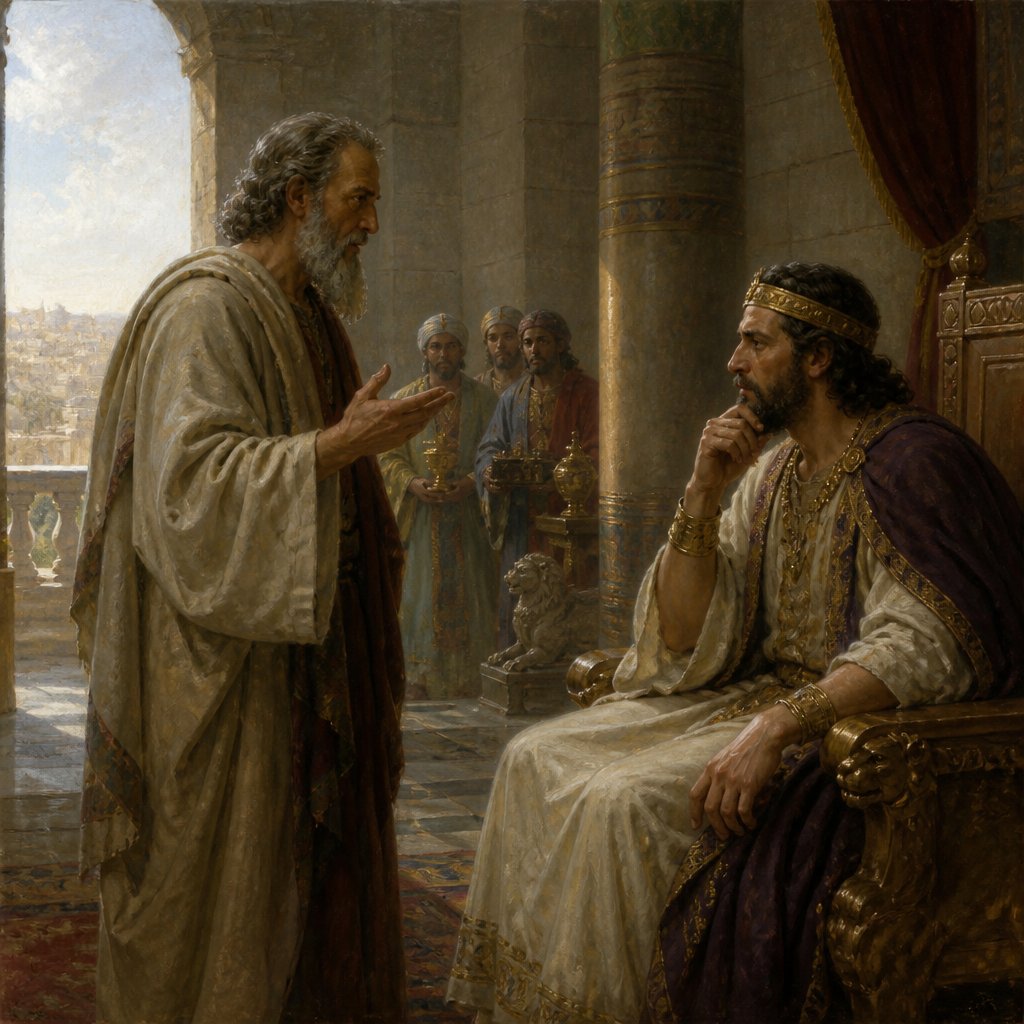
In 2 Kings 20:14, we read a critical moment in the life of King Hezekiah, where the prophet Isaiah confronts him with penetrating questions: "Then came Isaiah the prophet unto king Hezekiah, and said unto him, What said these men? and from whence came they unto thee? And Hezekiah said, They are come from a far country, even from Babylon." This exchange opens the door to profound lessons about discernment, pride, and the dangers of engaging with the world through unchecked curiosity.
Hezekiah had just experienced a significant victory; God had extended his life after he prayed for deliverance from death (2 Kings 20:1-7). Miraculously healed and granted a sign, Hezekiah's faith was restored. Yet, shortly after this encounter with God, he encounters envoys from Babylon. This meeting, interpreted by Isaiah, reveals an intrinsic danger—often in moments of personal triumph, we can become overly curious about the world, forgetting to guard our hearts against potential snares.
The arrival of the Babylonian delegation represents a crossroads of opportunity and peril. Babylon, a kingdom known for its wealth and future as a source of exile for the Israelites, symbolizes the alluring but deceptive nature of worldly affairs. Hezekiah's reply to Isaiah—acknowledging the distant visitors and their origin—highlights his engagement with foreign powers. Here lies the conundrum: while it is wise for leaders to understand other nations, the danger ensues when our attention shifts from reliance on God to a fascination with worldly prestige and alliances.
In this case, Hezekiah's curiosity blinds him to the deeper spiritual implications of his interaction. He seems to revel in the attention he receives from the Babylonians after his healing, sharing lavish details of his treasures and successes. Isaiah's poignant inquiry serves as a call to reflection. The underlying question infers a warning; what influence do these visitors hold over your heart, Hezekiah? In his moment of pride, Hezekiah loses sight of his allegiance to God and inadvertently opens the door to future consequences that would ultimately lead his nation astray.
As believers, we are called to exercise discernment in the face of worldly curiosities. There is a fine line between wisdom and worldly entanglement. When we allow ourselves to be captivated by the allure of exceptionalism—the recognition, the power, the glory of earthly things—we risk compromising our walk with God. Reflecting on Matthew 6:19-21, we are reminded to store up treasures in heaven, for where our treasure is, there will our hearts be also.
The downfall of Hezekiah lies in his neglect to consider the potential ramifications of his actions. While he may have perceived his exchange with Babylon as harmless curiosity, it opened a gateway to idolatry and division among his people. We must learn to question our motivations; are they aligned with the growth of God's kingdom or merely to satisfy our desire for recognition and success? The consequence of Hezekiah's interaction with Babylon is later revealed in the prophetic warnings from Isaiah concerning the exile of Judah (2 Kings 20:16-18).
In our daily lives, we encounter decisions that require wisdom and reverence for God's will. It serves us well to remember Hezekiah's story as a cautionary tale against unchecked ambition and curiosity. We should pause and ask ourselves: are we allowing the fleeting recognition of the world to distract us from our eternal purpose? Are we investing in relationships and pursuits that honor God, or are we entangled in something that leads us away from Him?
Ultimately, our lives are a testimony of what we value. Just as Isaiah urged Hezekiah to contemplate the significance of his engagement with the Babylonians, we too must reflect on our current pursuits and relationships. Let us strive to cultivate a heart that seeks the Lord above all, continuously drawing boundaries between the sacred and the secular, forging ahead in unwavering faith to the glory of His name.
Want to reflect more on 2 Kings 20:14?
Continue your spiritual journey with Bible Chat — an AI-powered tool for exploring God's Word through conversation. Ask questions, discover connections, and deepen your understanding.
Get Our Apps


2 Kings 20:14 Artwork

2 Kings 20:14 - "¶ Then came Isaiah the prophet unto king Hezekiah, and said unto him, What said these men? and from whence came they unto thee? And Hezekiah said, They are come from a far country, even from Babylon."
"¶ Then came Isaiah the prophet unto king Hezekiah, and said unto him, What said these men? and from whence came they unto thee? And Hezekiah said, They are come from a far country, even from Babylon." - 2 Kings 20:14

2 Kings 14:20 - "And they brought him on horses: and he was buried at Jerusalem with his fathers in the city of David."

1 Kings 14:1-20

"And they brought him on horses: and he was buried at Jerusalem with his fathers in the city of David." - 2 Kings 14:20

2 Kings 20:20 - "¶ And the rest of the acts of Hezekiah, and all his might, and how he made a pool, and a conduit, and brought water into the city, are they not written in the book of the chronicles of the kings of Judah?"

2 Kings 14:18 - "And the rest of the acts of Amaziah, are they not written in the book of the chronicles of the kings of Judah?"

2 Kings 20:2 - "Then he turned his face to the wall, and prayed unto the LORD, saying,"

2 Kings 2:20 - "And he said, Bring me a new cruse, and put salt therein. And they brought it to him."

1 Kings 20:14 - "And Ahab said, By whom? And he said, Thus saith the LORD, Even by the young men of the princes of the provinces. Then he said, Who shall order the battle? And he answered, Thou."

2 Kings 20:16 - "And Isaiah said unto Hezekiah, Hear the word of the LORD."

2 Kings 10:20 - "And Jehu said, Proclaim a solemn assembly for Baal. And they proclaimed it."

2 Kings 14:29 - "And Jeroboam slept with his fathers, even with the kings of Israel; and Zachariah his son reigned in his stead."

2 Kings 25:20 - "And Nebuzar-adan captain of the guard took these, and brought them to the king of Babylon to Riblah:"

2 Kings 12:14 - "But they gave that to the workmen, and repaired therewith the house of the LORD."

2 Kings 14:16 - "And Jehoash slept with his fathers, and was buried in Samaria with the kings of Israel; and Jeroboam his son reigned in his stead."

1 Kings 14:20 - "And the days which Jeroboam reigned were two and twenty years: and he slept with his fathers, and Nadab his son reigned in his stead."

2 Kings 14:14 - "And he took all the gold and silver, and all the vessels that were found in the house of the LORD, and in the treasures of the king's house, and hostages, and returned to Samaria."

2 Kings 20:21 - "And Hezekiah slept with his fathers: and Manasseh his son reigned in his stead."

2 Kings 21:20 - "And he did that which was evil in the sight of the LORD, as his father Manasseh did."

2 Kings 13:20 - "¶ And Elisha died, and they buried him. And the bands of the Moabites invaded the land at the coming in of the year."

2 Kings 20:7 - "And Isaiah said, Take a lump of figs. And they took and laid it on the boil, and he recovered."

2 Kings 11:20 - "And all the people of the land rejoiced, and the city was in quiet: and they slew Athaliah with the sword beside the king's house."

2 Kings 8:20 - "¶ In his days Edom revolted from under the hand of Judah, and made a king over themselves."

2 Kings 14:22 - "He built Elath, and restored it to Judah, after that the king slept with his fathers."

2 Kings 14:12 - "And Judah was put to the worse before Israel; and they fled every man to their tents."
2 Kings 14:15 - "¶ Now the rest of the acts of Jehoash which he did, and his might, and how he fought with Amaziah king of Judah, are they not written in the book of the chronicles of the kings of Israel?"

2 Kings 7:20 - "And so it fell out unto him: for the people trode upon him in the gate, and he died."

1 Kings 20:2 - "And he sent messengers to Ahab king of Israel into the city, and said unto him, Thus saith Ben-hadad,"

"And the rest of the acts of Amaziah, are they not written in the book of the chronicles of the kings of Judah?" - 2 Kings 14:18