The God Who Hears: A Call to Prayer
"It may be the LORD thy God will hear all the words of Rabshakeh, whom the king of Assyria his master hath sent to reproach the living God; and will reprove the words which the LORD thy God hath heard: wherefore lift up thy prayer for the remnant that are left." - 2 Kings 19:4
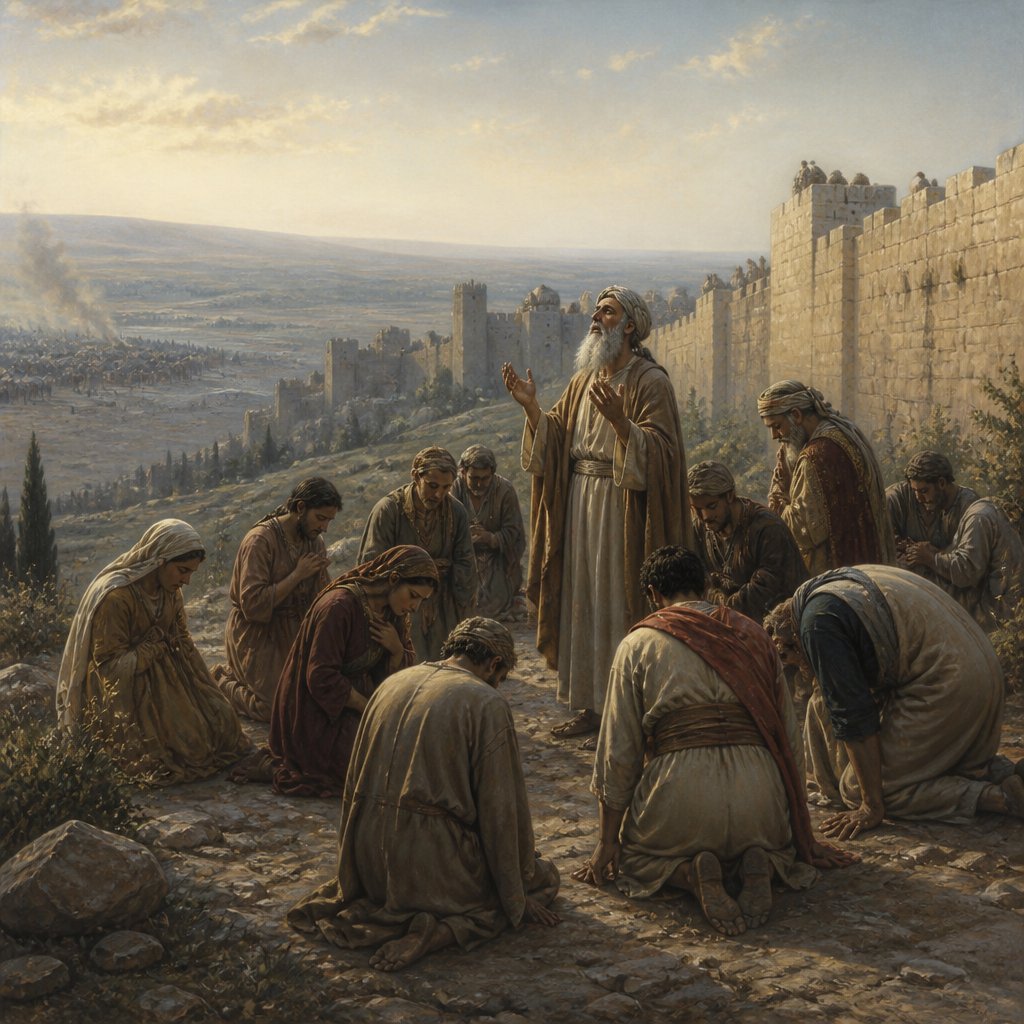
In the depths of despair, King Hezekiah faced an overwhelming challenge as the mighty Assyrian army, led by the fierce Rabshakeh, threatened the very existence of Jerusalem. The context of 2 Kings 19 places us in a pivotal moment where faith and fear collide, revealing to us the profound truth of God’s attentiveness to our cries. The verse proclaims, "It may be the LORD thy God will hear all the words of Rabshakeh, whom the king of Assyria his master hath sent to reproach the living God; and will reprove the words which the LORD thy God hath heard: wherefore lift up thy prayer for the remnant that are left" (2 Kings 19:4, KJV). Here, uncovering layers of meaning invites us deeper into the heart of God’s perpetual promise to hear and respond.
In the grand narrative of Scripture, we cannot ignore the significance of the audacity with which Rabshakeh spoke against Jerusalem. His taunts and reproaches were not merely against the people of Israel; they were directed against the living God. He sought to instill fear, provocation, and doubt within the hearts of God’s chosen people, questioning the power and presence of the Almighty. This is a vital reminder for us today; there will be voices that rise against us, challenging our faith, attempting to undermine our trust in God's providence. Yet, amid these threats, the assurance remains that our God hears.
Rabshakeh stands as a figure representing all those who would mock the power of God, but the Scripture reassures us that God is not silent. The phrase "It may be the LORD thy God will hear" is loaded with expectation. It encourages us to believe in God’s responsiveness to our plight. He is not a distant deity; He is intimately aware of the struggles we face. The full nature of God - His sovereignty, love, and justice - is our refuge in times of tumult. Let us not forget who we serve: the living God who actively engages with His creation.
The call to lift up prayer for the remnant that is left resonates with urgency. In geographic terms, a remnant might refer to those who remained in Jerusalem when all seemed lost. Spiritually, it signifies those of us who persist in faith despite adversity. In our lives, we may feel as if we are but a remnant in a world filled with chaos, doubt, and fear, yet we hold the potent weapon of prayer. Prayer is our lifeline, a direct connection to the One who created the universe. When we are confronted by Rabshakehs of our time—those voices of despair—our response should be to boldly lift our prayers to God.
Furthermore, this verse fosters community among believers. Hezekiah’s instruction to focus on prayer emphasizes that while we pray individually, we also carry the responsibilities of one another. As we gather to seek the Lord's face collectively, we build a tapestry of faith that strengthens our remnant status as children of God. Our intercessions become a powerful force, stirring God to movement in our lives and circumstances. When we pray for each other, we unite under a common goal to see His will made manifest on earth as it is in heaven.
As we reflect on 2 Kings 19:4, let us conclude that there are times when we need to recognize the malignancy in the threats around us, and rather than succumb, we lift up our hearts, hopes, and prayers to God. We do not pray out of desperation, but out of strength and assurance that God hears us. In so doing, we join with the remnant, lifting each other's burdens, and amplifying our voices to the God who sees, hears, and moves on our behalf. This week, may we continuously remind ourselves and one another that we serve the living God, whose ears are ever attentive to our cry.
Want to reflect more on 2 Kings 19:4?
Continue your spiritual journey with Bible Chat — an AI-powered tool for exploring God's Word through conversation. Ask questions, discover connections, and deepen your understanding.
Get Our Apps


2 Kings 19:4 Artwork

2 Kings 19:4 - "It may be the LORD thy God will hear all the words of Rabshakeh, whom the king of Assyria his master hath sent to reproach the living God; and will reprove the words which the LORD thy God hath heard: wherefore lift up thy prayer for the remnant that are left."
"It may be the LORD thy God will hear all the words of Rabshakeh, whom the king of Assyria his master hath sent to reproach the living God; and will reprove the words which the LORD thy God hath heard: wherefore lift up thy prayer for the remnant that are left." - 2 Kings 19:4

2 Kings 4:19 - "And he said unto his father, My head, my head. And he said to a lad, Carry him to his mother."

2 Kings 19:2

2 Kings 19:2

2 Kings 19:2

2 Kings 19:17 - "Of a truth, LORD, the kings of Assyria have destroyed the nations and their lands,"

2 Kings 12:19 - "¶ And the rest of the acts of Joash, and all that he did, are they not written in the book of the chronicles of the kings of Judah?"

2 Kings 3:16-19

2 Kings 16:19 - "¶ Now the rest of the acts of Ahaz which he did, are they not written in the book of the chronicles of the kings of Judah?"

2 Kings 19:5 - "So the servants of king Hezekiah came to Isaiah."

2 Kings 4:4-5

2 Kings 19:36 - "So Sennacherib king of Assyria departed, and went and returned, and dwelt at Nineveh."

2 Kings 19:13 - "Where is the king of Hamath, and the king of Arpad, and the king of the city of Sepharvaim, of Hena, and Ivah?"

2 Kings 19:11 - "Behold, thou hast heard what the kings of Assyria have done to all lands, by destroying them utterly: and shalt thou be delivered?"
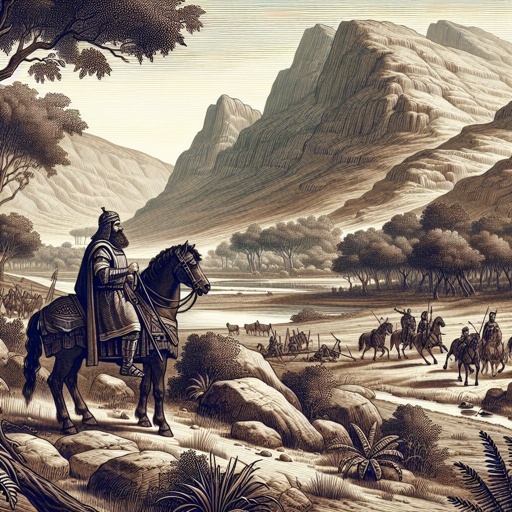
1 Kings 4:19 - "Geber the son of Uri was in the country of Gilead, in the country of Sihon king of the Amorites, and of Og king of Bashan; and he was the only officer which was in the land."

2 Timothy 4:19 - "Salute Prisca and Aquila, and the household of Onesiphorus."

2 Kings 19:2 - "And he sent Eliakim, which was over the household, and Shebna the scribe, and the elders of the priests, covered with sackcloth, to Isaiah the prophet the son of Amoz."

2 Kings 19:34 - "For I will defend this city, to save it, for mine own sake, and for my servant David's sake."

"Of a truth, LORD, the kings of Assyria have destroyed the nations and their lands," - 2 Kings 19:17

2 Kings 24:19 - "And he did that which was evil in the sight of the LORD, according to all that Jehoiakim had done."

2 Kings 17:19 - "Also Judah kept not the commandments of the LORD their God, but walked in the statutes of Israel which they made."

2 Kings 10:4 - "But they were exceedingly afraid, and said, Behold, two kings stood not before him: how then shall we stand?"
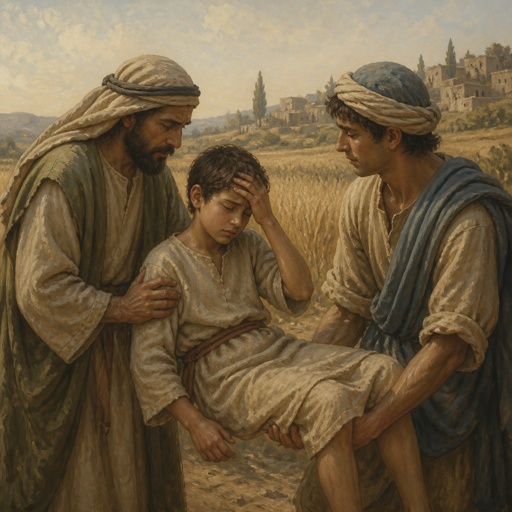
"And he said unto his father, My head, my head. And he said to a lad, Carry him to his mother." - 2 Kings 4:19

2 Kings 19:33 - "By the way that he came, by the same shall he return, and shall not come into this city, saith the LORD."

"So the servants of king Hezekiah came to Isaiah." - 2 Kings 19:5

2 Kings 11:19 - "And he took the rulers over hundreds, and the captains, and the guard, and all the people of the land; and they brought down the king from the house of the LORD, and came by the way of the gate of the guard to the king's house. And he sat on the throne of the kings."

2 Kings 19:27 - "But I know thy abode, and thy going out, and thy coming in, and thy rage against me."

2 Kings 2:19 - "¶ And the men of the city said unto Elisha, Behold, I pray thee, the situation of this city is pleasant, as my lord seeth: but the water is naught, and the ground barren."

2 Kings 5:19 - "And he said unto him, Go in peace. So he departed from him a little way."