Rooted and Fruitful: The Hope of the Remnant
"And the remnant that is escaped of the house of Judah shall yet again take root downward, and bear fruit upward." - 2 Kings 19:30
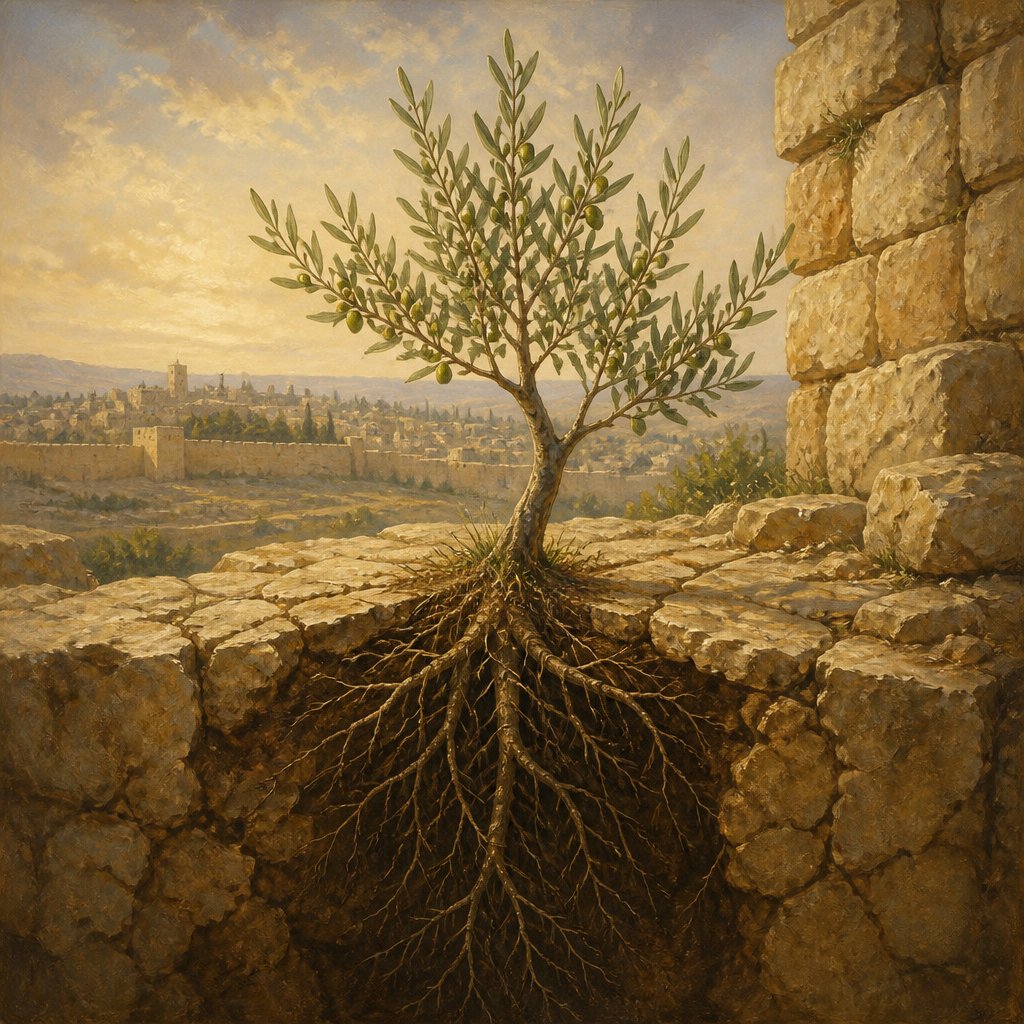
The depth and richness of God’s promises are often found buried beneath layers of historical context and prophetic declarations. In the verse we are exploring today, 2 Kings 19:30, we are invited to reflect on a powerful promise of restoration: "And the remnant that is escaped of the house of Judah shall yet again take root downward, and bear fruit upward" (KJV). This verse, situated within a narrative of crisis and judgment, speaks volumes about the resilience and hope of God’s people even in the direst circumstances.
At the time of this promise, Judah faced imminent threats from the Assyrian Empire, and many within the nation were engulfed in despair. The prophet Isaiah conveyed messages of both warning and hope. It is telling that God’s declaration centers around a remnant—a small, surviving group of people who would endure through adversity. This concept of a remnant is crucial in understanding God’s redemptive plans. Throughout scripture, we see that God often works through the few rather than the many, ensuring that His glory shines through as He brings restoration and renewal.
"Take root downward." This imagery evokes the idea of stability and nourishment. In agricultural terms, a plant that takes root well is one that is anchored and grows to withstand harsh conditions. For believers, taking root downward signifies a deepening faith—a strong relationship with God that goes below the surface. Ephesians 3:17 reminds us of this, stating, "That Christ may dwell in your hearts by faith; that ye, being rooted and grounded in love." Our spiritual roots need to dig deep into the soil of God’s truth, His love, and His promises.
What does it mean for us, as believers today, to take root downward? It means engaging intimately with the Word of God, committing ourselves to prayer, and gaining wisdom that can only come from prolonged exposure to His presence. In a world filled with distractions and uncertainties, our spiritual grounding in God enables us to weather storms of doubt and fear. The deeper our roots go, the stronger we become against the temptations and troubles that seek to uproot our faith.
The second part of the promise is equally compelling: "and bear fruit upward." Bearing fruit is not merely about personal success or visible achievements; it reflects the outward evidence of our inner life in Christ. As we grow deeper in our relationship with God, our lives should overflow with the fruits of the Spirit—love, joy, peace, patience, kindness, goodness, faithfulness, gentleness, and self-control (Galatians 5:22-23). This upward bearing of fruit serves as testimony to those around us, portraying the impact of God’s transformative work in our lives.
In today’s context, the idea of a remnant is especially relevant. The Church faces various challenges, both cultural and spiritual, but even in these trying times, there remains a community of believers who are committed to standing firm in their faith. It is in this remnant that God is still at work, calling us to not just survive, but to thrive. Our witness of faith and resilience can be a beacon of hope in a world hungry for authenticity and truth.
As we meditate on this verse, let us reflect on our own spiritual roots. Are we anchored deeply in God’s Word? Are we actively seeking to bear fruit in our lives, aligning our actions with His will? Let us be encouraged by the knowledge that God’s promises of revitalization are available to us. Like the remnant of Judah, we have the assurance that when we take root downward, we will indeed bear fruit upward, bringing glory to God and extending His grace to those around us.
In closing, may we strive to be that remnant—deeply rooted and fruitfully engaged in the work of His Kingdom, confident in the transformative power of our faith.
Want to reflect more on 2 Kings 19:30?
Continue your spiritual journey with Bible Chat — an AI-powered tool for exploring God's Word through conversation. Ask questions, discover connections, and deepen your understanding.
Get Our Apps


2 Kings 19:30 Artwork

2 Kings 19:30 - "And the remnant that is escaped of the house of Judah shall yet again take root downward, and bear fruit upward."
"And the remnant that is escaped of the house of Judah shall yet again take root downward, and bear fruit upward." - 2 Kings 19:30

Philippians 2:19-30

2 Kings 19:2

2 Kings 19:2

2 Kings 19:2

2 Kings 19:17 - "Of a truth, LORD, the kings of Assyria have destroyed the nations and their lands,"

2 Kings 12:19 - "¶ And the rest of the acts of Joash, and all that he did, are they not written in the book of the chronicles of the kings of Judah?"

2 Kings 3:16-19

2 Kings 16:19 - "¶ Now the rest of the acts of Ahaz which he did, are they not written in the book of the chronicles of the kings of Judah?"

2 Kings 19:5 - "So the servants of king Hezekiah came to Isaiah."

2 Kings 17:30 - "And the men of Babylon made Succoth-benoth, and the men of Cuth made Nergal, and the men of Hamath made Ashima,"

2 Kings 25:30 - "And his allowance was a continual allowance given him of the king, a daily rate for every day, all the days of his life."

2 Kings 19:36 - "So Sennacherib king of Assyria departed, and went and returned, and dwelt at Nineveh."

2 Kings 19:13 - "Where is the king of Hamath, and the king of Arpad, and the king of the city of Sepharvaim, of Hena, and Ivah?"

2 Chronicles 30:19 - "That prepareth his heart to seek God, the LORD God of his fathers, though he be not cleansed according to the purification of the sanctuary."

2 Kings 4:30 - "And the mother of the child said, As the LORD liveth, and as thy soul liveth, I will not leave thee. And he arose, and followed her."

2 Kings 19:11 - "Behold, thou hast heard what the kings of Assyria have done to all lands, by destroying them utterly: and shalt thou be delivered?"

2 Kings 18:30 - "Neither let Hezekiah make you trust in the LORD, saying, The LORD will surely deliver us, and this city shall not be delivered into the hand of the king of Assyria."

2 Kings 9:30 - "¶ And when Jehu was come to Jezreel, Jezebel heard of it; and she painted her face, and tired her head, and looked out at a window."

2 Kings 19:2 - "And he sent Eliakim, which was over the household, and Shebna the scribe, and the elders of the priests, covered with sackcloth, to Isaiah the prophet the son of Amoz."

2 Samuel 19:30 - "And Mephibosheth said unto the king, Yea, let him take all, forasmuch as my lord the king is come again in peace unto his own house."

2 Kings 19:34 - "For I will defend this city, to save it, for mine own sake, and for my servant David's sake."

"Of a truth, LORD, the kings of Assyria have destroyed the nations and their lands," - 2 Kings 19:17

2 Kings 24:19 - "And he did that which was evil in the sight of the LORD, according to all that Jehoiakim had done."

2 Kings 17:19 - "Also Judah kept not the commandments of the LORD their God, but walked in the statutes of Israel which they made."

Genesis 19-30

Deuteronomy 30:19:

2 Kings 19:33 - "By the way that he came, by the same shall he return, and shall not come into this city, saith the LORD."

"So the servants of king Hezekiah came to Isaiah." - 2 Kings 19:5