The Sovereignty of God Amidst the Claims of False Gods
"Have the gods of the nations delivered them which my fathers have destroyed; as Gozan, and Haran, and Rezeph, and the children of Eden which were in Thelasar?" - 2 Kings 19:12
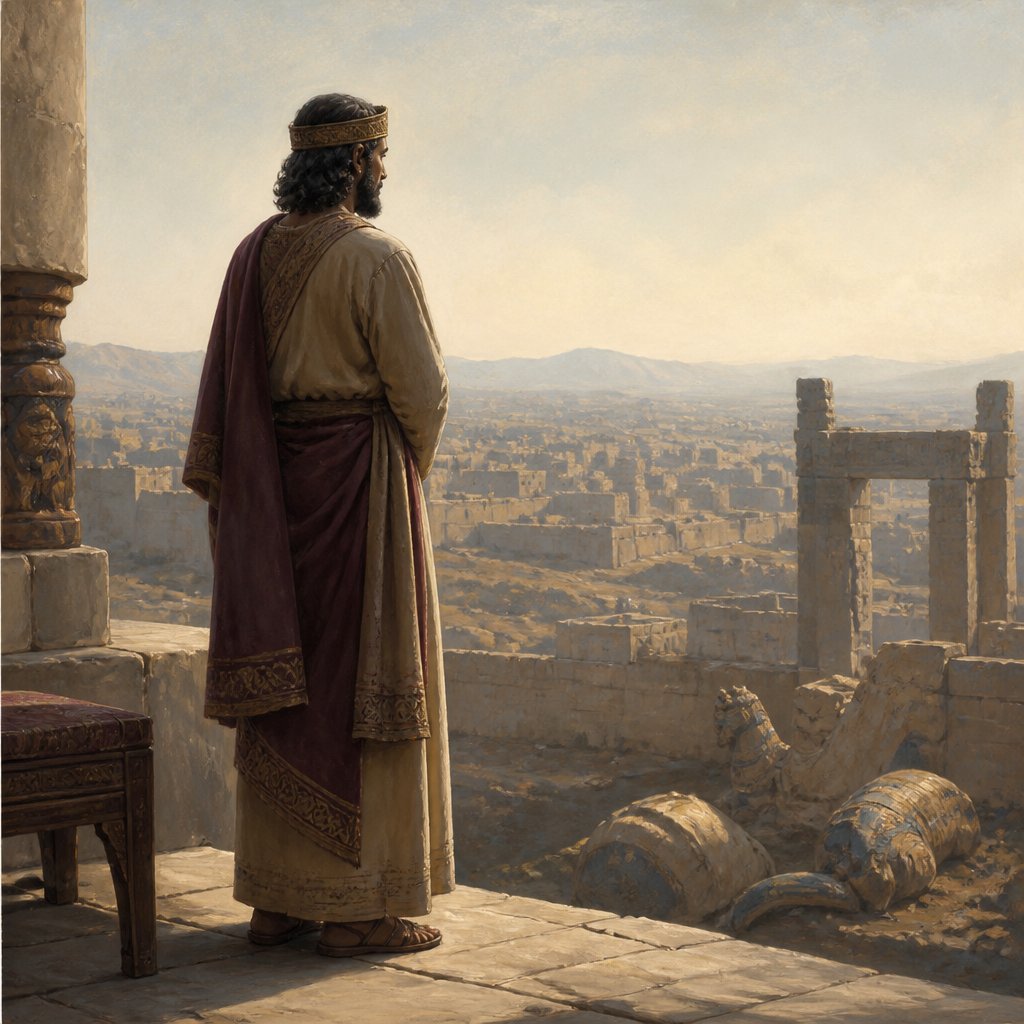
In the annals of history, we see nations rising and falling, ideologies being embraced and discarded, but throughout it all, one truth remains unquestioned: the sovereignty of our God over all creation. In 2 Kings 19:12, we find a poignant declaration from King Sennacherib of Assyria, who boldly challenged the God of Israel. He questioned the power of God, saying, “Have the gods of the nations delivered them which my fathers have destroyed; as Gozan, and Haran, and Rezeph, and the children of Eden which were in Thelasar?”
This moment serves as a powerful reminder of the futility of relying on false gods and the indispensable truth of God’s supremacy. Sennacherib’s inquiry reflects a heart filled with pride and contempt for the Almighty. He thought he could align the power of his military might with the perceived weakness of Yahweh. Yet, at the heart of his question lies a critical truth that echoes through the ages: no god that man creates can withstand the might of the One true God.
Sennacherib mentions notable cities and regions – Gozan, Haran, Rezeph, and Eden – cities that once boasted their own powerful deities. History shows us that these nations, with their idols and false worship, did not escape the judgment of God. They fell to the might of Assyria, but in their fall was not evidence of the superiority of Sennacherib’s gods; rather, it heralded the impending doom that awaited any nation that turns away from the living God. When we recount such historical narratives, as believers, we are called not to fear the rise of empires and their claims, but to remember the consistency of God’s redemptive work and His ultimate authority.
The gods of the nations Sennacherib represents are nothing more than illusions. They reflect the totality of humanity's rebellion against God. Just as the nations of old worshipped calves and Asherah poles, modern society has fashioned its own idols: materialism, celebrity culture, and ideologies that promote self over surrender to God. As we reflect on our own lives, we must ask ourselves, are there influences or ideologies we have allowed to rival our devotion to God? To what or whom are we looking for salvation, hope, and deliverance?
To look to anything but God is to misplace our confidence. Just like the nations defeated before Sennacherib, when calamity strikes, the false gods offer nothing but disappointment. The assurance of our God stands in stark contrast to these transient powers. For His faithful ones, He offers unshakeable hope. When we place our trust in Him alone, we find security that surpasses all human understanding. The remnants of past empires and the fall of mighty nations are testaments to the truth of Isaiah 40:23-24, which says that the rulers of the earth are as nothing.
What can we learn—especially in times of trouble, uncertainty, and distress? We must recognize the voice of the enemy, who seeks to taunt us and shake our faith in God. As Sennacherib cried out, he attempted to unsettle the people of Judah, evoking fear and doubt. Yet, in the face of such adversity, the faithful must respond with confidence in God’s unchanging nature.
In our prayers, we reflect upon and respond to the challenges of our times. Just as Hezekiah turned to the Lord, we are given the same privilege to lay our burdens, fears, and uncertainties before Him. When you face trials—be they personal, professional, or spiritual—declare against the lies of power and potential calamity that swirl around. What can man do to me if I am strong in faith, anchored in love, triumphant in hope?
In conclusion, let the inquiry of Sennacherib serve not to instill fear, but as a clarion call for us to reaffirm our allegiance to God. May we stand firm as witnesses to His greatness, declaring boldly that the God of Israel, the God we serve, is the only deliverer. Our hope lies not in the ‘gods’ of this world, which will surely falter, but in the One who alone saves and delivers from all harm—our God, the Living God.
Want to reflect more on 2 Kings 19:12?
Continue your spiritual journey with Bible Chat — an AI-powered tool for exploring God's Word through conversation. Ask questions, discover connections, and deepen your understanding.
Get Our Apps


2 Kings 19:12 Artwork

2 Kings 19:12 - "Have the gods of the nations delivered them which my fathers have destroyed; as Gozan, and Haran, and Rezeph, and the children of Eden which were in Thelasar?"
"Have the gods of the nations delivered them which my fathers have destroyed; as Gozan, and Haran, and Rezeph, and the children of Eden which were in Thelasar?" - 2 Kings 19:12

2 Kings 12:19 - "¶ And the rest of the acts of Joash, and all that he did, are they not written in the book of the chronicles of the kings of Judah?"

"¶ And the rest of the acts of Joash, and all that he did, are they not written in the book of the chronicles of the kings of Judah?" - 2 Kings 12:19

2 Kings 19:2

2 Kings 19:2

2 Kings 19:2

1 Kings 12:19 - "So Israel rebelled against the house of David unto this day."

2 Kings 19:17 - "Of a truth, LORD, the kings of Assyria have destroyed the nations and their lands,"

1 Kings 19:12 - "And after the earthquake a fire; but the LORD was not in the fire: and after the fire a still small voice."

2 Kings 3:16-19

2 Kings 16:19 - "¶ Now the rest of the acts of Ahaz which he did, are they not written in the book of the chronicles of the kings of Judah?"

2 Kings 19:5 - "So the servants of king Hezekiah came to Isaiah."

2 Kings 19:36 - "So Sennacherib king of Assyria departed, and went and returned, and dwelt at Nineveh."

2 Kings 19:13 - "Where is the king of Hamath, and the king of Arpad, and the king of the city of Sepharvaim, of Hena, and Ivah?"

1 Kings 19:11-12 – "The Lord said, 'Go out and stand on the mountain in the presence of the Lord, for the Lord is about to pass by.'"

1 Kings 19:11-12 – "The Lord said, 'Go out and stand on the mountain in the presence of the Lord, for the Lord is about to pass by.'"

2 Kings 12:14 - "But they gave that to the workmen, and repaired therewith the house of the LORD."

2 Kings 19:11 - "Behold, thou hast heard what the kings of Assyria have done to all lands, by destroying them utterly: and shalt thou be delivered?"
!["And after the earthquake a fire; [but] the LORD [was] not in the fire: and after the fire a still small voice." - 1 Kings 19:12](https://media.bible.art/472a453b-456d-4823-9472-470880d0f467-thumbnail.jpg)
"And after the earthquake a fire; [but] the LORD [was] not in the fire: and after the fire a still small voice." - 1 Kings 19:12

2 Kings 25:12 - "But the captain of the guard left of the poor of the land to be vinedressers and husbandmen."

2 Kings 19:2 - "And he sent Eliakim, which was over the household, and Shebna the scribe, and the elders of the priests, covered with sackcloth, to Isaiah the prophet the son of Amoz."

2 Kings 19:34 - "For I will defend this city, to save it, for mine own sake, and for my servant David's sake."

"Of a truth, LORD, the kings of Assyria have destroyed the nations and their lands," - 2 Kings 19:17

"So Israel rebelled against the house of David unto this day." - 1 Kings 12:19

2 Kings 12:16 - "The trespass money and sin money was not brought into the house of the LORD: it was the priests'."

2 Kings 12:12 - "And to masons, and hewers of stone, and to buy timber and hewed stone to repair the breaches of the house of the LORD, and for all that was laid out for the house to repair it."

2 Kings 24:19 - "And he did that which was evil in the sight of the LORD, according to all that Jehoiakim had done."

2 Kings 17:19 - "Also Judah kept not the commandments of the LORD their God, but walked in the statutes of Israel which they made."

2 Kings 12:2 - "And Jehoash did that which was right in the sight of the LORD all his days wherein Jehoiada the priest instructed him."