Trusting in the True God: A Lesson from Hezekiah’s Reforms
"But if ye say unto me, We trust in the LORD our God: is not that he, whose high places and whose altars Hezekiah hath taken away, and hath said to Judah and Jerusalem, Ye shall worship before this altar in Jerusalem?" - 2 Kings 18:22
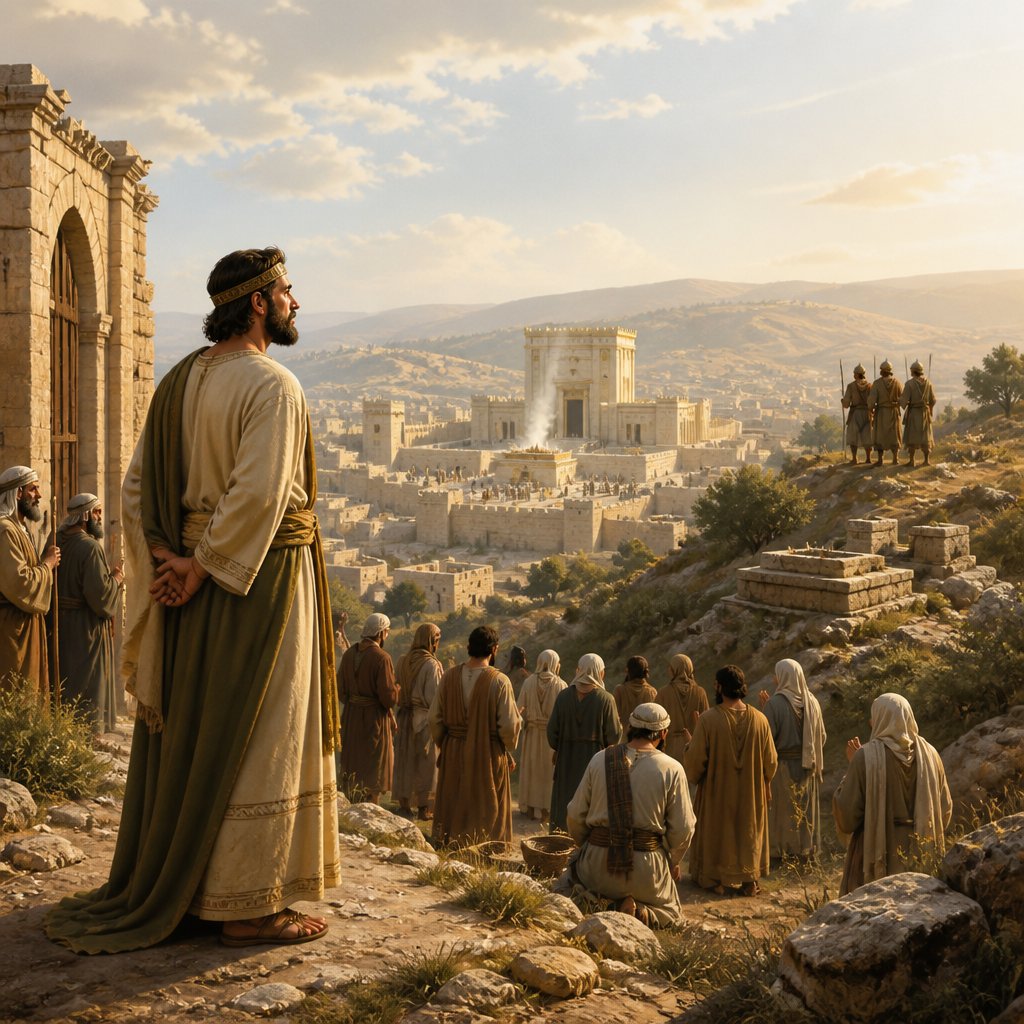
In 2 Kings 18:22, we encounter a pivotal moment in the history of Judah during the reign of King Hezekiah. The verse challenges us with a profound question:
"But if ye say unto me, We trust in the LORD our God: is not that he, whose high places and whose altars Hezekiah hath taken away, and hath said to Judah and Jerusalem, Ye shall worship before this altar in Jerusalem?"
This narrative takes place against the backdrop of an intense Assyrian threat. Sennacherib, the king of Assyria, laid siege to Judah, spreading fear and uncertainty among the people. Amidst this turmoil, Hezekiah’s actions to remove the high places and altars dedicated to false gods were driven by a faith that was unwavering in the face of adversity.
Hezekiah understood the importance of worshiping the one true God of Israel. The high places and altars represented a compromise of faith—worship practices that the people had adopted which contradicted God’s commandments. Hezekiah’s reforms aimed to return the people of Judah to genuine worship centered around God’s ordained place, the temple in Jerusalem. When we analyze his actions, we see a powerful reminder of what it means to truly put our trust in God.
Our verse poses an important rhetorical question to the people: if they profess their trust in the LORD, how can they ignore the reforms Hezekiah has initiated? This question highlights the intrinsic link between faith and practice. Trust in the Lord must manifest in the way we live our lives, how we worship, and the decisions we make. It forces us to confront our own high places—those areas in our lives where we may have compromised, where we may still be harboring disobedience or distractions from our relationship with God.
When looking at Hezekiah's reforms, we are reminded that trust in God often necessitates removing the things in our lives that are contrary to His will. The act of dismantling false altars required courage and conviction. In our lives, we are called to do the same; we must confront and eliminate anything that detracts from our relationship with God, whether that be unhealthy habits, relationships that pull us away from Him, or even misguided priorities. Trusting God means wholeheartedly committing ourselves to His path, fully embracing the worship that He desires.
In a modern context, this verse calls us to examine our own hearts. Do we trust in the Lord while holding on to the idols of our time? We live in a world full of distractions—social media, possessions, status, and influence often take precedence over our relationship with God. Like the people of Judah, we may confidently declare that we trust in God, yet we may still cling to practices and beliefs that undermine that trust. The question is, what high places have we built in our hearts that need to be taken away?
Furthermore, this verse emphasizes the community aspect of faith. Hezekiah’s reforms were not just individual; they were collective, aimed at revitalizing the entire nation’s worship. We, too, are part of a community of believers called to worship God together. We need to support and exhort one another in our faith journey. When we trust in the Lord, we call each other to move toward true worship, just as Hezekiah called the people of Judah back to the altar in Jerusalem.
Ultimately, this verse serves as a reminder that true trust in God hinges upon our willingness to align our practices with His will. May we respond to God’s question with a renewed commitment to faith that transforms our hearts and lives. Let us be a people who willingly dismantle our high places, embrace His altar, and wholeheartedly trust in the God we serve.
Want to reflect more on 2 Kings 18:22?
Continue your spiritual journey with Bible Chat — an AI-powered tool for exploring God's Word through conversation. Ask questions, discover connections, and deepen your understanding.
Get Our Apps


2 Kings 18:22 Artwork

2 Kings 18:22 - "But if ye say unto me, We trust in the LORD our God: is not that he, whose high places and whose altars Hezekiah hath taken away, and hath said to Judah and Jerusalem, Ye shall worship before this altar in Jerusalem?"
"But if ye say unto me, We trust in the LORD our God: is not that he, whose high places and whose altars Hezekiah hath taken away, and hath said to Judah and Jerusalem, Ye shall worship before this altar in Jerusalem?" - 2 Kings 18:22

2 Kings 22:18 - "But to the king of Judah which sent you to enquire of the LORD, thus shall ye say to him, Thus saith the LORD God of Israel, As touching the words which thou hast heard;"

2 Kings 14:18 - "And the rest of the acts of Amaziah, are they not written in the book of the chronicles of the kings of Judah?"
2 Kings 23:22 - "Surely there was not holden such a passover from the days of the judges that judged Israel, nor in all the days of the kings of Israel, nor of the kings of Judah;"

1 Kings 22:18 - "And the king of Israel said unto Jehoshaphat, Did I not tell thee that he would prophesy no good concerning me, but evil?"

2 Kings 1:18 - "Now the rest of the acts of Ahaziah which he did, are they not written in the book of the chronicles of the kings of Israel?"

2 Kings 13:22 - "¶ But Hazael king of Syria oppressed Israel all the days of Jehoahaz."

2 Chronicles 9:22 - "And king Solomon passed all the kings of the earth in riches and wisdom."

1 Kings 18:22 - "Then said Elijah unto the people, I, even I only, remain a prophet of the LORD; but Baal's prophets are four hundred and fifty men."

2 Kings 2:22 - "So the waters were healed unto this day, according to the saying of Elisha which he spake."

2 Kings 14:22 - "He built Elath, and restored it to Judah, after that the king slept with his fathers."

1 Kings 2:18 - "And Bath-sheba said, Well; I will speak for thee unto the king."

1 Kings 22:2 - "And it came to pass in the third year, that Jehoshaphat the king of Judah came down to the king of Israel."

2 Kings 21:22 - "And he forsook the LORD God of his fathers, and walked not in the way of the LORD."

2 Kings 8:18 - "And he walked in the way of the kings of Israel, as did the house of Ahab: for the daughter of Ahab was his wife: and he did evil in the sight of the LORD."

2 Kings 18:18 - "And when they had called to the king, there came out to them Eliakim the son of Hilkiah, which was over the household, and Shebna the scribe, and Joah the son of Asaph the recorder."

2 Kings 22:7 - "Howbeit there was no reckoning made with them of the money that was delivered into their hand, because they dealt faithfully."

1 Kings 18:2 - "And Elijah went to shew himself unto Ahab. And there was a sore famine in Samaria."

2 Kings 18:15 - "And Hezekiah gave him all the silver that was found in the house of the LORD, and in the treasures of the king's house."

2 Kings 18:36 - "But the people held their peace, and answered him not a word: for the king's commandment was, saying, Answer him not."

2 Kings 22:6 - "Unto carpenters, and builders, and masons, and to buy timber and hewn stone to repair the house."

2 Kings 15:22 - "And Menahem slept with his fathers; and Pekahiah his son reigned in his stead."

2 Kings 22:11 - "And it came to pass, when the king had heard the words of the book of the law, that he rent his clothes."

"And the rest of the acts of Amaziah, are they not written in the book of the chronicles of the kings of Judah?" - 2 Kings 14:18

2 Kings 22:2 - "And he did that which was right in the sight of the LORD, and walked in all the way of David his father, and turned not aside to the right hand or to the left."

2 Kings 3:18 - "And this is but a light thing in the sight of the LORD: he will deliver the Moabites also into your hand."

2 Kings 18:33 - "Hath any of the gods of the nations delivered at all his land out of the hand of the king of Assyria?"

2 Kings 18:5 - "He trusted in the LORD God of Israel; so that after him was none like him among all the kings of Judah, nor any that were before him."

2 Kings 22:12 - "And the king commanded Hilkiah the priest, and Ahikam the son of Shaphan, and Achbor the son of Michaiah, and Shaphan the scribe, and Asahiah a servant of the king's, saying,"