Trusting Beyond the Empty Words
"Thou sayest, (but they are but vain words,) I have counsel and strength for the war. Now on whom dost thou trust, that thou rebellest against me?" - 2 Kings 18:20
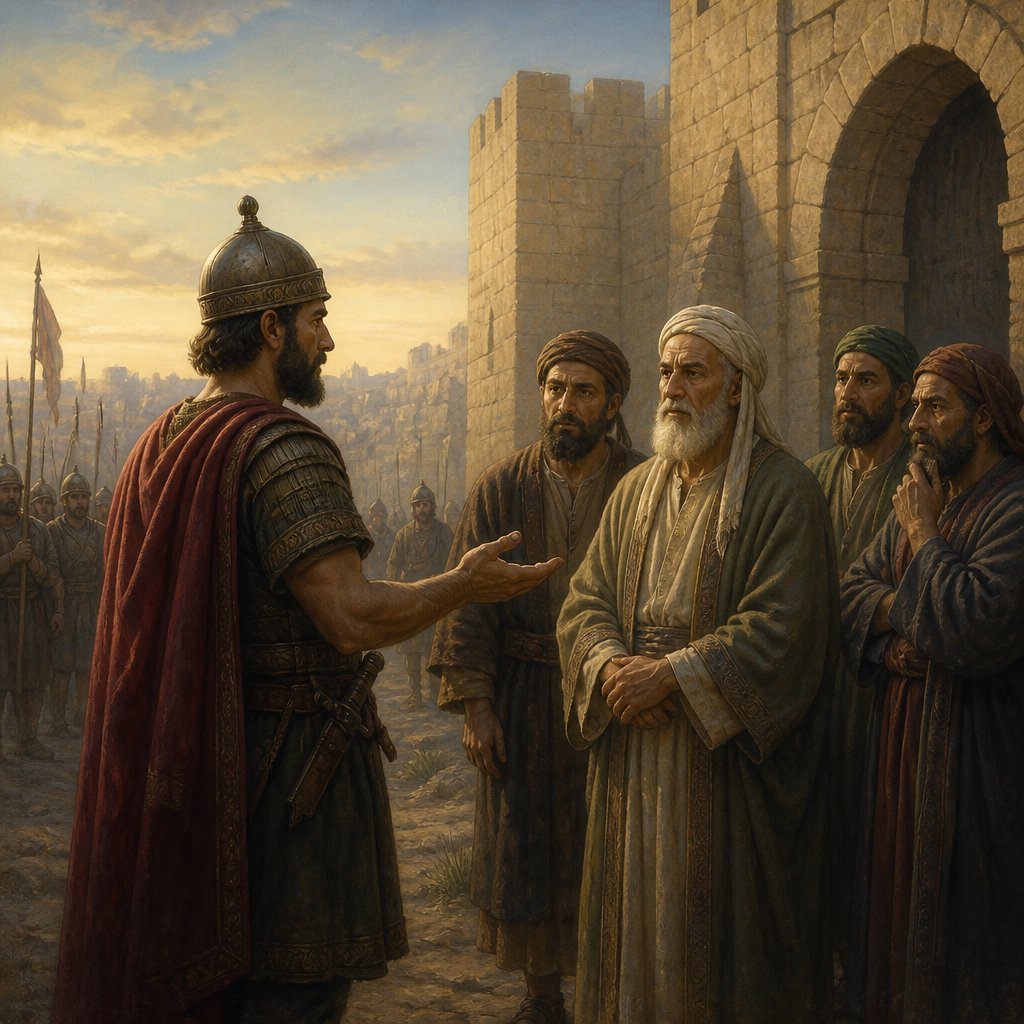
In the heart of 2 Kings 18:20, we encounter a significant moment within the turbulent reign of King Hezekiah of Judah. The verse states: “Thou sayest, (but they are but vain words,) I have counsel and strength for the war. Now on whom dost thou trust, that thou rebellest against me?” This discourse unfolds as the Assyrian king Sennacherib had invaded Judah and was seeking to instigate fear among the people. Sennacherib’s emissaries were attempting to undermine Hezekiah’s defenses not just with military might, but by eroding the faith and resolve of the citizens of Judah.
To grasp the full weight of this statement, we must consider the context. Sennacherib, known for his ruthless conquests, approached the fortified city of Jerusalem with an air of confidence. He sent scouts to shout propaganda over the walls, questioning the trustworthiness of Hezekiah and his reliance on the Lord. In his reply to Sennacherib’s representatives, Hezekiah expressed his belief in God's protection, drawing a stark contrast to the futility of the Assyrian king's army.
The phrase “but they are but vain words” serves as a piercing admonition. In this moment of desperation, the strongest statement of faith can come across as folly to those who rely on external strength, entire nations that lean on their power or political maneuvering for safety. Sennacherib’s words were indeed empty; his trust in his armies and alliances could not compare to the power of the God of Israel. The great challenge posed here is one of trust and allegiance. On what—or rather whom—do we place our trust?
When Sennacherib questions Hezekiah’s rebellion, it serves as a potent metaphor for life’s battles. Are we rebelling against worldly pressures, or are we entangled in empty promises and hollow assurances? Sennacherib assumes that military might and wisdom in counsel are sufficient, yet Hezekiah knows that true strength comes from trusting in the Lord. This trust is not merely a passive acknowledgment; it requires action and courage. It is stepping out in faith, believing that God is greater than any challenge or threat we may face.
The call here is to discern the “vain words” around us. In times of fear and uncertainty—whether in our personal lives, communities, or even our nations—there are voices that urge us to rely on human wisdom, wealth, and physical strength. “Get a bigger house, earn more money, gain more influence!” Yet these are often just as Sennacherib’s words; tempting, yet ultimately empty. They do not hold the power to save our souls or grant us peace.
Moreover, when we consider the end of the verse, “Now on whom dost thou trust, that thou rebellest against me?” it evokes a deeper reflection. Trust is not a passive act; it is a rebellion against the false idols of this world. To trust God amidst adversity is to defy the pressures that beckon us toward uncertain securities. Each confrontation with fear presents an opportunity: we can either surrender to the winds of doubt or anchor ourselves to the everlasting promises of God.
As we navigate our challenges, let us echo King Hezekiah’s resolve. His story reminds us that trust in God is a fortified fortress, stronger than any military might or wise counsel derived from the world. We must commune with God, meditate on His promises, and develop a steadfast spirit like Hezekiah’s. Let His strength be our underpinning while knowing we do not wrestle against flesh and blood but against principalities and powers.
In the grand story of God’s people, 2 Kings 18:20 invites us not to be swayed by the empty words around us. Instead, may we dare to trust deeply, finding our strength in the Lord and rebelling against falsehoods with faith that echoes through the ages. Amen.
Want to reflect more on 2 Kings 18:20?
Continue your spiritual journey with Bible Chat — an AI-powered tool for exploring God's Word through conversation. Ask questions, discover connections, and deepen your understanding.
Get Our Apps


2 Kings 18:20 Artwork

2 Kings 18:20 - "Thou sayest, (but they are but vain words,) I have counsel and strength for the war. Now on whom dost thou trust, that thou rebellest against me?"
"Thou sayest, (but they are but vain words,) I have counsel and strength for the war. Now on whom dost thou trust, that thou rebellest against me?" - 2 Kings 18:20

2 Kings 20:18 - "And of thy sons that shall issue from thee, which thou shalt beget, shall they take away; and they shall be eunuchs in the palace of the king of Babylon."

2 Chronicles 20:18

2 Kings 14:18 - "And the rest of the acts of Amaziah, are they not written in the book of the chronicles of the kings of Judah?"

2 Kings 20:20 - "¶ And the rest of the acts of Hezekiah, and all his might, and how he made a pool, and a conduit, and brought water into the city, are they not written in the book of the chronicles of the kings of Judah?"

1 Kings 18:20 - "So Ahab sent unto all the children of Israel, and gathered the prophets together unto mount Carmel."

2 Kings 20:2 - "Then he turned his face to the wall, and prayed unto the LORD, saying,"

2 Kings 1:18 - "Now the rest of the acts of Ahaziah which he did, are they not written in the book of the chronicles of the kings of Israel?"

1 Kings 20:18 - "And he said, Whether they be come out for peace, take them alive; or whether they be come out for war, take them alive."

2 Kings 2:20 - "And he said, Bring me a new cruse, and put salt therein. And they brought it to him."

2 Kings 20:16 - "And Isaiah said unto Hezekiah, Hear the word of the LORD."

2 Kings 10:20 - "And Jehu said, Proclaim a solemn assembly for Baal. And they proclaimed it."

1 Kings 2:18 - "And Bath-sheba said, Well; I will speak for thee unto the king."

2 Kings 25:20 - "And Nebuzar-adan captain of the guard took these, and brought them to the king of Babylon to Riblah:"

2 Kings 8:18 - "And he walked in the way of the kings of Israel, as did the house of Ahab: for the daughter of Ahab was his wife: and he did evil in the sight of the LORD."

2 Kings 18:18 - "And when they had called to the king, there came out to them Eliakim the son of Hilkiah, which was over the household, and Shebna the scribe, and Joah the son of Asaph the recorder."

1 Kings 18:2 - "And Elijah went to shew himself unto Ahab. And there was a sore famine in Samaria."

2 Kings 18:15 - "And Hezekiah gave him all the silver that was found in the house of the LORD, and in the treasures of the king's house."

2 Kings 18:36 - "But the people held their peace, and answered him not a word: for the king's commandment was, saying, Answer him not."
"And of thy sons that shall issue from thee, which thou shalt beget, shall they take away; and they shall be eunuchs in the palace of the king of Babylon." - 2 Kings 20:18

2 Kings 14:20 - "And they brought him on horses: and he was buried at Jerusalem with his fathers in the city of David."

2 Kings 20:21 - "And Hezekiah slept with his fathers: and Manasseh his son reigned in his stead."

2 Kings 21:20 - "And he did that which was evil in the sight of the LORD, as his father Manasseh did."

2 Kings 13:20 - "¶ And Elisha died, and they buried him. And the bands of the Moabites invaded the land at the coming in of the year."

2 Kings 20:7 - "And Isaiah said, Take a lump of figs. And they took and laid it on the boil, and he recovered."

2 Kings 11:20 - "And all the people of the land rejoiced, and the city was in quiet: and they slew Athaliah with the sword beside the king's house."

2 Kings 8:20 - "¶ In his days Edom revolted from under the hand of Judah, and made a king over themselves."

"And the rest of the acts of Amaziah, are they not written in the book of the chronicles of the kings of Judah?" - 2 Kings 14:18

2 Kings 3:18 - "And this is but a light thing in the sight of the LORD: he will deliver the Moabites also into your hand."