Generational Decisions: A Legacy of Worship
"So these nations feared the LORD, and served their graven images, both their children, and their children's children: as did their fathers, so do they unto this day." - 2 Kings 17:41
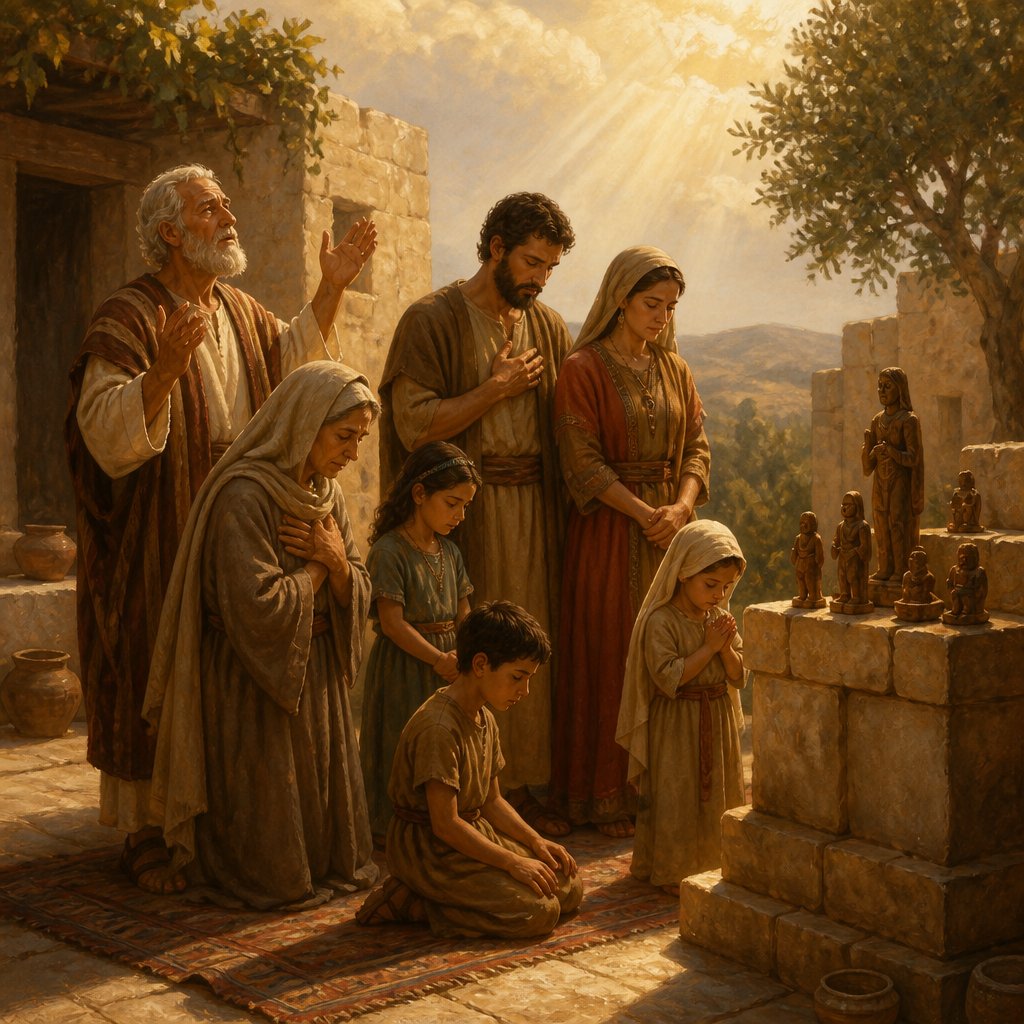
The verse from 2 Kings 17:41 reads: "So these nations feared the LORD, and served their graven images, both their children, and their children's children: as did their fathers, so do they unto this day." At first glance, we might see this as a historical account of the nations that surrounded Israel, reflecting their dual allegiance to the true God and to their idols. However, with a deeper examination, we uncover significant insights regarding the nature of worship, the legacy we pass on to future generations, and the subtle complexities of fear and service to God.
The phrase “feared the LORD” suggests a level of reverence or respect towards God. Their acknowledgment of the Lord signifies that they recognized His power and authority. But what followed is troubling: instead of fully committing to Him, they served "their graven images." This juxtaposition reflects a choice rooted in convenience and cultural identity over true faith. It highlights the human tendency to compartmentalize our beliefs, creating a facade of reverence while inwardly clinging to familiar comforts that are not of God.
As we reflect on these words, we must ask ourselves: in what ways do we acknowledge God while simultaneously holding on to our 'graven images'? In today’s context, our idols may not be physical statues but could manifest as materialism, status, relationships, or ideologies that distract us from a genuine relationship with God. These distractions dilute our worship and can lead to a generation that adopts a superficial approach to faith, merely repeating the rituals without understanding their significance or power.
This passage also infers a disturbing truth about the consequences of our choices—it speaks to the idea of generational sin. The actions of the fathers resulted in an ongoing legacy—"both their children, and their children's children" followed in their footsteps. This indicates that our decisions do not merely affect us; they resonate through generations. Sometimes, without explicit intention, we can pass down spiritual apathy and a lack of true devotion to our children. This reality reminds us of the weight of our discipleship in our households.
As parents, guardians, and mentors, we hold a sacred responsibility to model authentic worship. Our practices should align with our declaration of faith. If we allow superficiality to take root in our hearts, we must consider what we are teaching the next generation about faith in God. Are we merely fulfilling the role of ‘church-goers’ or do we demonstrate a living faith that shows our children the joy, peace, and transformative power of a true relationship with Christ?
Moreover, the mention of "as did their fathers, so do they unto this day" also hints at the dangers of a culture of disengagement. If we grow comfortable with a fragmented faith, then our children may also find it normal to pick and choose their faith practices based on convenience or peer influence. The cycle continues, and the genuine fear of the Lord can dwindle into a ritualistic formality devoid of heart.
Thus, we must strive for a faith that is continuously rekindled, seeking deeply and authentically the presence of God. Let us challenge ourselves to assess what we are modeling and ensure that our legacy is an unwavering commitment to the Lord of Heaven and Earth. Acts of prayer, worship, and service should be evident in our lives, shaping the next generation’s understanding of God not through doctrines alone but through demonstrable love and faithfulness.
In conclusion, the essence of 2 Kings 17:41 serves as a stark reminder of our spiritual legacy. Will our children see us as those who fear the Lord with reverence and true devotion? Or will they only observe a dichotomy—worship of the Lord mingled with the embrace of trivial idols? May we seek the Lord wholeheartedly and pass on a faith that boldly stands resolved to honor Him above all. Let us commit ourselves anew to authentic worship, ensuring that our legacies lead others towards the true light, Christ Jesus.
Want to reflect more on 2 Kings 17:41?
Continue your spiritual journey with Bible Chat — an AI-powered tool for exploring God's Word through conversation. Ask questions, discover connections, and deepen your understanding.
Get Our Apps


2 Kings 17:41 Artwork

2 Kings 17:41 - "So these nations feared the LORD, and served their graven images, both their children, and their children's children: as did their fathers, so do they unto this day."
"So these nations feared the LORD, and served their graven images, both their children, and their children's children: as did their fathers, so do they unto this day." - 2 Kings 17:41

1 Kings 2:41 - "And it was told Solomon that Shimei had gone from Jerusalem to Gath, and was come again."

2 Kings 17:2 - "And he did that which was evil in the sight of the LORD, but not as the kings of Israel that were before him."

2 Kings 19:17 - "Of a truth, LORD, the kings of Assyria have destroyed the nations and their lands,"

2 Kings 4:41 - "But he said, Then bring meal. And he cast it into the pot; and he said, Pour out for the people, that they may eat. And there was no harm in the pot."

1 Kings 17:2 - "And the word of the LORD came unto him, saying,"

2 Kings 17:40 - "Howbeit they did not hearken, but they did after their former manner."

2 Kings 17:8 - "And walked in the statutes of the heathen, whom the LORD cast out from before the children of Israel, and of the kings of Israel, which they had made."

2 Kings 21:17 - "¶ Now the rest of the acts of Manasseh, and all that he did, and his sin that he sinned, are they not written in the book of the chronicles of the kings of Judah?"

"And it was told Solomon that Shimei had gone from Jerusalem to Gath, and was come again." - 1 Kings 2:41

2 Kings 17:17 - "And they caused their sons and their daughters to pass through the fire, and used divination and enchantments, and sold themselves to do evil in the sight of the LORD, to provoke him to anger."

"And he did that which was evil in the sight of the LORD, but not as the kings of Israel that were before him." - 2 Kings 17:2

"Of a truth, LORD, the kings of Assyria have destroyed the nations and their lands," - 2 Kings 19:17

Job 41:17 - "They are joined one to another, they stick together, that they cannot be sundered."

2 Kings 17:19 - "Also Judah kept not the commandments of the LORD their God, but walked in the statutes of Israel which they made."

2 Kings 17:5 - "¶ Then the king of Assyria came up throughout all the land, and went up to Samaria, and besieged it three years."

2 Kings 24:17 - "¶ And the king of Babylon made Mattaniah his father's brother king in his stead, and changed his name to Zedekiah."

2 Kings 17:22 - "For the children of Israel walked in all the sins of Jeroboam which he did; they departed not from them;"

2 Kings 17:12 - "For they served idols, whereof the LORD had said unto them, Ye shall not do this thing."

2 Kings 17:14 - "Notwithstanding they would not hear, but hardened their necks, like to the neck of their fathers, that did not believe in the LORD their God."

2 Kings 11:17 - "¶ And Jehoiada made a covenant between the LORD and the king and the people, that they should be the LORD'S people; between the king also and the people."

2 Kings 17:3 - "Against him came up Shalmaneser king of Assyria; and Hoshea became his servant, and gave him presents."

2 Kings 17:10 - "And they set them up images and groves in every high hill, and under every green tree:"

2 Kings 14:17 - "¶ And Amaziah the son of Joash king of Judah lived after the death of Jehoash son of Jehoahaz king of Israel fifteen years."

Jeremiah 41:17 (KJVA) 17 And they departed, and dwelt in the habitation of Chimham, which is by Bethlehem, to go to enter into Egypt,

2 Kings 2:17 - "And when they urged him till he was ashamed, he said, Send. They sent therefore fifty men; and they sought three days, but found him not."

2 Kings 6:17 – "And Elisha prayed, 'Open his eyes, Lord, so that he may see.' Then the Lord opened the servant’s eyes."

2 Kings 17:1 - "In the twelfth year of Ahaz king of Judah began Hoshea the son of Elah to reign in Samaria over Israel nine years."

2 Kings 17:33 - "They feared the LORD, and served their own gods, after the manner of the nations whom they carried away from thence."