The Heart of Worship: Understanding Sacrifice in Our Offerings
"And he burnt his burnt offering and his meat offering, and poured his drink offering, and sprinkled the blood of his peace offerings, upon the altar." - 2 Kings 16:13
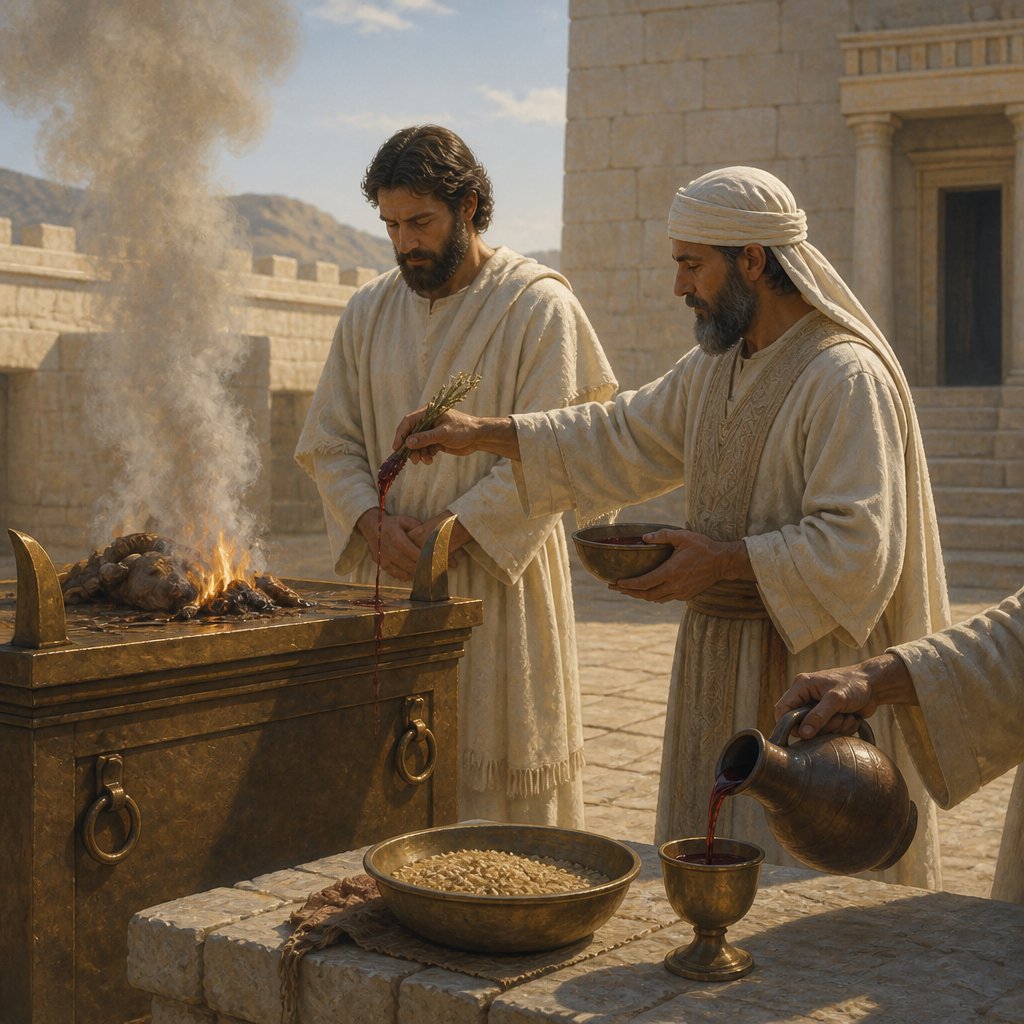
In 2 Kings 16:13, we encounter a moment in the life of King Ahaz that reveals profound truths about the nature of worship and sacrifice. The verse reads, "And he burnt his burnt offering, and his meat offering, and poured his drink offering, and sprinkled the blood of his peace offerings, upon the altar." (2 Kings 16:13 KJV) This description of Ahaz's sacrifices invites us to delve deeper into the significance of what it means to offer to God, and how these acts can reflect the posture of our hearts.
### Context of Sacrifice
King Ahaz reigned during a tumultuous time in the kingdom of Judah. Surrounded by conflict and influenced by idolatrous practices, Ahaz ultimately turned away from the ways of the Lord. The offerings he presented, although appearing ritualistically correct, stemmed not from a heart aligned with God, but from desperation for strength and approval from foreign nations. His actions underscore a crucial underlying principle: true worship is not confined to ritual acts; it must originate from a heart wholly devoted to God.
### The Burnt Offering
The burnt offering (olah) was wholly consumed by fire, symbolizing total surrender and commitment to God. As we reflect on our own lives, we must question: Are we offering God our whole selves? Romans 12:1 exhorts us, "I beseech you therefore, brethren, by the mercies of God, that ye present your bodies a living sacrifice, holy, acceptable unto God, which is your reasonable service" (Romans 12:1 KJV). Our worship extends beyond the songs we sing or the prayers we utter; it encompasses our daily choices and sacrifices. In what ways can we burn away our pride, selfish desires, and preoccupations, laying our lives entirely before God?
### The Meat Offering
Next, we see Ahaz pouring out the meat offering (minchah). The meat offering was traditionally associated with gratitude and devotion to God. It can be viewed as an expression of our talents and the fruits of our labor. When we present our offerings to God, whether through our time, resources, or skills, it is an acknowledgment of His provision and sovereignty over our lives. This leads us to consider how well we steward the gifts He has given us. Do we offer them back in service to His kingdom, or do we hide them away in fear or neglect?
### The Drink Offering
Ahaz also poured a drink offering (nisach) on the altar. This act, rich with symbolism, represents the abundance and joy in serving God. It is a statement of celebration and dedication. How often do we approach our relationship with God with joy? Are our offerings accompanied by gratitude that acknowledges not only what He has done but also His unchanging nature? A drink offering invites us to cultivate an attitude of celebration in our worship, allowing our hearts to overflow with thankfulness, even in challenges.
### The Peace Offerings
Lastly, Ahaz sprinkled the blood of his peace offerings (shelamim). This act was fundamental in reaffirming the covenant relationship with God, representing reconciliation and peace between the worshipper and the divine. In our walk with Christ, we have been granted peace through His sacrifice. Are we living in that peace and sharing it with others? Jesus calls us to be peacemakers, fostering harmony in our relationships and communities. Are we extending our peace offerings to those around us, actively engaging in reconciliation and love?
### Conclusion
While King Ahaz’s sacrifices were presented outwardly in proper form, they lacked the heart of true worship. May we learn from this lesson as we navigate our own lives. Let us not simply perform rituals; instead, let every burnt offering, meat offering, drink offering, and peace offering originate from a heart that is truly devoted to God. Worship is deeply relational, grounded in our understanding of His love and sacrifice. As we offer our lives to Him, may our sacrifices reflect a genuine desire to draw closer to Him, honoring Him not just in ritual, but in spirit and truth.
Want to reflect more on 2 Kings 16:13?
Continue your spiritual journey with Bible Chat — an AI-powered tool for exploring God's Word through conversation. Ask questions, discover connections, and deepen your understanding.
Get Our Apps


2 Kings 16:13 Artwork

2 Kings 16:13 - "And he burnt his burnt offering and his meat offering, and poured his drink offering, and sprinkled the blood of his peace offerings, upon the altar."
"And he burnt his burnt offering and his meat offering, and poured his drink offering, and sprinkled the blood of his peace offerings, upon the altar." - 2 Kings 16:13

2 Kings 13:16 - "And he said to the king of Israel, Put thine hand upon the bow. And he put his hand upon it: and Elisha put his hands upon the king's hands."

Proverbs 16:13 - "Righteous lips are the delight of kings; and they love him that speaketh right."

2 Kings 13:13 - "And Joash slept with his fathers; and Jeroboam sat upon his throne: and Joash was buried in Samaria with the kings of Israel."

2 Kings 16:16 - "Thus did Urijah the priest, according to all that king Ahaz commanded."

2 Kings 3:16-19

2 Kings 16:19 - "¶ Now the rest of the acts of Ahaz which he did, are they not written in the book of the chronicles of the kings of Judah?"

2 Kings 14:16 - "And Jehoash slept with his fathers, and was buried in Samaria with the kings of Israel; and Jeroboam his son reigned in his stead."

2 Kings 13:22 - "¶ But Hazael king of Syria oppressed Israel all the days of Jehoahaz."

2 Kings 6:16 - "And he answered, Fear not: for they that be with us are more than they that be with them."

2 Kings 20:16 - "And Isaiah said unto Hezekiah, Hear the word of the LORD."

2 Kings 13:8 - "¶ Now the rest of the acts of Jehoahaz, and all that he did, and his might, are they not written in the book of the chronicles of the kings of Israel?"

2 Kings 12:16 - "The trespass money and sin money was not brought into the house of the LORD: it was the priests'."

2 Chronicles 28:16 - "¶ At that time did king Ahaz send unto the kings of Assyria to help him."

2 Kings 19:13 - "Where is the king of Hamath, and the king of Arpad, and the king of the city of Sepharvaim, of Hena, and Ivah?"
"Righteous lips are the delight of kings; and they love him that speaketh right." - Proverbs 16:13

2 Kings 3:16 - "And he said, Thus saith the LORD, Make this valley full of ditches."

1 Kings 13:16 - "And he said, I may not return with thee, nor go in with thee: neither will I eat bread nor drink water with thee in this place:"
1 Kings 16:13 - "For all the sins of Baasha, and the sins of Elah his son, by which they sinned, and by which they made Israel to sin, in provoking the LORD God of Israel to anger with their vanities."

2 Kings 2:13 - "He took up also the mantle of Elijah that fell from him, and went back, and stood by the bank of Jordan;"

2 Kings 16:1 - "In the seventeenth year of Pekah the son of Remaliah Ahaz the son of Jotham king of Judah began to reign."

2 Kings 16:8 - "And Ahaz took the silver and gold that was found in the house of the LORD, and in the treasures of the king's house, and sent it for a present to the king of Assyria."

"Thus did Urijah the priest, according to all that king Ahaz commanded." - 2 Kings 16:16

2 Kings 13:12 - "And the rest of the acts of Joash, and all that he did, and his might wherewith he fought against Amaziah king of Judah, are they not written in the book of the chronicles of the kings of Israel?"

2 Kings 16:12 - "And when the king was come from Damascus, the king saw the altar: and the king approached to the altar, and offered thereon."

2 Chronicles 13:16 - "And the children of Israel fled before Judah: and God delivered them into their hand."

2 Kings 16:4 - "And he sacrificed and burnt incense in the high places, and on the hills, and under every green tree."

2 Kings 16:18 - "And the covert for the sabbath that they had built in the house, and the king's entry without, turned he from the house of the LORD for the king of Assyria."

2 Kings 13:20 - "¶ And Elisha died, and they buried him. And the bands of the Moabites invaded the land at the coming in of the year."