The Weight of Power: A Reflection on Menahem's Rise
"For Menahem the son of Gadi went up from Tirzah, and came to Samaria, and smote Shallum the son of Jabesh in Samaria, and slew him, and reigned in his stead." - 2 Kings 15:14
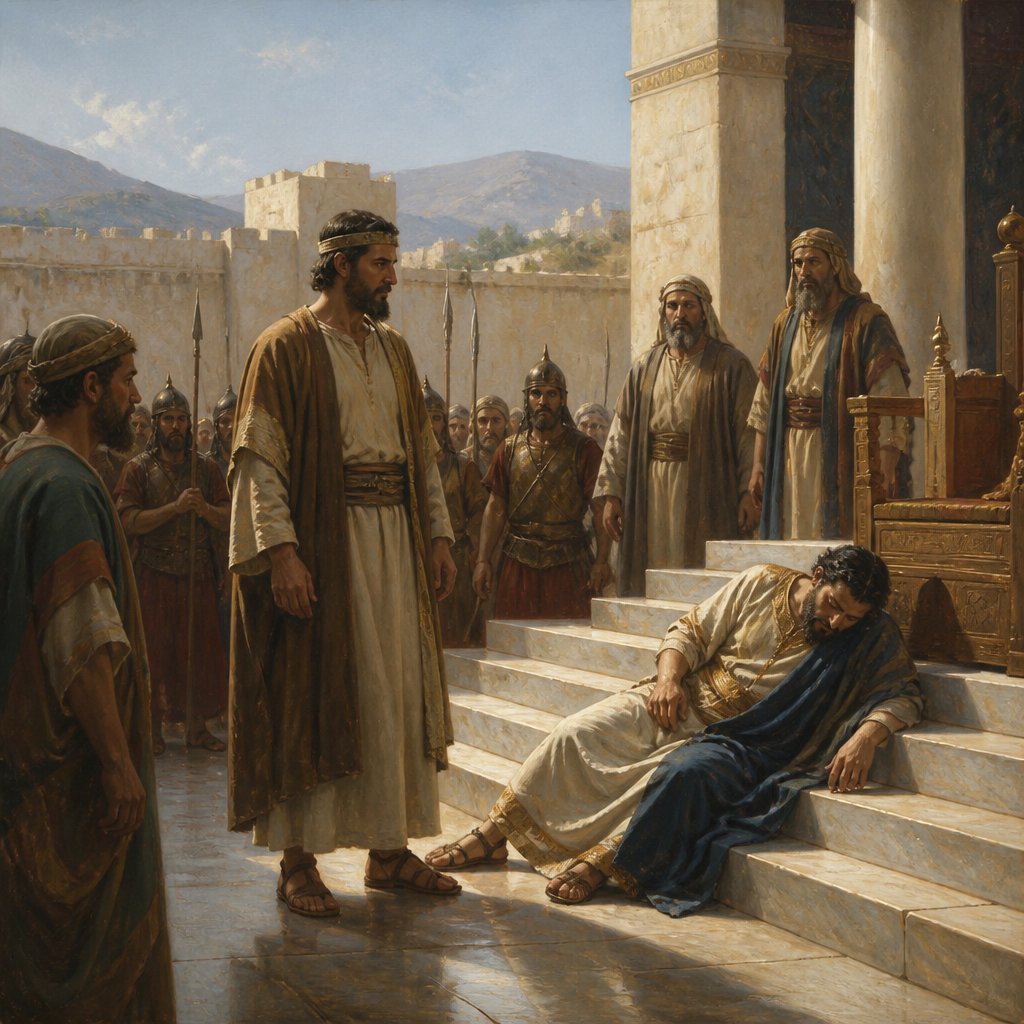
In 2 Kings 15:14, we witness a stark moment of political intrigue and bloodshed: "For Menahem the son of Gadi went up from Tirzah, and came to Samaria, and smote Shallum the son of Jabesh in Samaria, and slew him, and reigned in his stead." This passage encapsulates the raw struggle for power in ancient Israel, a struggle that is not only historical but also deeply reflective of our own hearts and the world we inhabit today.
Menahem’s ascent to the throne is a potent reminder of the lengths to which leaders may go to secure their positions. Menahem’s journey from Tirzah to Samaria wasn’t just a physical transition; it symbolized his ambition and intent. He didn’t merely intend to challenge Shallum; he was prepared to eliminate him. This act of aggression raises profound questions about the nature of authority and the character of those who pursue it. Would Menahem’s reign be marked by tyranny born of violence, or could it foster stability?
As we delve deeper into this account, we must consider the broader context. During Menahem's time, Israel was steeped in political upheaval and moral decay. Previous kings had led the nation away from the ways of God, embracing idolatry and disobedience. Each transition of power was often accompanied by bloodshed, serving as a grim reminder of the corruption that ensnires mankind when reign is sought without divine guidance. The actions of Menahem reflect a critical truth: when men place their ambitions above God’s purposes, the results can be disastrous for a nation.
In our contemporary world, we witness similar struggles for power. Nations experience coups, political assassinations, and corruption, often as individuals strive to establish or retain control. Our hearts can also mirror this longing for power; we are tempted to manipulate circumstances or relationships to gain our desired influence or position. However, Menahem’s bloody ascent encourages us to reflect on our own motivations.
What motivates our actions? Are we pursuing positions of authority to reflect God's glory, or are we driven by personal ambition? Do we engage in our daily lives with integrity, seeking to uplift others, or do we maneuver to bring about our own success at the expense of those around us? The story of Menahem reminds us that the thirst for power must be tempered with a reverence for God, and a commitment to justice and righteousness.
Consider the heart of God in the face of such ambition. Throughout Scripture, we see God’s preference not for the mighty, but for the humble. Jesus taught that the greatest among us would be those who serve others (Matthew 23:11). Menahem’s violent takeover starkly contrasts God’s call to love, serve, and lead with a servant's heart. Rather than seeking our own elevation, we are called to pursue the good of others and build them up in faith.
Finally, as we reflect on this passage, let's be mindful of the consequences of our actions. The reign of a king like Menahem can bring temporary power, but it can also sow seeds of discord that may lead to greater turmoil. History teaches us that leadership should be approached with humility, as it bears profound responsibility for the people under our care.
In conclusion, let us remember that power is not an end in itself, but a means to fulfill God's purposes. Before we aspire to climb any ladder of authority, let us first seek His kingdom and righteousness (Matthew 6:33). The rise and fall of leaders throughout history remind us to hold firmly to God, our true source of strength and wisdom. May we strive to lead with a heart aligned to His will, seeking not our glory, but His. In our own spheres of influence, let us commit to the ethos of servanthood, embodying the principles of love, justice, and integrity that God calls us to display as His representatives.
Want to reflect more on 2 Kings 15:14?
Continue your spiritual journey with Bible Chat — an AI-powered tool for exploring God's Word through conversation. Ask questions, discover connections, and deepen your understanding.
Get Our Apps


2 Kings 15:14 Artwork

2 Kings 15:14 - "For Menahem the son of Gadi went up from Tirzah, and came to Samaria, and smote Shallum the son of Jabesh in Samaria, and slew him, and reigned in his stead."
"For Menahem the son of Gadi went up from Tirzah, and came to Samaria, and smote Shallum the son of Jabesh in Samaria, and slew him, and reigned in his stead." - 2 Kings 15:14
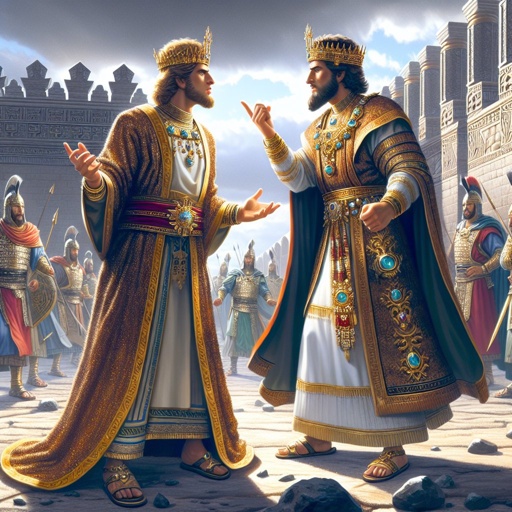
2 Kings 14:15 - "¶ Now the rest of the acts of Jehoash which he did, and his might, and how he fought with Amaziah king of Judah, are they not written in the book of the chronicles of the kings of Israel?"

2 Kings 15:15 - "And the rest of the acts of Shallum, and his conspiracy which he made, behold, they are written in the book of the chronicles of the kings of Israel."

2 Kings 14:18 - "And the rest of the acts of Amaziah, are they not written in the book of the chronicles of the kings of Judah?"

2 Kings 3:15

2 Kings 3:15

2 Kings 3:15

2 Kings 15:11 - "And the rest of the acts of Zachariah, behold, they are written in the book of the chronicles of the kings of Israel."

1 Kings 15:14 - "But the high places were not removed: nevertheless Asa's heart was perfect with the LORD all his days."
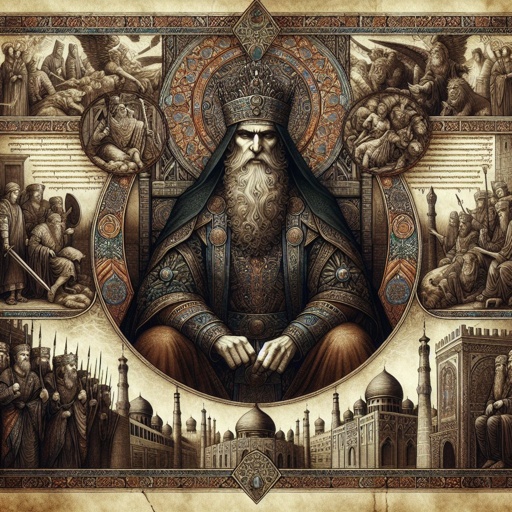
2 Kings 15:6 - "And the rest of the acts of Azariah, and all that he did, are they not written in the book of the chronicles of the kings of Judah?"

2 Kings 15:21 - "¶ And the rest of the acts of Menahem, and all that he did, are they not written in the book of the chronicles of the kings of Israel?"

2 Kings 15:31 - "And the rest of the acts of Pekah, and all that he did, behold, they are written in the book of the chronicles of the kings of Israel."

2 Kings 15:36 - "¶ Now the rest of the acts of Jotham, and all that he did, are they not written in the book of the chronicles of the kings of Judah?"

2 Kings 15:26 - "And the rest of the acts of Pekahiah, and all that he did, behold, they are written in the book of the chronicles of the kings of Israel."

"¶ Now the rest of the acts of Jehoash which he did, and his might, and how he fought with Amaziah king of Judah, are they not written in the book of the chronicles of the kings of Israel?" - 2 Kings 14:15

2 Kings 14:29 - "And Jeroboam slept with his fathers, even with the kings of Israel; and Zachariah his son reigned in his stead."

2 Kings 12:14 - "But they gave that to the workmen, and repaired therewith the house of the LORD."

2 Kings 14:16 - "And Jehoash slept with his fathers, and was buried in Samaria with the kings of Israel; and Jeroboam his son reigned in his stead."

2 Kings 14:14 - "And he took all the gold and silver, and all the vessels that were found in the house of the LORD, and in the treasures of the king's house, and hostages, and returned to Samaria."

2 Kings 15:29 show the army and attack

2 Kings 14:22 - "He built Elath, and restored it to Judah, after that the king slept with his fathers."

2 Kings 18:15 - "And Hezekiah gave him all the silver that was found in the house of the LORD, and in the treasures of the king's house."

2 Chronicles 15:14 - "And they sware unto the LORD with a loud voice, and with shouting, and with trumpets, and with cornets."

2 Kings 14:12 - "And Judah was put to the worse before Israel; and they fled every man to their tents."

2 Kings 15:22 - "And Menahem slept with his fathers; and Pekahiah his son reigned in his stead."

2 Kings 14:20 - "And they brought him on horses: and he was buried at Jerusalem with his fathers in the city of David."

2 Kings 15:1 - "In the twenty and seventh year of Jeroboam king of Israel began Azariah son of Amaziah king of Judah to reign."

"And the rest of the acts of Amaziah, are they not written in the book of the chronicles of the kings of Judah?" - 2 Kings 14:18

"And the rest of the acts of Shallum, and his conspiracy which he made, behold, they are written in the book of the chronicles of the kings of Israel." - 2 Kings 15:15