Victory in Obscurity: Lessons from King Amaziah
"He slew of Edom in the valley of salt ten thousand, and took Selah by war, and called the name of it Joktheel unto this day." - 2 Kings 14:7

In the annals of biblical history, certain verses stand out not just for their narrative brevity but for their profound implications on faith, leadership, and God's providence. One such verse is found in 2 Kings 14:7, where we read: "He slew of Edom in the valley of salt ten thousand, and took Selah by war, and called the name of it Joktheel unto this day" (KJV). This verse encapsulates the story of King Amaziah of Judah, and within it, we can extract rich spiritual lessons that resonate with our lives today.
**The Context of Victory**
To fully grasp the meaning behind this verse, we must first appreciate the context in which it was written. King Amaziah, following in the footsteps of his father Joash, had a reign marked by both reform and collapse. Though he began with zeal for worshiping the Lord, he faltered later, leading to disastrous consequences. The mention of his victory over Edom, however, stands as a testament to a period when he relied on God’s strength to achieve what seemed insurmountable.
In our journey of faith, we, too, encounter 'valleys of salt'—areas in our lives that may feel barren, desolate, and void of hope. It is in these valleys that God often prepares us for victories we could not achieve on our own. Like Amaziah, we must remember that our successes do not stem from our might or intellect but from reliance on God's power. Reflect on your personal struggles and consider how God has shown up in times when you felt utterly defeated.
**The Significance of Selah**
Amaziah's conquest in the 'valley of salt' and his capture of Selah, which he renamed Joktheel, points to the importance of new beginnings and transformation. Selah, a city of significance, represents the places we conquer in our lives. The act of naming it Joktheel is symbolic—arising from a place of conflict and strife to one of hope and renewal.
In your life, think about the ‘Selah’ moments. What are those areas where God has brought victory despite the battles you faced? Are there places in your life that you need to rename from defeat to victory? Just as Amaziah redefined Selah, we can redefine our struggles—seeing them as stepping stones rather than stumbling blocks.
**The Call to Remember**
Moreover, the ending of the verse, "and called the name of it Joktheel unto this day,” emphasizes the importance of remembering and sharing our victories. In modern times, we often forget the lessons learned from our past encounters with God. We live in a fast-paced world where gratitude and reflection are seldom prioritized. Yet, remembering our past victories serves as spiritual encouragement in times of present uncertainty. It not only reinforces our faith but also serves as a testimony to others of God’s faithfulness.
In your prayer time, consider journaling your victories. Acknowledge the ways God has worked in your life—both in the grand victories and the subtle shifts in your daily routine. Share these stories with others; they could be the lifeline someone else needs in their valley.
**Conclusion**
Amaziah’s success against Edom and the renaming of Selah to Joktheel was more than just a military triumph; it symbolized the faithfulness of God to those who trust in Him, even through their struggles. As we navigate through our valleys of salt, let us hold tightly to the promise that God is our deliverer, capable of transforming our challenges into testimonies.
Remember this: victory is not always about the external battles we face, but rather about the internal growth that often comes from those struggles. Therefore, as we study 2 Kings 14:7, let it inspire us to seek God earnestly in our challenging times, to believe in His power to bring about new beginnings, and to always commemorate the ‘Joktheels’ in our lives.
Want to reflect more on 2 Kings 14:7?
Continue your spiritual journey with Bible Chat — an AI-powered tool for exploring God's Word through conversation. Ask questions, discover connections, and deepen your understanding.
Get Our Apps


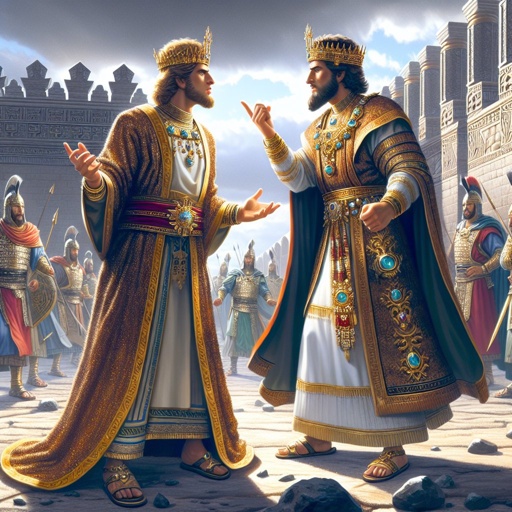
2 Kings 14:7 Artwork

2 Kings 14:7 - "He slew of Edom in the valley of salt ten thousand, and took Selah by war, and called the name of it Joktheel unto this day."

"He slew of Edom in the valley of salt ten thousand, and took Selah by war, and called the name of it Joktheel unto this day." - 2 Kings 14:7

2 Kings 7:14 - "They took therefore two chariot horses; and the king sent after the host of the Syrians, saying, Go and see."

2 Kings 7:2

2 Kings 14:18 - "And the rest of the acts of Amaziah, are they not written in the book of the chronicles of the kings of Judah?"

"They took therefore two chariot horses; and the king sent after the host of the Syrians, saying, Go and see." - 2 Kings 7:14

2 Kings 14:29 - "And Jeroboam slept with his fathers, even with the kings of Israel; and Zachariah his son reigned in his stead."

2 chronicles 7:14

2 chronicles 7:14

2 Kings 12:14 - "But they gave that to the workmen, and repaired therewith the house of the LORD."

2 Kings 14:16 - "And Jehoash slept with his fathers, and was buried in Samaria with the kings of Israel; and Jeroboam his son reigned in his stead."

2 Kings 14:14 - "And he took all the gold and silver, and all the vessels that were found in the house of the LORD, and in the treasures of the king's house, and hostages, and returned to Samaria."

2 Kings 7:11 - "And he called the porters; and they told it to the king's house within."

2 Kings 7:7 - "Wherefore they arose and fled in the twilight, and left their tents, and their horses, and their asses, even the camp as it was, and fled for their life."

2 Kings 14:22 - "He built Elath, and restored it to Judah, after that the king slept with his fathers."

2 Kings 14:12 - "And Judah was put to the worse before Israel; and they fled every man to their tents."
2 Kings 14:15 - "¶ Now the rest of the acts of Jehoash which he did, and his might, and how he fought with Amaziah king of Judah, are they not written in the book of the chronicles of the kings of Israel?"

2 Kings 2:7 - "And fifty men of the sons of the prophets went, and stood to view afar off: and they two stood by Jordan."

2 Kings 14:20 - "And they brought him on horses: and he was buried at Jerusalem with his fathers in the city of David."

"And the rest of the acts of Amaziah, are they not written in the book of the chronicles of the kings of Judah?" - 2 Kings 14:18

2 Kings 14:1 - "In the second year of Joash son of Jehoahaz king of Israel reigned Amaziah the son of Joash king of Judah."

2 Kings 25:14 - "And the pots, and the shovels, and the snuffers, and the spoons, and all the vessels of brass wherewith they ministered, took they away."

1 Kings 14:7 - "Go, tell Jeroboam, Thus saith the LORD God of Israel, Forasmuch as I exalted thee from among the people, and made thee prince over my people Israel,"

1 Kings 2:14 - "He said moreover, I have somewhat to say unto thee. And she said, Say on."

2 Kings 17:14 - "Notwithstanding they would not hear, but hardened their necks, like to the neck of their fathers, that did not believe in the LORD their God."

Humble ourselves and pray 2 Chronicles 7:14

2 Kings 20:7 - "And Isaiah said, Take a lump of figs. And they took and laid it on the boil, and he recovered."

2 Kings 22:7 - "Howbeit there was no reckoning made with them of the money that was delivered into their hand, because they dealt faithfully."

2 Kings 14:17 - "¶ And Amaziah the son of Joash king of Judah lived after the death of Jehoash son of Jehoahaz king of Israel fifteen years."

2 Kings 6:14 - "Therefore sent he thither horses, and chariots, and a great host: and they came by night, and compassed the city about."