The Legacy of Leadership: Lessons from Jeroboam’s Reign and His Succession
"And Jeroboam slept with his fathers, even with the kings of Israel; and Zachariah his son reigned in his stead." - 2 Kings 14:29

In the book of 2 Kings, we encounter a pivotal moment in Israel's history with the verse: "And Jeroboam slept with his fathers, even with the kings of Israel; and Zachariah his son reigned in his stead." (2 Kings 14:29, KJV). This simple historical statement carries profound implications about leadership, legacy, and the cycles of history.
Jeroboam II, the king referred to, was a significant figure in Israel's divided monarchy. He reigned during a time of relative peace and prosperity, as well as territorial expansion. His reign was marked by military victories and economic growth, restoring the borders of Israel reminiscent of the days of Solomon. However, despite these external achievements, Jeroboam's legacy is tainted by spiritual failure, as he led the Israelites into idolatry. This duality is crucial for understanding the Bible's teachings on the nature of true leadership.
Looming over Jeroboam's achievements was the critical matter of faithfulness to God. Idolatry was a persistent issue among the kings of Israel, and Jeroboam II was complicit in establishing a pattern that would indeed affect his son, Zachariah. The legacy we leave can either be a blessing or a curse. Jeroboam's actions cultivated a ground where idolatry could flourish, setting a trajectory for his descendants and the nation as a whole.
As we meditate on Jeroboam’s reign, it prompts us to examine our definitions of success, particularly in leadership roles. Are we measuring success by external achievements such as power, wealth, and popularity, or is our metric aligned with faithfulness to God's commands? Our leadership should inspire future generations not merely through accolades, but through a commitment to integrity and godliness.
Zachariah's ascension to the throne signifies the continuation of a legacy. However, it is essential to recognize that this legacy was not one of pure virtue. As the son of Jeroboam, Zachariah inherited both the blessings and the curses that came with his father’s life choices. This is a sobering reminder that the actions of leaders have lasting impacts that extend far beyond their reigns.
In our lives today, we are all leaders in some capacity—be it in our families, workplaces, or communities. The example we set creates ripples that influence those who follow us, much like the reign of Jeroboam shaped the destiny of Israel. This leads to the question of what kind of legacy we are crafting as we lead.
The narrative encourages us to pursue a genuine relationship with God, ensuring that our leadership reflects divine principles rather than personal ambition. While Jeroboam II might have enjoyed a fruitful reign in certain respects, his failure in spiritual leadership illustrates the tension between worldly success and spiritual fidelity. We must strive to align our ambitions and achievements with God’s overarching narrative of redemption and justice.
Moreover, this verse nudges us to reflect on the nature of God’s justice and mercy. Even in the face of idolatry and moral failure, God’s continued presence with His people is evident. For those of us who might stumble along our journey as leaders, we can take comfort in the fact that God offers grace. He invites us to return to Him, rectify our paths, and restore our legacies. This divine promise propels us to pursue righteousness amid a world that often glorifies success devoid of ethical grounding.
Ultimately, as we observe the story of Jeroboam and Zachariah, we are called to lay down our ambitions before God, seeking wisdom in our leadership roles. Let us imbue our legacies with virtues of faithfulness, integrity, and love. For at the end of our days, the measure of our lives will not merely be our achievements, but how well we reflected Christ’s character and drew others into His presence.
Want to reflect more on 2 Kings 14:29?
Continue your spiritual journey with Bible Chat — an AI-powered tool for exploring God's Word through conversation. Ask questions, discover connections, and deepen your understanding.
Get Our Apps


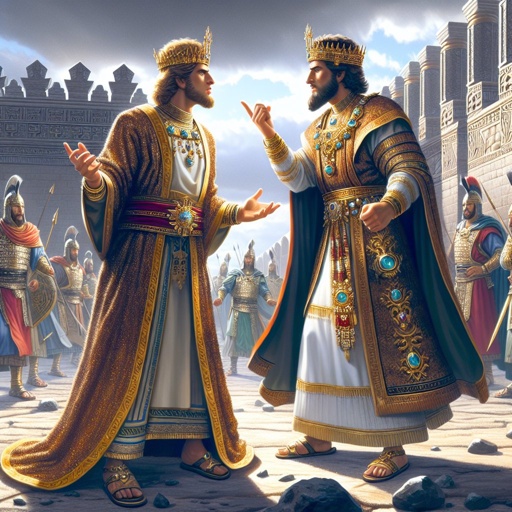
2 Kings 14:29 Artwork

2 Kings 14:29 - "And Jeroboam slept with his fathers, even with the kings of Israel; and Zachariah his son reigned in his stead."

"And Jeroboam slept with his fathers, even with the kings of Israel; and Zachariah his son reigned in his stead." - 2 Kings 14:29

1 Kings 14:29 - "¶ Now the rest of the acts of Rehoboam, and all that he did, are they not written in the book of the chronicles of the kings of Judah?"

2 KINGS 8:29

2 Kings 15:29 show the army and attack

2 Kings 14:18 - "And the rest of the acts of Amaziah, are they not written in the book of the chronicles of the kings of Judah?"

2 Chronicles 29:14 - "And of the sons of Heman; Jehiel, and Shimei: and of the sons of Jeduthun; Shemaiah, and Uzziel."

"¶ Now the rest of the acts of Rehoboam, and all that he did, are they not written in the book of the chronicles of the kings of Judah?" - 1 Kings 14:29

2 Kings 9:29 - "And in the eleventh year of Joram the son of Ahab began Ahaziah to reign over Judah."

2 Kings 18:29 - "Thus saith the king, Let not Hezekiah deceive you: for he shall not be able to deliver you out of his hand:"

2 Kings 12:14 - "But they gave that to the workmen, and repaired therewith the house of the LORD."

2 Kings 14:16 - "And Jehoash slept with his fathers, and was buried in Samaria with the kings of Israel; and Jeroboam his son reigned in his stead."

2 Kings 25:29 - "And changed his prison garments: and he did eat bread continually before him all the days of his life."

2 Kings 14:14 - "And he took all the gold and silver, and all the vessels that were found in the house of the LORD, and in the treasures of the king's house, and hostages, and returned to Samaria."

2 Kings 14:22 - "He built Elath, and restored it to Judah, after that the king slept with his fathers."

2 Kings 14:12 - "And Judah was put to the worse before Israel; and they fled every man to their tents."
2 Kings 14:15 - "¶ Now the rest of the acts of Jehoash which he did, and his might, and how he fought with Amaziah king of Judah, are they not written in the book of the chronicles of the kings of Israel?"

2 Kings 14:20 - "And they brought him on horses: and he was buried at Jerusalem with his fathers in the city of David."

"And the rest of the acts of Amaziah, are they not written in the book of the chronicles of the kings of Judah?" - 2 Kings 14:18

1 Kings 2:29 - "And it was told king Solomon that Joab was fled unto the tabernacle of the LORD; and, behold, he is by the altar. Then Solomon sent Benaiah the son of Jehoiada, saying, Go, fall upon him."

2 Kings 14:1 - "In the second year of Joash son of Jehoahaz king of Israel reigned Amaziah the son of Joash king of Judah."

2 Kings 25:14 - "And the pots, and the shovels, and the snuffers, and the spoons, and all the vessels of brass wherewith they ministered, took they away."

2 Kings 7:14 - "They took therefore two chariot horses; and the king sent after the host of the Syrians, saying, Go and see."

2 Kings 17:29 - "Howbeit every nation made gods of their own, and put them in the houses of the high places which the Samaritans had made, every nation in their cities wherein they dwelt."

2 Samuel 14:29 - "Therefore Absalom sent for Joab, to have sent him to the king; but he would not come to him: and when he sent again the second time, he would not come."

1 Kings 2:14 - "He said moreover, I have somewhat to say unto thee. And she said, Say on."

2 Kings 17:14 - "Notwithstanding they would not hear, but hardened their necks, like to the neck of their fathers, that did not believe in the LORD their God."

"And of the sons of Heman; Jehiel, and Shimei: and of the sons of Jeduthun; Shemaiah, and Uzziel." - 2 Chronicles 29:14

2 Kings 14:17 - "¶ And Amaziah the son of Joash king of Judah lived after the death of Jehoash son of Jehoahaz king of Israel fifteen years."

2 Kings 6:14 - "Therefore sent he thither horses, and chariots, and a great host: and they came by night, and compassed the city about."