A Divine Appeal: Seeking God’s Attention
"Now, my God, let, I beseech thee, thine eyes be open, and let thine ears be attent unto the prayer that is made in this place." - 2 Chronicles 6:40
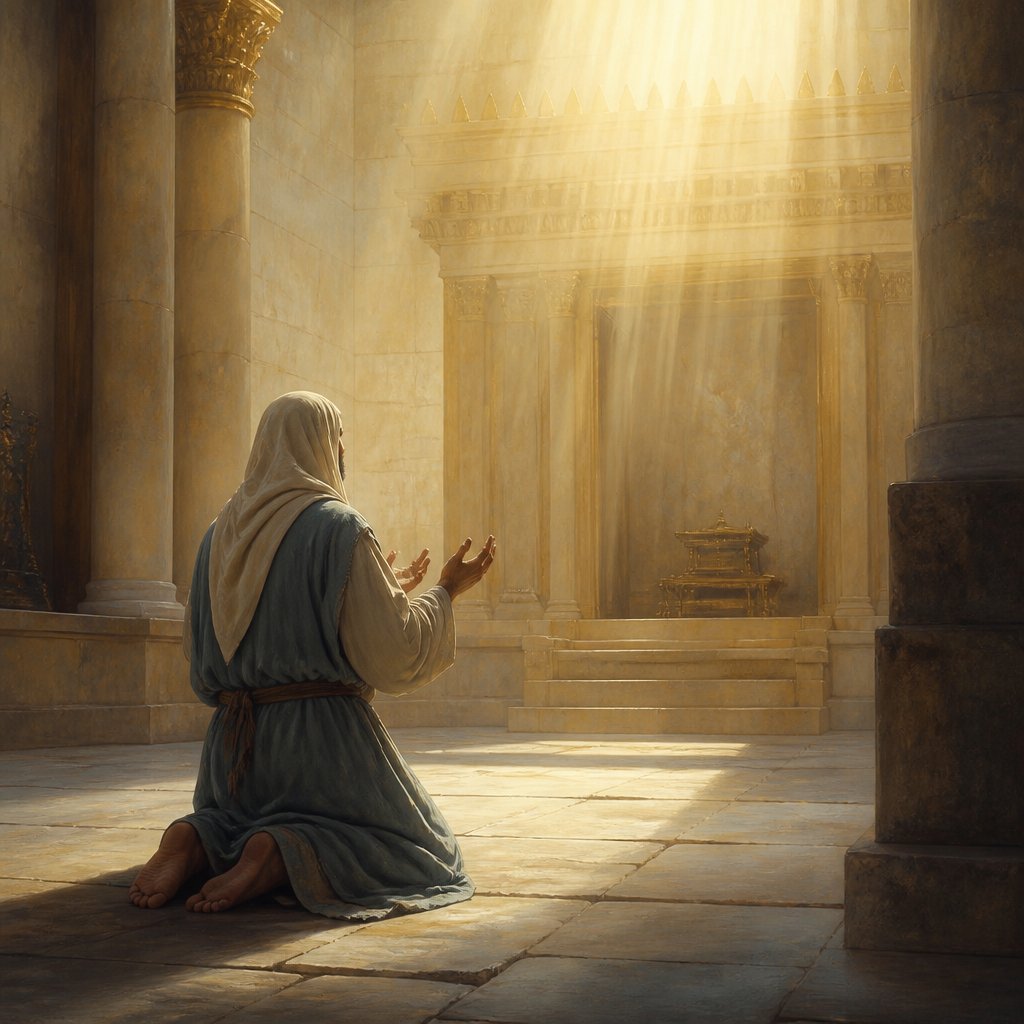
In the book of 2 Chronicles, we find a profound moment of prayer offered by King Solomon as he dedicates the newly built temple—the magnificent house of the Lord. In 2 Chronicles 6:40, Solomon urgently seeks God’s attention with the words: "Now, my God, let, I beseech thee, thine eyes be open, and let thine ears be attent unto the prayer that is made in this place." This heartfelt plea holds deep significance and speaks volumes about the relationship between God and His people, as well as the nature of prayer itself.
As Solomon stands before the assembled people, he acknowledges the greatness and holiness of God. The temple, constructed over years of hard work, was more than a physical structure; it was a symbol of God’s presence among His people. Yet, despite this grandeur, Solomon realizes that a temple made by human hands cannot contain the Almighty. Instead, he turns to prayer, recognizing that the heart's cry is what truly invites God’s presence.
"Let thine eyes be open" is a powerful invocation that expresses a longing for divine awareness. Solomon is aware that God’s eyes are everywhere, but he appeals for them to be fixed upon the prayers rising from the temple. It is a reminder for us that, while God is omniscient, our specific intentions and pleas matter significantly. In our own lives, we often find ourselves in moments filled with anxiety and need. How often do we echo Solomon’s plea, asking God to open His eyes towards our struggles, our dreams, and our prayers?
In the call to "let thine ears be attent," we see a picture of God not just listening, but engaging with us. The word "attent" implies an active participation and consideration. When we pray, we are not simply sending words into the void; we are engaging the Creator of the universe in a conversation. Solomon here is not merely asking for God’s attention; he’s recognizing the necessity of a two-way relationship. Prayer is not just about voicing our needs; it’s about being sensitive to His responses as well. We must cultivate our hearts to hear and respond to what He says.
Moreover, Solomon’s plea occurs in a corporate context. He stands amidst the assembly, signifying that prayer is powerful when we come together as the body of Christ. In our modern world, we often view prayer as a solitary act. While personal prayer is of utmost importance, there is also immense strength in collective prayer, echoing the same desire for God’s attention over shared concerns—be it for our community, our nation, or the world.
As we meditate on this verse, we must also reflect on the nature of the place to which Solomon refers. The temple stood as a sacred space designated for divine encounter. In today’s context, we must consider where we meet God. Prayer can happen in many settings, but do we create sacred space—both physically and spiritually—to invite Him in? Whether it’s through dedicated time in prayer, worship gatherings, or simply by creating quiet moments in our busy lives, seeking God’s presence transforms the ordinary into the holy.
In the midst of our own life's construction projects—be they relationships, careers, or personal development—let us continually come back to this prayer for attention. We need God’s perspectives to guide our paths and His ears to hear our cries. As Solomon implores in desperation, our hearts too should beseech the Lord, not just for ourselves but on behalf of those around us.
Thus, let us boldly approach the throne of grace, echoing Solomon’s earnest appeal. As we seek the Lord’s eyes to be open and His ears to be attentive, may we also commit to listening, responding, and acting upon His divine guidance. Our prayers have the power to invoke God’s attention—let’s lift our voices to Him reverently, knowing He is both willing and able to respond.
Want to reflect more on 2 Chronicles 6:40?
Continue your spiritual journey with Bible Chat — an AI-powered tool for exploring God's Word through conversation. Ask questions, discover connections, and deepen your understanding.
Get Our Apps


2 Chronicles 6:40 Artwork

2 Chronicles 6:40 - "Now, my God, let, I beseech thee, thine eyes be open, and let thine ears be attent unto the prayer that is made in this place."
"Now, my God, let, I beseech thee, thine eyes be open, and let thine ears be attent unto the prayer that is made in this place." - 2 Chronicles 6:40

1 Chronicles 6:40 - "The son of Michael, the son of Baaseiah, the son of Malchiah,"

1 Chronicles 2:40 - "And Eleasah begat Sisamai, and Sisamai begat Shallum,"

"The son of Michael, the son of Baaseiah, the son of Malchiah," - 1 Chronicles 6:40

"And Eleasah begat Sisamai, and Sisamai begat Shallum," - 1 Chronicles 2:40

2 Chronicles 6:13

Psalm 40:6

John 6:40

1 Chronicles 11:40 - "Ira the Ithrite, Gareb the Ithrite,"

2 Chronicles 6:2 - "But I have built an house of habitation for thee, and a place for thy dwelling for ever."

John 6:40

1 Chronicles 6:2 - "And the sons of Kohath; Amram, Izhar, and Hebron, and Uzziel."

2 Chronicles 6:6 - "But I have chosen Jerusalem, that my name might be there; and have chosen David to be over my people Israel."

2 Chronicles 11:6 - "He built even Beth-lehem, and Etam, and Tekoa,"

2 Chronicles 6:35 - "Then hear thou from the heavens their prayer and their supplication, and maintain their cause."

2 Chronicles 3:6 - "And he garnished the house with precious stones for beauty: and the gold was gold of Parvaim."

2 Chronicles 12:6 - "Whereupon the princes of Israel and the king humbled themselves; and they said, The LORD is righteous."

1 Chronicles 9:40 - "And the son of Jonathan was Merib-baal: and Merib-baal begat Micah."

Mark 6:40 - "And they sat down in ranks, by hundreds, and by fifties."

1 Chronicles 2:6 - "And the sons of Zerah; Zimri, and Ethan, and Heman, and Calcol, and Dara: five of them in all."

2 Chronicles 18:6 - "But Jehoshaphat said, Is there not here a prophet of the LORD besides, that we might enquire of him?"

2 Chronicles 6:1 - "Then said Solomon, The LORD hath said that he would dwell in the thick darkness."

2 Kings 15:6 - "And the rest of the acts of Azariah, and all that he did, are they not written in the book of the chronicles of the kings of Judah?"

2 Chronicles 6:7 - "Now it was in the heart of David my father to build an house for the name of the LORD God of Israel."

2 Chronicles 15:6 - "And nation was destroyed of nation, and city of city: for God did vex them with all adversity."

2 Chronicles 6:11 - "And in it have I put the ark, wherein is the covenant of the LORD, that he made with the children of Israel."

Job 40:6 - "¶ Then answered the LORD unto Job out of the whirlwind, and said,"

"Ira the Ithrite, Gareb the Ithrite," - 1 Chronicles 11:40

1 Chronicles 1:40 - "The sons of Shobal; Alian, and Manahath, and Ebal, Shephi, and Onam. And the sons of Zibeon; Aiah, and Anah."