In Times of Dearth: Seeking God’s Presence
"¶ If there be dearth in the land, if there be pestilence, if there be blasting, or mildew, locusts, or caterpillers; if their enemies besiege them in the cities of their land; whatsoever sore or whatsoever sickness there be:" - 2 Chronicles 6:28
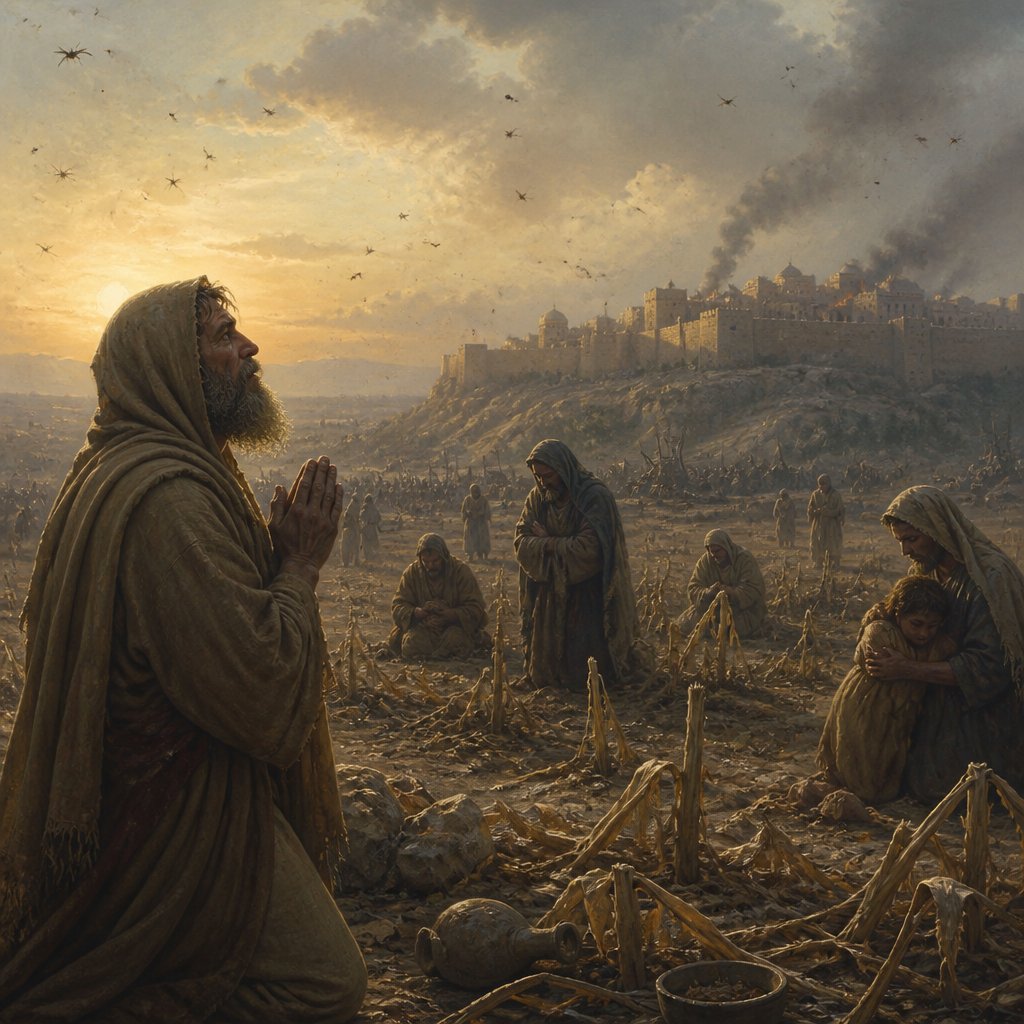
The passage in 2 Chronicles 6:28 reads: "If there be dearth in the land, if there be pestilence, if there be blasting, or mildew, locusts, or caterpillars; if their enemies besiege them in the cities of their land; whatsoever sore or whatsoever sickness there be:" This verse, spoken by Solomon at the dedication of the temple, is not just a recounting of potential calamities; it is an invitation from God to his people to turn their hearts toward Him during times of adversity.
**Understanding the Context**
The context of this verse is monumental. Solomon has just completed the Temple, a physical representation of God's presence among His people. He recognized that this sacred space would not be a magical fortress against hardship but rather a place where the people could come to seek God in their moments of despair. The challenges listed by Solomon reflect a deep understanding of human existence and the unpredictable nature of life. Dearth—a severe shortage—pestilence, agricultural disasters like mildew, locusts, and caterpillars, and enemy sieges represent real fears that could overwhelm the people of Israel.
Why does Solomon mention these troubles? Because he knows that life is filled with challenges that can wear us down, and he understands that in those moments, the greatest need to be met is a spiritual one. God desires our attention and our cries for help. In our own lives, we can relate these adversities to our own 'dearths'—those experiences where we feel depleted spiritually, emotionally, or physically.
**The Suffering and Seeking**
Just as Solomon identified various tribulations that would come, we too face our own calamities. Financial struggles, health issues, relationships in disarray, and mental anguish can feel like a siege against our well-being. In the world we live in, the presence of disease, disaster, and despair is undeniable. Yet these challenges present an opportunity—a moment for us to seek God.
When we are confronted with dearth in different forms, it’s easy to feel overwhelmed and helpless. But Solomon’s words remind us that our greatest action in times of suffering is to turn to God. He invites us to bring our troubles before Him, much like the Israelites were to do at the Temple. The Temple represented a sanctuary where prayers were offered, and it was here that God's presence was assured. Similarly, we find solace in God's presence through prayer, worship, and community.
**The Promise in Prayer**
As we engage with God in prayer, particularly amidst our struggles, we can be reassured that He hears us. The same God who was present in the Temple during King Solomon's time is still sovereign and attentive to our pleas today. We bring our pain, our fears, and our questions to Him because He is an ever-present help in trouble (Psalm 46:1).
The challenges in 2 Chronicles 6:28 lead us to contemplate our own trials but will also guide us to the next step—seeking God with expectation. Solomon’s prayer continues beyond this verse, calling for God’s intervention. We must do the same, committing to pray not just once or twice but persistently. We should express our needs to Him, acknowledging the dearth in our lives and asking for His provision, healing, and deliverance.
**Conclusion: Hope Amidst Hardship**
Let us remember that no matter how severe the crisis we encounter may seem, God is far greater than the storms of this life. He calls us, as He did to the Israelites, to bring our burdens before Him in prayer. In our suffering, we are met by unfailing love and grace. May we choose to seek God in times of dearth, trusting that He is the ultimate source of restoration and hope. Through every pestilence and every siege, let us seek Him earnestly, for in communion with Him lies our strength and refuge.
In moments of trial, let us lift our voices, hearts, and minds towards Him, asking for His guidance and comfort. Together, we shall witness the power of God’s hand bringing forth hope from our hardship, leading us to triumph through faith.
Want to reflect more on 2 Chronicles 6:28?
Continue your spiritual journey with Bible Chat — an AI-powered tool for exploring God's Word through conversation. Ask questions, discover connections, and deepen your understanding.
Get Our Apps


2 Chronicles 6:28 Artwork

2 Chronicles 6:28 - "¶ If there be dearth in the land, if there be pestilence, if there be blasting, or mildew, locusts, or caterpillers; if their enemies besiege them in the cities of their land; whatsoever sore or whatsoever sickness there be:"
"¶ If there be dearth in the land, if there be pestilence, if there be blasting, or mildew, locusts, or caterpillers; if their enemies besiege them in the cities of their land; whatsoever sore or whatsoever sickness there be:" - 2 Chronicles 6:28

1 Chronicles 6:28 - "And the sons of Samuel; the firstborn Vashni, and Abiah."

2 Chronicles 28:6 - "¶ For Pekah the son of Remaliah slew in Judah an hundred and twenty thousand in one day, which were all valiant men; because they had forsaken the LORD God of their fathers."

2 Chronicles 28:3

2 Chronicles 20:28

"And the sons of Samuel; the firstborn Vashni, and Abiah." - 1 Chronicles 6:28

2 Chronicles 28:2 - "For he walked in the ways of the kings of Israel, and made also molten images for Baalim."

2 Chronicles 20:28 - "And they came to Jerusalem with psalteries and harps and trumpets unto the house of the LORD."

2 Chronicles 9:28 - "And they brought unto Solomon horses out of Egypt, and out of all lands."

1 Chronicles 2:28 - "And the sons of Onam were, Shammai, and Jada. And the sons of Shammai; Nadab, and Abishur."

2 Chronicles 28:17 - "For again the Edomites had come and smitten Judah, and carried away captives."

2 Chronicles 28:14 - "So the armed men left the captives and the spoil before the princes and all the congregation."

2 Chronicles 18:28 - "So the king of Israel and Jehoshaphat the king of Judah went up to Ramoth-gilead."

2 Chronicles 28:16 - "¶ At that time did king Ahaz send unto the kings of Assyria to help him."

2 Chronicles 25:28 - "And they brought him upon horses, and buried him with his fathers in the city of Judah."

2 Chronicles 28:20 - "And Tilgath-pilneser king of Assyria came unto him, and distressed him, but strengthened him not."

2 Chronicles 6:13

2 Chronicles 28:22 - "¶ And in the time of his distress did he trespass yet more against the LORD: this is that king Ahaz."

2 Chronicles 28:4 - "He sacrificed also and burnt incense in the high places, and on the hills, and under every green tree."

2 Kings 23:28 - "Now the rest of the acts of Josiah, and all that he did, are they not written in the book of the chronicles of the kings of Judah?"

2 Chronicles 32:28 - "Storehouses also for the increase of corn, and wine, and oil; and stalls for all manner of beasts, and cotes for flocks."

2 Chronicles 29:28 - "And all the congregation worshipped, and the singers sang, and the trumpeters sounded: and all this continued until the burnt offering was finished."

2 Chronicles 28:7 - "And Zichri, a mighty man of Ephraim, slew Maaseiah the king's son, and Azrikam the governor of the house, and Elkanah that was next to the king."

2 Chronicles 6:2 - "But I have built an house of habitation for thee, and a place for thy dwelling for ever."

1 Chronicles 6:2 - "And the sons of Kohath; Amram, Izhar, and Hebron, and Uzziel."

2 Chronicles 28:26 - "¶ Now the rest of his acts and of all his ways, first and last, behold, they are written in the book of the kings of Judah and Israel."

1 Chronicles 28:6 - "And he said unto me, Solomon thy son, he shall build my house and my courts: for I have chosen him to be my son, and I will be his father."

2 Chronicles 6:6 - "But I have chosen Jerusalem, that my name might be there; and have chosen David to be over my people Israel."

2 Chronicles 28:19 - "For the LORD brought Judah low because of Ahaz king of Israel; for he made Judah naked, and transgressed sore against the LORD."