The Majesty of Worship: Understanding the Cherubim in 2 Chronicles 3:11
"¶ And the wings of the cherubims were twenty cubits long: one wing of the one cherub was five cubits, reaching to the wall of the house: and the other wing was likewise five cubits, reaching to the wing of the other cherub." - 2 Chronicles 3:11
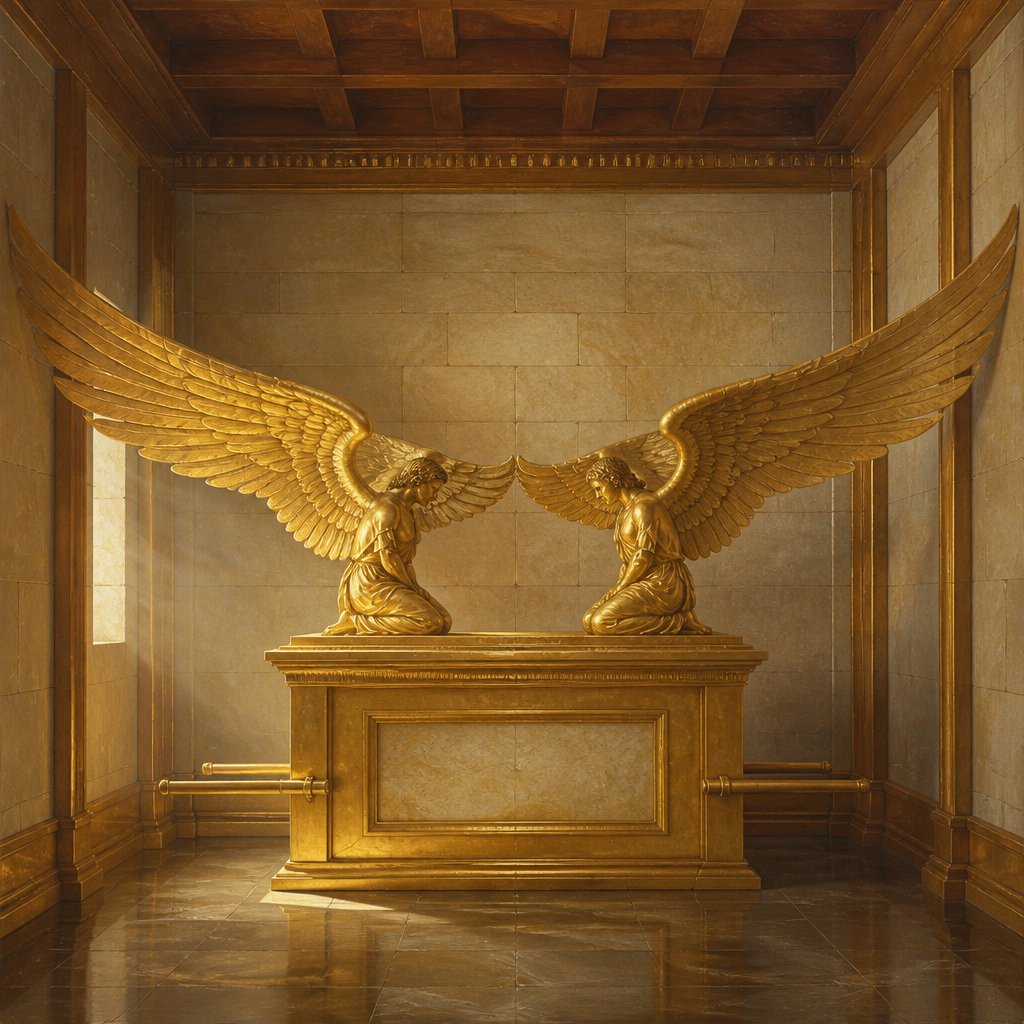
In the intricate design of Solomon’s Temple, the grandeur and spirituality that emanated from every corner were intended to create a tangible atmosphere of God’s presence. Among the most significant elements of the Temple’s structure were the cherubim that adorned the Holy of Holies. As we delve into 2 Chronicles 3:11, which states, "And the wings of the cherubims were twenty cubits long: one wing of the one cherub was five cubits, reaching to the wall of the house: and the other wing was likewise five cubits, reaching to the wing of the other cherub," we are invited to explore not just the physical dimensions but the theological implications of these majestic beings.
### Understanding the Cherubim
To the Hebrew mind, cherubim were not mere decorations. They were celestial beings created by God, often associated with divine presence and glory. Their wings stretched magnificently, combining majesty with compassion. The description of their wings—twenty cubits long—illustrates a grandiosity that is difficult for the modern observer to fathom. The cherubim are symbolic of God's protection and holiness. Their wings being spread wide was not purely for show; they served as a reminder that access to God requires reverence and humility.
In the ancient Near Eastern context, cherubim were often seen as guardians of sacred spaces. By placing these celestial beings in the most innermost part of the Temple, Solomon wasn’t just creating a place for worship; he was welcoming God Himself to dwell among His people. This act of design reflects a deep understanding of worship that recognizes the vast gulf between the Creator and His creation.
### The Geometry of Divine Presence
The mathematics of the cherubim's wings can speak volumes to us. The total span of twenty cubits symbolizes the vastness of God’s reach and the inclusion of His people within His embrace. Each wing, extending toward the wall and then reaching out toward the other cherub, paints a picture of a sanctuary filled with divine fellowship. The structure of the cherubim teaches us how deeply God desires relationship. He does not merely dwell among us; He invites us into communion with Him. It’s as if every aspect of Solomon’s Temple was crafted not just with skill, but with a theological significance that invites us to engage with our faith in a deeply personal way.
### Contemplating Our Worship
As we reflect on the wings of the cherubim, let us ponder the nature of our own worship. Are our offerings to God as grand as the cherubim? Worship is both a privilege and a responsibility. We navigate through worship not merely to fulfill a duty but to engage in a transformative relationship with our Creator. The cherubim beckon us to reflect on the posture of our hearts. Are we entering His presence with reverence, recognizing the sanctity of our approach to God?
Moreover, the span of the cherubim illustrates that while God is majestic and holy, He is also near—a God who reaches out to His creation. As believers, we are tasked with carrying this duality into our own worship experiences. We are to worship in awe, yet with the certainty that He is accessible. In every prayer, song, and act of service, may our wings stretch wide, embracing the longing to encounter His presence in ways both personal and communal.
### Conclusion: Living in Response
In conclusion, 2 Chronicles 3:11 extends beyond a mere architectural description—it’s an invitation to encounter the divine majesty each time we step into His presence. As we meditate on the wings of the cherubim, let us be reminded of the vast love and grace of God that allows such closeness.
When we approach God, let us do so knowing that He is the divine architect of our lives, inviting us to worship Him in spirit and truth (John 4:24). May we cultivate a heart that constantly yearns to spread our wings wide in surrender, seeking to dwell in His presence, and proclaiming His glory in all we do.
Want to reflect more on 2 Chronicles 3:11?
Continue your spiritual journey with Bible Chat — an AI-powered tool for exploring God's Word through conversation. Ask questions, discover connections, and deepen your understanding.
Get Our Apps


2 Chronicles 3:11 Artwork

2 Chronicles 3:11 - "¶ And the wings of the cherubims were twenty cubits long: one wing of the one cherub was five cubits, reaching to the wall of the house: and the other wing was likewise five cubits, reaching to the wing of the other cherub."
"¶ And the wings of the cherubims were twenty cubits long: one wing of the one cherub was five cubits, reaching to the wall of the house: and the other wing was likewise five cubits, reaching to the wing of the other cherub." - 2 Chronicles 3:11

2 Chronicles 11:3 - "Speak unto Rehoboam the son of Solomon, king of Judah, and to all Israel in Judah and Benjamin, saying,"

1 Chronicles 3:11 - "Joram his son, Ahaziah his son, Joash his son,"

"Joram his son, Ahaziah his son, Joash his son," - 1 Chronicles 3:11

2 Chronicles 11:20

2 Chronicles 35:11

2 Chronicles 11:2 - "But the word of the LORD came to Shemaiah the man of God, saying,"

2 Chronicles 11:9 - "And Adoraim, and Lachish, and Azekah,"

2 Chronicles 11:8 - "And Gath, and Mareshah, and Ziph,"
2 Chronicles 31:1

2 Chronicles 31:1

2 Chronicles 11:7 - "And Beth-zur, and Shoco, and Adullam,"

2 Chronicles 11:11 - "And he fortified the strong holds, and put captains in them, and store of victual, and of oil and wine."

2 Chronicles 28:3

"Speak unto Rehoboam the son of Solomon, king of Judah, and to all Israel in Judah and Benjamin, saying," - 2 Chronicles 11:3

1 Chronicles 2:11 - "And Nahshon begat Salma, and Salma begat Boaz,"

2 Chronicles 11:19 - "Which bare him children; Jeush, and Shamariah, and Zaham."

2 Chronicles 11:5 - "¶ And Rehoboam dwelt in Jerusalem, and built cities for defence in Judah."

2 Chronicles 11:6 - "He built even Beth-lehem, and Etam, and Tekoa,"

2 Chronicles 31:11 - "¶ Then Hezekiah commanded to prepare chambers in the house of the LORD; and they prepared them,"

2 Chronicles 11:10 - "And Zorah, and Aijalon, and Hebron, which are in Judah and in Benjamin fenced cities."

2 Chronicles 8:3 - "And Solomon went to Hamath-zobah, and prevailed against it."

2 Chronicles 30:11 - "Nevertheless divers of Asher and Manasseh and of Zebulun humbled themselves, and came to Jerusalem."

2 Chronicles 3:2 - "And he began to build in the second day of the second month, in the fourth year of his reign."

2 Kings 15:11 - "And the rest of the acts of Zachariah, behold, they are written in the book of the chronicles of the kings of Israel."

"And Adoraim, and Lachish, and Azekah," - 2 Chronicles 11:9

"And Gath, and Mareshah, and Ziph," - 2 Chronicles 11:8

2 Chronicles 11:13 - "¶ And the priests and the Levites that were in all Israel resorted to him out of all their coasts."

2 Chronicles 16:11 - "¶ And, behold, the acts of Asa, first and last, lo, they are written in the book of the kings of Judah and Israel."