The Sacred Feast: A Call to Devotion and Community
"And they roasted the passover with fire according to the ordinance: but the other holy offerings sod they in pots, and in caldrons, and in pans, and divided them speedily among all the people." - 2 Chronicles 35:13
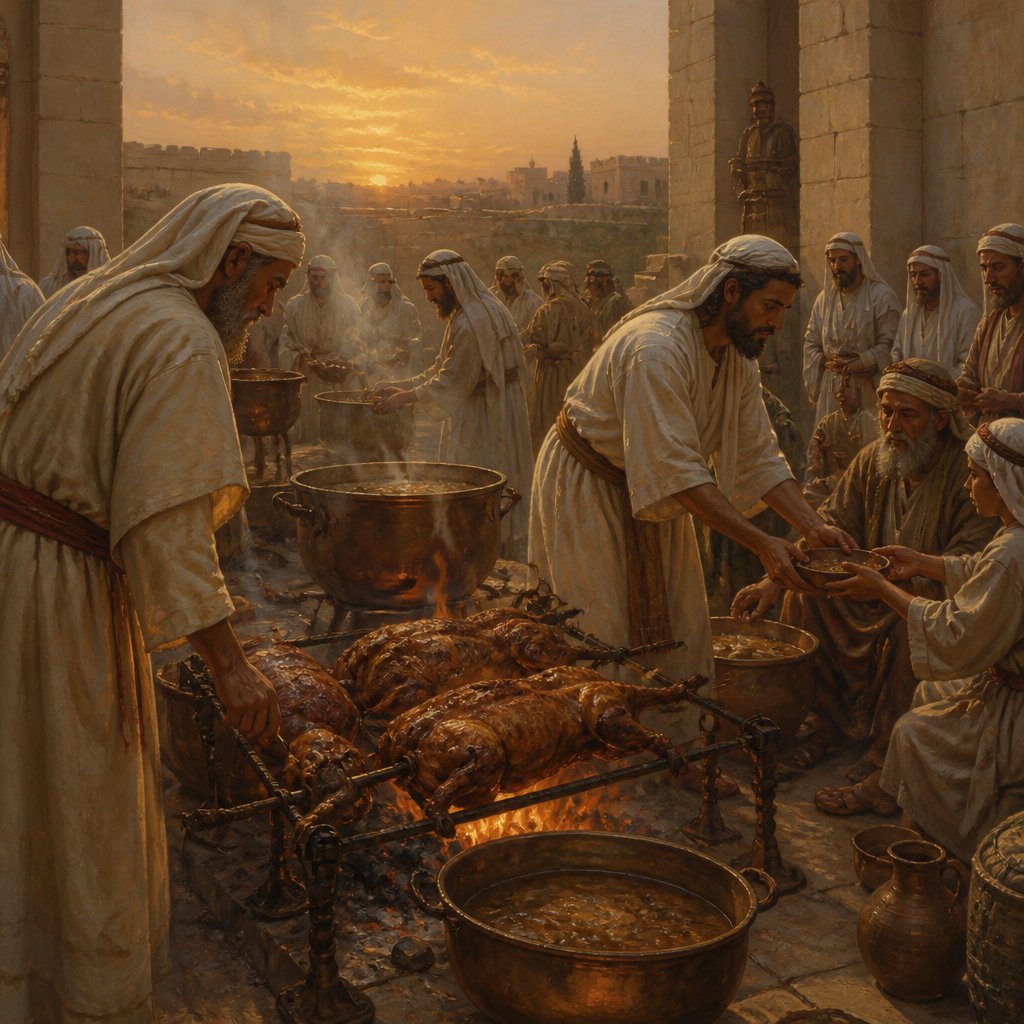
In 2 Chronicles 35:13, we find a poignant reminder of how the ancient Israelites approached the sacred act of worship and community celebration during the Passover—the central festival of their faith. The scripture states: "And they roasted the passover with fire according to the ordinance: but the other holy offerings sod they in pots, and in caldrons, and in pans, and divided them speedily among all the people." This passage reflects the deep significance of obedience to God’s commands, the communal spirit of the Israelites, and the heart of sacrificial worship.
The act of roasting the Passover lamb signifies more than just preparation of food; it embodies obedience to God's law as established through Moses. In Exodus 12, detailed instructions are given regarding the preparation of the lamb for Passover—how it should be chosen, slain, and eaten. The fact that the people of Judah adhered to these ordinances during King Josiah’s reign is a testament to their desire to honor God. It prompts us to reflect on our own lives and the importance of obedience and reverence in our worship. Are we obedient to God’s directions in our spiritual journeys?
In today’s context, the act of roasting the Passover can symbolize our commitment to living a life that honors the sacrifices made for us through Christ. Every Sunday and during our special communal gatherings, are we remembering the ultimate sacrifice of the Lamb of God as reverently as the Israelites remembered their deliverance in Egypt? This verse draws us closer to recognizing that our worship and acts of remembrance should be rooted in the desire to glorify God and recall the redemption we have experienced.
The second part of the verse speaks to the preparation of "other holy offerings" which were cooked in various vessels. The mention of pots, caldrons, and pans reveals the practicality of the Israelites’ approach to worship. They understood that communal worship required collaboration and efficiency. In our modern-day gatherings—whether church services, fellowship meals, or community outreach—there lies a parallel call for us to work together, bringing our talents and resources in a spirit of unity and generosity. As the holy offerings were divided "speedily among all the people," we, too, are called to share the blessings of God with one another, ensuring that no one among us suffers in want.
Moreover, the communal aspect of this festival—where every individual received a share—invites us to examine the ways in which we foster inclusivity and support one another in our faith communities. Are we extending love and grace to one another? Are we sharing the joys and blessings we have received? In doing so, we fulfill the law of Christ by bearing one another's burdens (Galatians 6:2).
As we meditate on this passage today, let us draw practical applications into our lives. First, let’s strive to deepen our obedience to God’s commands—taking time to study His Word and committing to living out His decrees. Second, let us engage actively in our communities. How can we serve those around us through acts of kindness or tangible offerings? Whether through our time, resources, or skills, may we reflect the love of Christ in personal and meaningful ways.
Finally, let’s embrace the spirit of communal worship and celebration. As we gather in our churches or homes, may we remember the significance of sharing—whether it’s a meal, a word of encouragement, or an act of service. Like the Israelites in this biblical account, may we celebrate our faith together, rejoicing in the glory of God’s provision and the beauty of unity in diversity. In all things, let our hearts be ignited by the fire of devotion to serve Him and foster community in His name.
Want to reflect more on 2 Chronicles 35:13?
Continue your spiritual journey with Bible Chat — an AI-powered tool for exploring God's Word through conversation. Ask questions, discover connections, and deepen your understanding.
Get Our Apps


2 Chronicles 35:13 Artwork

2 Chronicles 35:13 - "And they roasted the passover with fire according to the ordinance: but the other holy offerings sod they in pots, and in caldrons, and in pans, and divided them speedily among all the people."
"And they roasted the passover with fire according to the ordinance: but the other holy offerings sod they in pots, and in caldrons, and in pans, and divided them speedily among all the people." - 2 Chronicles 35:13
2 Chronicles 35:23

2 Chronicles 35:10

2 Chronicles 35:11

2 Chronicles 35:2 - "And he set the priests in their charges, and encouraged them to the service of the house of the LORD,"

2 Chronicles 35:19 - "In the eighteenth year of the reign of Josiah was this passover kept."

2 Chronicles 6:35 - "Then hear thou from the heavens their prayer and their supplication, and maintain their cause."

2 Chronicles 35:27 - "And his deeds, first and last, behold, they are written in the book of the kings of Israel and Judah."

2 Chronicles 35:10 - "So the service was prepared, and the priests stood in their place, and the Levites in their courses, according to the king's commandment."

2 Chronicles 35:26 - "Now the rest of the acts of Josiah, and his goodness, according to that which was written in the law of the LORD,"

2 Chronicles 35:17 - "And the children of Israel that were present kept the passover at that time, and the feast of unleavened bread seven days."

1 Chronicles 2:35 - "And Sheshan gave his daughter to Jarha his servant to wife; and she bare him Attai."

2 Chronicles 35:1 - "Moreover Josiah kept a passover unto the LORD in Jerusalem: and they killed the passover on the fourteenth day of the first month."

2 Samuel 13:35 - "And Jonadab said unto the king, Behold, the king's sons come: as thy servant said, so it is."

2 Chronicles 35:5 - "And stand in the holy place according to the divisions of the families of the fathers of your brethren the people, and after the division of the families of the Levites."

2 Chronicles 20:35 - "¶ And after this did Jehoshaphat king of Judah join himself with Ahaziah king of Israel, who did very wickedly:"

2 Chronicles 35:6 - "So kill the passover, and sanctify yourselves, and prepare your brethren, that they may do according to the word of the LORD by the hand of Moses."

2 Chronicles 35:23 - "And the archers shot at king Josiah; and the king said to his servants, Have me away; for I am sore wounded."

"In the eighteenth year of the reign of Josiah was this passover kept." - 2 Chronicles 35:19

2 Chronicles 6:13

2 chronicles 13:12

"And he set the priests in their charges, and encouraged them to the service of the house of the LORD," - 2 Chronicles 35:2

2 Chronicles 35:4 - "And prepare yourselves by the houses of your fathers, after your courses, according to the writing of David king of Israel, and according to the writing of Solomon his son."

2 Chronicles 35:12 - "And they removed the burnt offerings, that they might give according to the divisions of the families of the people, to offer unto the LORD, as it is written in the book of Moses. And so did they with the oxen."

2 Chronicles 29:35 - "And also the burnt offerings were in abundance, with the fat of the peace offerings, and the drink offerings for every burnt offering. So the service of the house of the LORD was set in order."

2 Chronicles 35:25 - "¶ And Jeremiah lamented for Josiah: and all the singing men and the singing women spake of Josiah in their lamentations to this day, and made them an ordinance in Israel: and, behold, they are written in the lamentations."

2 Chronicles 35:16 - "So all the service of the LORD was prepared the same day, to keep the passover, and to offer burnt offerings upon the altar of the LORD, according to the commandment of king Josiah."

"Then hear thou from the heavens their prayer and their supplication, and maintain their cause." - 2 Chronicles 6:35

2 Chronicles 2:13 - "And now I have sent a cunning man, endued with understanding, of Huram my father's,"