Restoration Through Covenant: Heeding the Call
"And he caused all that were present in Jerusalem and Benjamin to stand to it. And the inhabitants of Jerusalem did according to the covenant of God, the God of their fathers." - 2 Chronicles 34:32
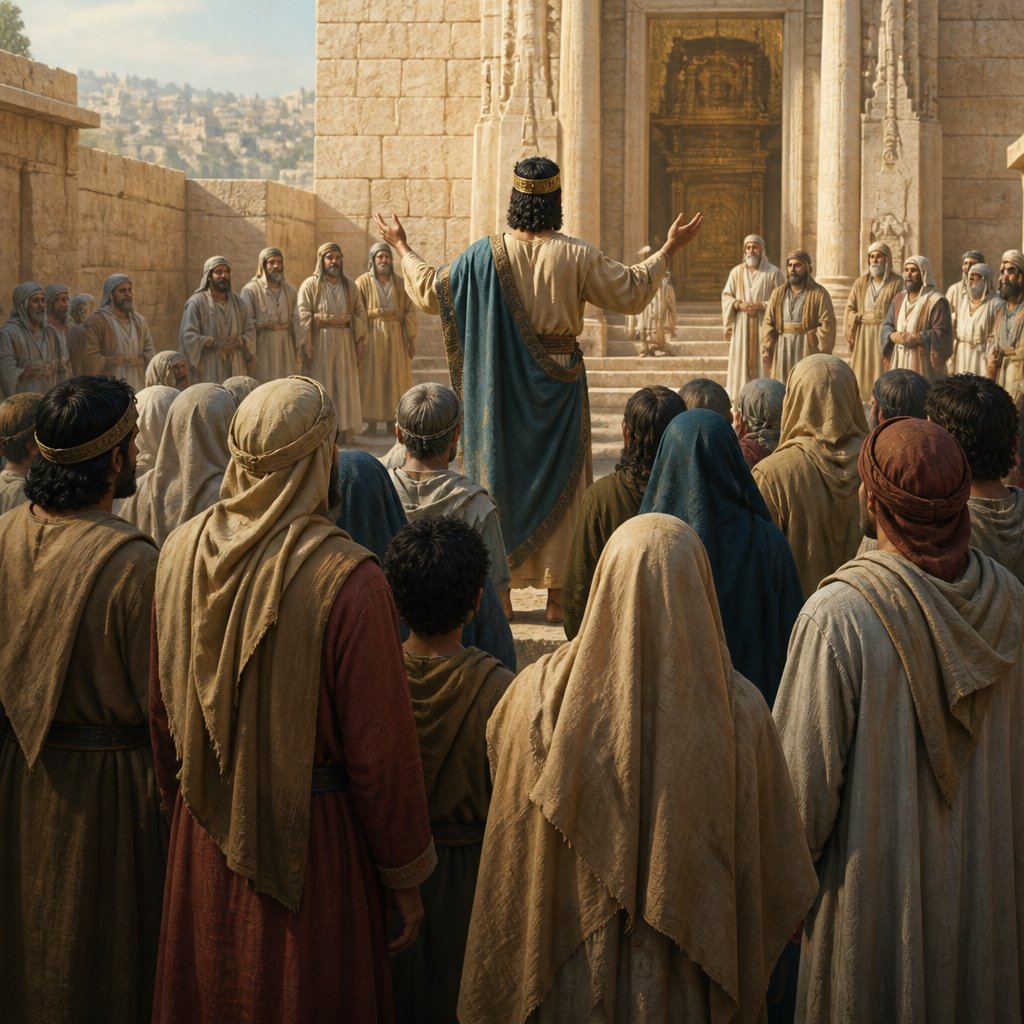
In a world often marred by distractions, disobedience, and division, the narrative found in 2 Chronicles 34:32 presents a poignant call to restoration and commitment. The verse states, "And he caused all that were present in Jerusalem and Benjamin to stand to it. And the inhabitants of Jerusalem did according to the covenant of God, the God of their fathers" (KJV). The historical context of this passage reveals significant spiritual renewal, threaded through the actions of King Josiah, a young monarch who came to the throne under dire circumstances yet emerged as a beacon of reform.
Josiah's reign was set against a backdrop of deep apostasy in Judah, where idolatry had become rampant, and the covenant between God and His people was largely ignored. But upon discovering the Book of the Law during the restoration of the temple, he was confronted with the gravity of their disobedience. Rather than turning a blind eye or making excuses, Josiah took decisive action to restore the covenant—the sacred agreement between God and His people. This begins an essential journey for anyone seeking spiritual renewal.
### A Call to Stand Firm
"And he caused all that were present in Jerusalem and Benjamin to stand to it" introduces the moment of collective commitment—the act of standing firm in the covenant of God. The phrase "stand to it" suggests not just a physical posture but also a mental and spiritual resolve. King Josiah understood that renewing the covenant required more than mere acknowledgment; it demanded a communal commitment to live according to God’s statutes and commandments.
The significance of this initial posture is profound, illustrating that true transformation begins with willing hearts ready to embrace the truth. Today, as believers, we are called to stand firm in our convictions and to engage with the Word of God actively. Are we willing to make a public declaration alongside our community, demonstrating our commitment to live out the values of our faith?
### Collective Responsibility
The commitment made by the inhabitants of Jerusalem—"did according to the covenant of God, the God of their fathers"—highlights the collective responsibility of God’s people to honor God’s commandments. Their willingness to follow through with Josiah’s decree exemplified a unified response that echoed the faithfulness of their ancestors.
In our current cultural context, we may find ourselves in a similar predicament where the call to uphold God’s covenant is crucial. We may be tempted to overlook the weight of our collective responsibility as believers. The actions of the people of Jerusalem can inspire us to not only pursue personal holiness but also encourage one another to uphold biblical standards in our communities. In a fractured world, our unity in living out God’s word serves as a testament to His transformative power.
### Returning to Our Roots
The phrase "the God of their fathers" reminds us that our faith is deeply rooted in a history that is both sacred and significant. As we stand firm in the modern age, we must not forget the rich traditions and teachings passed down through generations. Recognizing God as the God of our fathers compels us to honor our heritage, learn from past successes and failures, and lean on the wisdom of those who walked before us.
This relationship isn’t merely historical; it is relational. It invites us into a living dialogue with God, one that stretches beyond time and culture for our own edification and the building up of future generations. In a time where identity can seem fragmented, claiming our identity in God compels us to seek Him earnestly and return to the practices of worship and obedience that define us.
### Conclusion
In conclusion, let us heed the powerful example set by Josiah and the people of Jerusalem. May we cause ourselves and those around us to "stand to it"—to actively engage in fulfilling the covenant with God, embracing our roles as each other's keepers. As we commit to living out this covenant, anchoring ourselves in the history of our faith, we invite others to walk alongside us in a life characterized by reverence for the profound covenant relationship we have with our God. The restoration of our hearts and communities will surely follow.
Want to reflect more on 2 Chronicles 34:32?
Continue your spiritual journey with Bible Chat — an AI-powered tool for exploring God's Word through conversation. Ask questions, discover connections, and deepen your understanding.
Get Our Apps


2 Chronicles 34:32 Artwork

2 Chronicles 34:32 - "And he caused all that were present in Jerusalem and Benjamin to stand to it. And the inhabitants of Jerusalem did according to the covenant of God, the God of their fathers."
"And he caused all that were present in Jerusalem and Benjamin to stand to it. And the inhabitants of Jerusalem did according to the covenant of God, the God of their fathers." - 2 Chronicles 34:32

2 Chronicles 34:19

2 Chronicles 34:19

2 Chronicles 32:2 - "And when Hezekiah saw that Sennacherib was come, and that he was purposed to fight against Jerusalem,"

2 Chronicles 34:29 - "¶ Then the king sent and gathered together all the elders of Judah and Jerusalem."

2 Chronicles 32:32 - "Now the rest of the acts of Hezekiah, and his goodness, behold, they are written in the vision of Isaiah the prophet, the son of Amoz, and in the book of the kings of Judah and Israel."

2 Chronicles 34:5 - "And he burnt the bones of the priests upon their altars, and cleansed Judah and Jerusalem."

2 Chronicles 32:20 - "And for this cause Hezekiah the king, and the prophet Isaiah the son of Amoz, prayed and cried to heaven."

1 Chronicles 2:32 - "And the sons of Jada the brother of Shammai; Jether, and Jonathan: and Jether died without children."

2 Chronicles 34:19 - "And it came to pass, when the king had heard the words of the law, that he rent his clothes."

1 Chronicles 2:34 - "¶ Now Sheshan had no sons, but daughters. And Sheshan had a servant, an Egyptian, whose name was Jarha."

2 Chronicles 34:2 - "And he did that which was right in the sight of the LORD, and walked in the ways of David his father, and declined neither to the right hand, nor to the left."

2 Chronicles 34:17 - "And they have gathered together the money that was found in the house of the LORD, and have delivered it into the hand of the overseers, and to the hand of the workmen."

2 Chronicles 32:16 - "And his servants spake yet more against the LORD God, and against his servant Hezekiah."

2 Chronicles 32:28 - "Storehouses also for the increase of corn, and wine, and oil; and stalls for all manner of beasts, and cotes for flocks."

2 Chronicles 34:6 - "And so did he in the cities of Manasseh, and Ephraim, and Simeon, even unto Naphtali, with their mattocks round about."

2 Chronicles 34:1 - "Josiah was eight years old when he began to reign, and he reigned in Jerusalem one and thirty years."

Numbers 32:34 - "¶ And the children of Gad built Dibon, and Ataroth, and Aroer,"

2 Chronicles 20:32 - "And he walked in the way of Asa his father, and departed not from it, doing that which was right in the sight of the LORD."

2 Chronicles 32:10 - "Thus saith Sennacherib king of Assyria, Whereon do ye trust, that ye abide in the siege in Jerusalem?"

2 Chronicles 32:19 - "And they spake against the God of Jerusalem, as against the gods of the people of the earth, which were the work of the hands of man."

2 Chronicles 34:23 - "¶ And she answered them, Thus saith the LORD God of Israel, Tell ye the man that sent you to me,"

2 Chronicles 34:10 - "And they put it in the hand of the workmen that had the oversight of the house of the LORD, and they gave it to the workmen that wrought in the house of the LORD, to repair and amend the house:"

2 Chronicles 34:14 - "¶ And when they brought out the money that was brought into the house of the LORD, Hilkiah the priest found a book of the law of the LORD given by Moses."

2 Chronicles 34:18 - "Then Shaphan the scribe told the king, saying, Hilkiah the priest hath given me a book. And Shaphan read it before the king."

2 Kings 10:34 - "Now the rest of the acts of Jehu, and all that he did, and all his might, are they not written in the book of the chronicles of the kings of Israel?"

2 Chronicles 18:32 - "For it came to pass, that, when the captains of the chariots perceived that it was not the king of Israel, they turned back again from pursuing him."

2 Chronicles 34:20 - "And the king commanded Hilkiah, and Ahikam the son of Shaphan, and Abdon the son of Micah, and Shaphan the scribe, and Asaiah a servant of the king's, saying,"

2 Chronicles 34:16 - "And Shaphan carried the book to the king, and brought the king word back again, saying, All that was committed to thy servants, they do it."