Restoration Through Humility: The Journey of Manasseh
"And prayed unto him: and he was intreated of him, and heard his supplication, and brought him again to Jerusalem into his kingdom. Then Manasseh knew that the LORD he was God." - 2 Chronicles 33:13
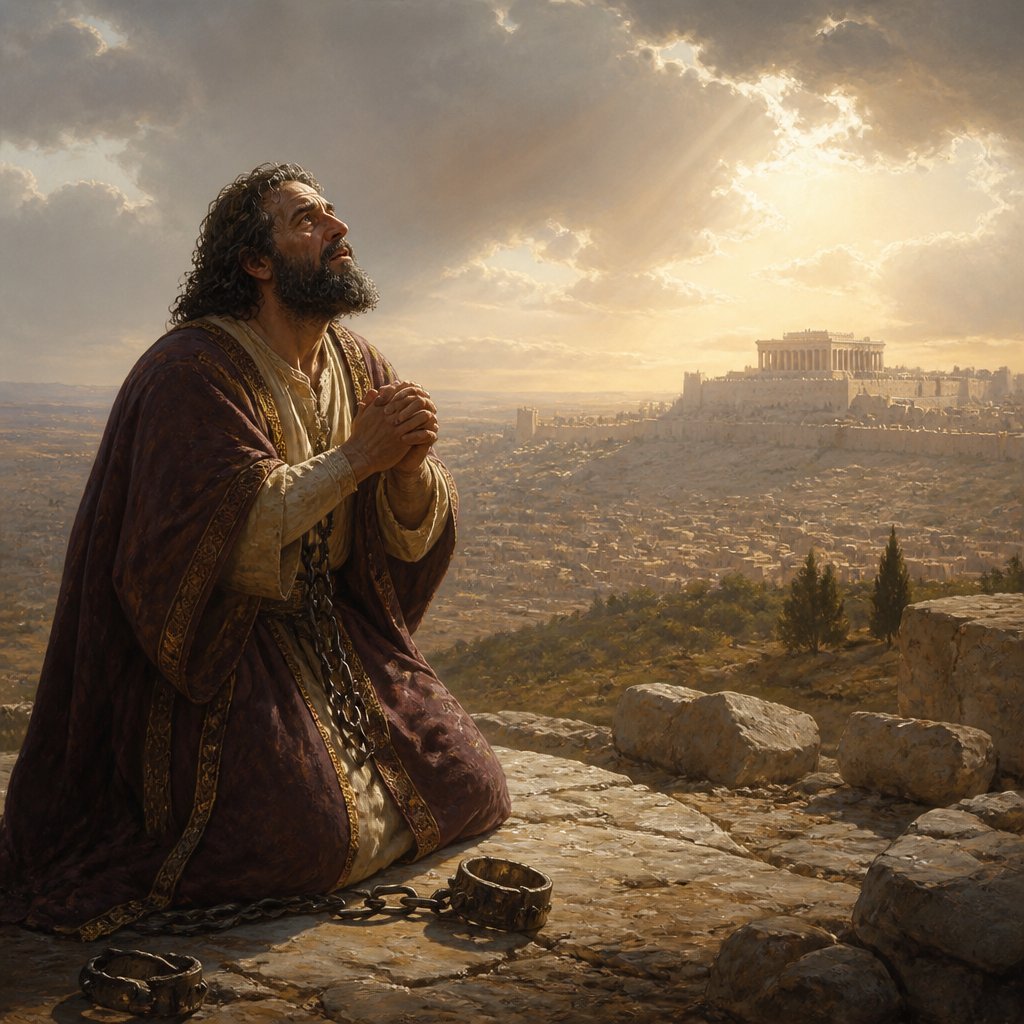
In 2 Chronicles 33:13, we find a poignant moment of transformation and restoration in the life of King Manasseh, a king known for his grievous sins and idolatry. The verse states: "And prayed unto him: and he was intreated of him, and heard his supplication, and brought him again to Jerusalem into his kingdom. Then Manasseh knew that the LORD he was God." This verse encapsulates the essence of redemption, the power of prayer, and the profound realization of God's sovereignty.
Manasseh ascended to the throne at a young age and ruled for fifty-five years, becoming one of the most notorious kings of Judah. His reign was marked by idol worship, the shedding of innocent blood, and a direct rebellion against God. The scriptures narrate that he built altars to false gods, practiced sorcery, and even sacrificed his own son (2 Kings 21:1-16). Despite his horrific actions, the story does not conclude with his judgment but instead pivots dramatically in a moment of desperate prayer. This paints a picture of God's unwavering grace, highlighting that no one, regardless of their past, is beyond the scope of God’s redemptive love.
The phrase "And prayed unto him" sets the stage for Manasseh's turning point. He found himself in captivity, humbled by the consequences of his actions. It was in this lowly state that he recognized the futility of his rebellion against God. Manasseh's prayer reflects a heart that was not just seeking relief from his circumstances but was genuinely contrite and ready to submit to God's authority. This aspect of his prayer teaches us that sincere repentance often springs forth from experiences of brokenness and humility. It reminds us that we do not come to God with our pride but rather our need for His mercy.
When the verse says, "and he was intreated of him," it emphasizes the response of God to the prayers of His people. The Almighty is merciful and compassionate, listening to the cries of those who seek Him sincerely, regardless of how far they have strayed. This truth is foundational to our faith; God waits to respond to our genuine pleas for help and restoration. As we approach Him, we need to grasp that the pathway back to His grace is paved with humility and a willingness to change.
The restoration of Manasseh back to his throne, as described in this verse, symbolizes the overwhelming compassion and mercy of God. The act of bringing him back to Jerusalem emphasizes God's desire to restore not only our relationship with Him but also our identities and places in His Kingdom. It speaks volumes about the nature of God's grace—allowing a sinner to reign with Him once more. In essence, it serves as a reminder that the past does not dictate our future. Manasseh's return to power illustrates the hope that is extended to all of us; regardless of our past decisions, we can still be brought back into the fullness of God’s purpose.
Finally, the concluding phrase "Then Manasseh knew that the LORD he was God" encapsulates the crux of his transformation. Knowledge of God goes beyond intellectual acknowledgment; it is an experiential understanding that flows from the realization of His faithfulness and power. Manasseh's encounter with God in his darkest hour led him to a profound knowledge of the divine, one that deeply rooted itself in his heart. How often do we miss the opportunities to truly know God because we are unwilling to lay down our pride? When we become open to His leading, even in our valleys of despair, we encounter His majestic presence.
In closing, let us remember that like Manasseh, we are all called to pray, to seek God in our weaknesses, and to be confident that He hears our supplications. No sin is too great for His grace, and no heart is beyond His ability to restore. Let us approach Him with humility and expectant faith, knowing that redemption awaits those who earnestly seek Him.
Want to reflect more on 2 Chronicles 33:13?
Continue your spiritual journey with Bible Chat — an AI-powered tool for exploring God's Word through conversation. Ask questions, discover connections, and deepen your understanding.
Get Our Apps


2 Chronicles 33:13 Artwork

2 Chronicles 33:13 - "And prayed unto him: and he was intreated of him, and heard his supplication, and brought him again to Jerusalem into his kingdom. Then Manasseh knew that the LORD he was God."
"And prayed unto him: and he was intreated of him, and heard his supplication, and brought him again to Jerusalem into his kingdom. Then Manasseh knew that the LORD he was God." - 2 Chronicles 33:13

1 Chronicles 2:33 - "And the sons of Jonathan; Peleth, and Zaza. These were the sons of Jerahmeel."

2 Chronicles 33:10 - "And the LORD spake to Manasseh, and to his people: but they would not hearken."

2 Chronicles 29:33 - "And the consecrated things were six hundred oxen and three thousand sheep."

2 Chronicles 33:5 - "And he built altars for all the host of heaven in the two courts of the house of the LORD."

2 Chronicles 33:24 - "And his servants conspired against him, and slew him in his own house."

2 Chronicles 33:2 - "But did that which was evil in the sight of the LORD, like unto the abominations of the heathen, whom the LORD had cast out before the children of Israel."

2 Chronicles 33:17 - "Nevertheless the people did sacrifice still in the high places, yet unto the LORD their God only."

2 Chronicles 33:21 - "¶ Amon was two and twenty years old when he began to reign, and reigned two years in Jerusalem."

2 Chronicles 6:13

2 Chronicles 20:33 - "Howbeit the high places were not taken away: for as yet the people had not prepared their hearts unto the God of their fathers."

2 chronicles 13:12

2 Chronicles 33:23 - "And humbled not himself before the LORD, as Manasseh his father had humbled himself; but Amon trespassed more and more."

2 Chronicles 33:1 - "Manasseh was twelve years old when he began to reign, and he reigned fifty and five years in Jerusalem:"

2 Chronicles 33:12 - "And when he was in affliction, he besought the LORD his God, and humbled himself greatly before the God of his fathers,"

2 Chronicles 33:4 - "Also he built altars in the house of the LORD, whereof the LORD had said, In Jerusalem shall my name be for ever."

2 Chronicles 33:20 - "¶ So Manasseh slept with his fathers, and they buried him in his own house: and Amon his son reigned in his stead."

2 Chronicles 33:16 - "And he repaired the altar of the LORD, and sacrificed thereon peace offerings and thank offerings, and commanded Judah to serve the LORD God of Israel."

"And the LORD spake to Manasseh, and to his people: but they would not hearken." - 2 Chronicles 33:10

"And the sons of Jonathan; Peleth, and Zaza. These were the sons of Jerahmeel." - 1 Chronicles 2:33

2 Chronicles 2:13 - "And now I have sent a cunning man, endued with understanding, of Huram my father's,"

2 Chronicles 33:9 - "So Manasseh made Judah and the inhabitants of Jerusalem to err, and to do worse than the heathen, whom the LORD had destroyed before the children of Israel."

2 Chronicles 13:13 - "¶ But Jeroboam caused an ambushment to come about behind them: so they were before Judah, and the ambushment was behind them."

2 Chronicles 33:25 - "¶ But the people of the land slew all them that had conspired against king Amon; and the people of the land made Josiah his son king in his stead."

2 Chronicles 29:13 - "And of the sons of Elizaphan; Shimri, and Jeiel: and of the sons of Asaph; Zechariah, and Mattaniah:"

2 Chronicles 33:11 - "¶ Wherefore the LORD brought upon them the captains of the host of the king of Assyria, which took Manasseh among the thorns, and bound him with fetters, and carried him to Babylon."

2 Samuel 13:33 - "Now therefore let not my lord the king take the thing to his heart, to think that all the king's sons are dead: for Amnon only is dead."

2 Chronicles 20:13 - "And all Judah stood before the LORD, with their little ones, their wives, and their children."

2 Chronicles 13:16 - "And the children of Israel fled before Judah: and God delivered them into their hand."