In the Shadows of Siege: Trusting God Through Adversity
"¶ After this did Sennacherib king of Assyria send his servants to Jerusalem, (but he himself laid siege against Lachish, and all his power with him,) unto Hezekiah king of Judah, and unto all Judah that were at Jerusalem, saying," - 2 Chronicles 32:9
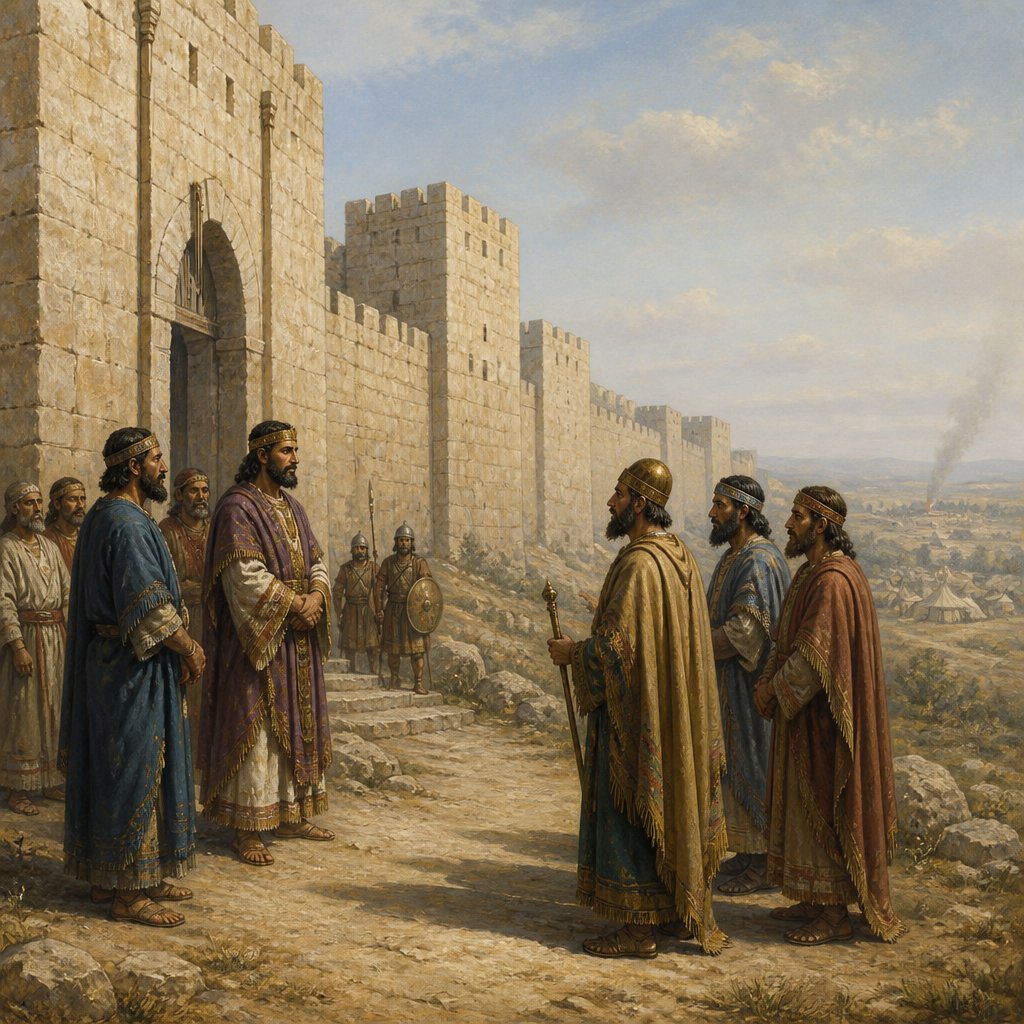
In the annals of biblical history, few events illustrate the clash between faith and fear more poignantly than the siege of Jerusalem by Sennacherib, king of Assyria. In 2 Chronicles 32:9, we read, “After this did Sennacherib king of Assyria send his servants to Jerusalem, (but he himself laid siege against Lachish, and all his power with him,) unto Hezekiah king of Judah, and unto all Judah that were at Jerusalem, saying,” (KJV). This moment serves as a reminder that challenges often arise after victory, and how we respond in those precarious times defines our faith.
The historical context of this verse is vital. Hezekiah had recently experienced a remarkable triumph—God had delivered him and the people of Judah from grave danger when the Northern Kingdom of Israel was swept away. With a king who defied God and a nation that turned from Him, Hezekiah’s determination to reinstate the worship of the one true God was met with considerable success. Yet, just as the people had started to enjoy the fruits of this spiritual revival, the looming threat from Sennacherib emerged. This serves as a biblical principle: often, after we experience blessing and victory, we find ourselves under the weight of new challenges.
The siege represents not only a physical threat but also a psychological one. Sennacherib’s approach was calculated. By sending delegates to speak with Hezekiah, he attempted to undermine the morale of the people within the fortified walls of Jerusalem. These agents of fear taunted and questioned the power of the God of Israel, reminding the people that many have fallen before them, thus sowing seeds of doubt where faith had just begun to blossom. The bravado of Sennacherib’s messengers mirrored, in many ways, the adversities we face today; they were laden with intimidation and discouragement.
In the face of such hostility, Hezekiah’s response is profoundly instructive. Rather than yielding to despair, he took the matter before the Lord. The siege highlights the crucial practice of prayer and supplication. Throughout the rest of the chapter, we see Hezekiah seeking God’s face, and ultimately, God intervenes. This pivotal moment illustrates the power of faith—it shifts the focus from the magnitude of the problem to the greatness of God.
God’s response to Hezekiah’s plea not only ensured the safety of Jerusalem but also provided a lesson on divine sovereignty and deliverance. The entire narrative reminds us that while human leaders may threaten and earthly kings may wield power, the destiny of nations lies ultimately in the hands of God. This bringing into perspective is essential for every believer; when faced with intimidation and insurmountable odds, we must remember that our help comes from the Lord.
Moreover, Sennacherib’s attack wasn’t just on Hezekiah but on the collective faith of Judah. The enemy’s strategy is to isolate and obliterate. But just as the people of Judah had the opportunity to unite and rally around their king, so too are we called to showcase our faith in unity with fellow believers. Isolation often breeds despair; hence, congregating in prayer and support is vital.
As we reflect on this text, we can find solace in knowing that God is ever-present in our struggles. The siege that we face—whether of financial hardship, relational struggles, or spiritual doubt—can drive us to God when we choose to surrender our worries and fears to Him. Like Hezekiah, we are called to take our burdens to the Lord, trusting that He will display His power on our behalf.
Thus, let us take our stand today in faith, believing that the same God who saved Jerusalem is still in control. As we face our ‘Sennacheribs,’ let our response echo that of Hezekiah: persistent prayer, steadfast faith, and an unwavering belief in God’s ability to deliver and save.
Want to reflect more on 2 Chronicles 32:9?
Continue your spiritual journey with Bible Chat — an AI-powered tool for exploring God's Word through conversation. Ask questions, discover connections, and deepen your understanding.
Get Our Apps


2 Chronicles 32:9 Artwork

2 Chronicles 32:9 - "¶ After this did Sennacherib king of Assyria send his servants to Jerusalem, (but he himself laid siege against Lachish, and all his power with him,) unto Hezekiah king of Judah, and unto all Judah that were at Jerusalem, saying,"
"¶ After this did Sennacherib king of Assyria send his servants to Jerusalem, (but he himself laid siege against Lachish, and all his power with him,) unto Hezekiah king of Judah, and unto all Judah that were at Jerusalem, saying," - 2 Chronicles 32:9

1 Chronicles 9:32 - "And other of their brethren, of the sons of the Kohathites, were over the shewbread, to prepare it every sabbath."

2 Chronicles 32:2 - "And when Hezekiah saw that Sennacherib was come, and that he was purposed to fight against Jerusalem,"

2 Chronicles 32:32 - "Now the rest of the acts of Hezekiah, and his goodness, behold, they are written in the vision of Isaiah the prophet, the son of Amoz, and in the book of the kings of Judah and Israel."

2 Chronicles 32:20 - "And for this cause Hezekiah the king, and the prophet Isaiah the son of Amoz, prayed and cried to heaven."

1 Chronicles 2:32 - "And the sons of Jada the brother of Shammai; Jether, and Jonathan: and Jether died without children."

2 Chronicles 32:16 - "And his servants spake yet more against the LORD God, and against his servant Hezekiah."

2 Chronicles 32:28 - "Storehouses also for the increase of corn, and wine, and oil; and stalls for all manner of beasts, and cotes for flocks."

2 Chronicles 20:32 - "And he walked in the way of Asa his father, and departed not from it, doing that which was right in the sight of the LORD."

2 Chronicles 32:10 - "Thus saith Sennacherib king of Assyria, Whereon do ye trust, that ye abide in the siege in Jerusalem?"

2 Chronicles 32:19 - "And they spake against the God of Jerusalem, as against the gods of the people of the earth, which were the work of the hands of man."

2 Chronicles 18:32 - "For it came to pass, that, when the captains of the chariots perceived that it was not the king of Israel, they turned back again from pursuing him."

2 Chronicles 18:9

2 Chronicles 21:9

2 Chronicles 18:9

2 Chronicles 11:9 - "And Adoraim, and Lachish, and Azekah,"

2 Chronicles 32:7 - "Be strong and courageous, be not afraid nor dismayed for the king of Assyria, nor for all the multitude that is with him: for there be more with us than with him:"

2 Chronicles 34:32 - "And he caused all that were present in Jerusalem and Benjamin to stand to it. And the inhabitants of Jerusalem did according to the covenant of God, the God of their fathers."

2 Chronicles 32:29 - "Moreover he provided him cities, and possessions of flocks and herds in abundance: for God had given him substance very much."

2 Chronicles 32:24 - "¶ In those days Hezekiah was sick to the death, and prayed unto the LORD: and he spake unto him, and he gave him a sign."
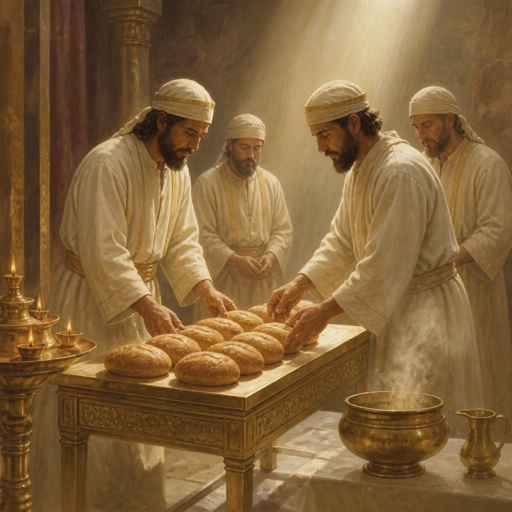
"And other of their brethren, of the sons of the Kohathites, were over the shewbread, to prepare it every sabbath." - 1 Chronicles 9:32

2 Chronicles 32:6 - "And he set captains of war over the people, and gathered them together to him in the street of the gate of the city, and spake comfortably to them, saying,"

2 Chronicles 32:18 - "Then they cried with a loud voice in the Jews' speech unto the people of Jerusalem that were on the wall, to affright them, and to trouble them; that they might take the city."

2 Chronicles 32:3 - "He took counsel with his princes and his mighty men to stop the waters of the fountains which were without the city: and they did help him."

2 Chronicles 32:1 - "After these things, and the establishment thereof, Sennacherib king of Assyria came, and entered into Judah, and encamped against the fenced cities, and thought to win them for himself."

2 Chronicles 31:9 - "Then Hezekiah questioned with the priests and the Levites concerning the heaps."

2 Chronicles 32:23 - "And many brought gifts unto the LORD to Jerusalem, and presents to Hezekiah king of Judah: so that he was magnified in the sight of all nations from thenceforth."

"And when Hezekiah saw that Sennacherib was come, and that he was purposed to fight against Jerusalem," - 2 Chronicles 32:2

2 Chronicles 29:32 - "And the number of the burnt offerings, which the congregation brought, was threescore and ten bullocks, an hundred rams, and two hundred lambs: all these were for a burnt offering to the LORD."