The End of a Legacy: Lessons from Ahaz
"And Ahaz slept with his fathers, and they buried him in the city, even in Jerusalem: but they brought him not into the sepulchres of the kings of Israel: and Hezekiah his son reigned in his stead." - 2 Chronicles 28:27
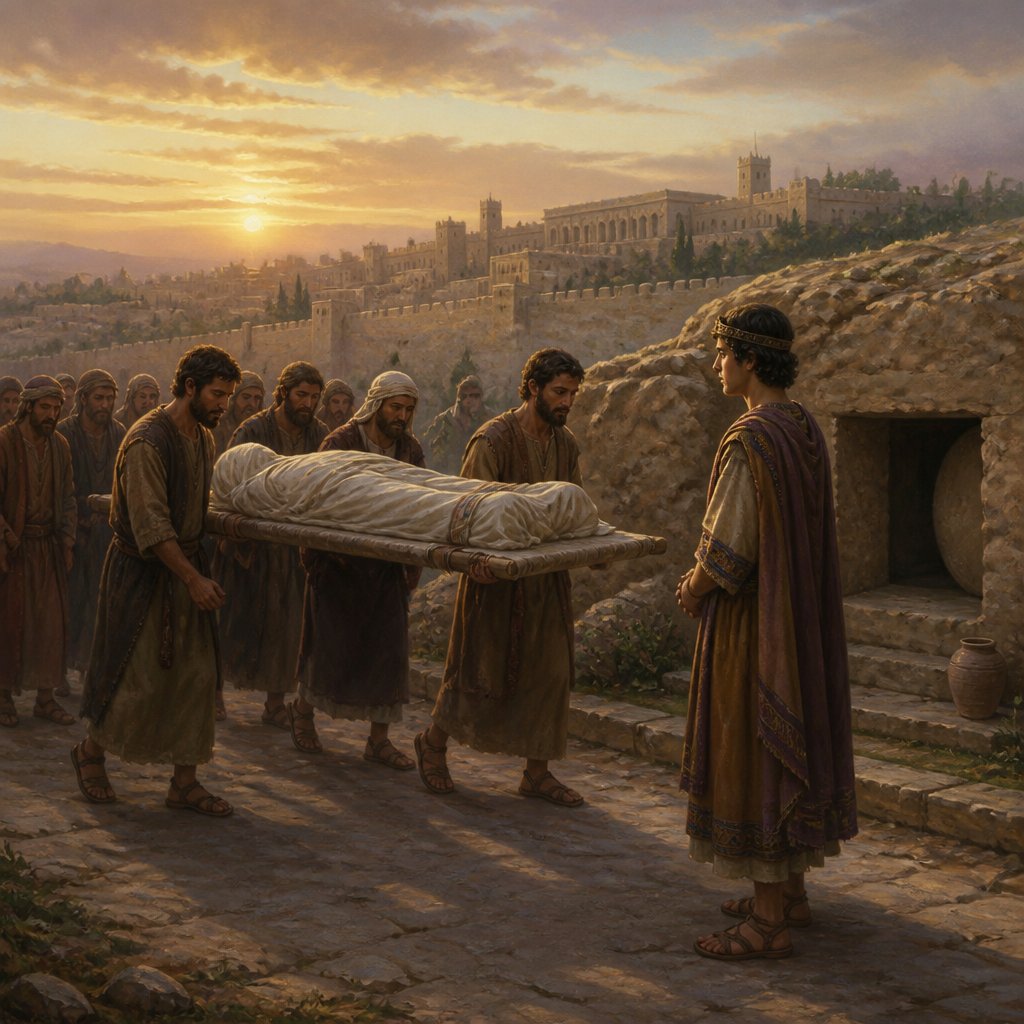
As we reflect on the historical account of Ahaz in 2 Chronicles 28:27, we are confronted with a sobering reality of legacy and leadership. The verse states, “And Ahaz slept with his fathers, and they buried him in the city, even in Jerusalem: but they brought him not into the sepulchres of the kings of Israel: and Hezekiah his son reigned in his stead.” This passage encapsulates the culmination of Ahaz's reign and the consequent transition to his son, Hezekiah, forcing us to confront the profound implications of what it means to leave a legacy.
Ahaz, king of Judah, reigned during a tumultuous time. His leadership was marked by significant turmoil, including invasion and internal strife. Rather than relying on God, Ahaz sought help from foreign powers, notably the Assyrians, forsaking his covenant with the Lord. His actions led to a decline in the spiritual and moral fabric of Judah, causing many to drift away from the worship of Yahweh. How often do we see leaders today, both in church and in wider society, make decisions driven by fear or expediency rather than faith and conviction? We are reminded that these choices can have lasting effects, not only on ourselves but also on future generations.
The burial of Ahaz serves as a revelation of how he was viewed in the eyes of God and his people. The fact that he was not granted a place in the sepulchres of the kings of Israel sends a clear message about the assessment of his reign. Ahaz's life was one of disgrace and disappointment—a legacy tarnished by his disobedience. When he closed his eyes for the last time, Ahaz didn't leave behind a legacy of reverence or respect; instead, he left his son, Hezekiah, a kingdom disrupted by his choices and a people in desperate need of revival. We must ask ourselves: what kind of legacy are we leaving behind?
In stark contrast, Hezekiah would reign as a king whose heart was inclined toward the Lord. His emergence as a leader following Ahaz presents a pivotal moment for Judah. Hezekiah's reign brings hope, restoration, and a significant return to the worship of Yahweh. It highlights the transformative power of turning back to God, which yields the fruits of righteousness and genuine revival. The shadow of Ahaz’s poor leadership only serves to underscore the brilliance of Hezekiah’s reforms. Where one king had led the people astray, the next had the opportunity to lead them back to unity with God.
In considering how the roots of our own legacies can be changed, we must acknowledge that it is never too late to start living a life marked by faith and obedience. No matter the mistakes of the past, each day presents a fresh opportunity to choose God’s path. In Christ, we find not just the chance for redemption, but also the promise that we can influence the next generation for good.
Ahaz’s lack of honor in death serves as a warning to all of us regarding how we choose to live. Let us strive to embody the qualities that Hezekiah displayed: a heart for God, a spirit of repentance, and a commitment to lead others back to righteousness. Furthermore, as we exercise leadership in our own lives—be it in our families, workplaces, or communities—may we ensure that our legacies are marked by love, faith, and a dedicated service to God. Let us remember that those who follow in our footsteps will learn from our actions, both good and bad. Embrace the chance to be a Hezekiah in a world that is constantly wrestling with the shadow of Ahaz.
In this season of reflection, may we earnestly seek God’s guidance, understanding that our choices today shape the mountains of tomorrow’s legacy. Let us also pray for the leaders among us that they may emulate righteousness so that when their time comes, they too will be remembered for their faithful service to God.
Want to reflect more on 2 Chronicles 28:27?
Continue your spiritual journey with Bible Chat — an AI-powered tool for exploring God's Word through conversation. Ask questions, discover connections, and deepen your understanding.
Get Our Apps


2 Chronicles 28:27 Artwork

2 Chronicles 28:27 - "And Ahaz slept with his fathers, and they buried him in the city, even in Jerusalem: but they brought him not into the sepulchres of the kings of Israel: and Hezekiah his son reigned in his stead."
"And Ahaz slept with his fathers, and they buried him in the city, even in Jerusalem: but they brought him not into the sepulchres of the kings of Israel: and Hezekiah his son reigned in his stead." - 2 Chronicles 28:27

1 Chronicles 27:28 - "And over the olive trees and the sycomore trees that were in the low plains was Baal-hanan the Gederite: and over the cellars of oil was Joash:"

2 Chronicles 28:3

2 Chronicles 20:28

2 Chronicles 28:2 - "For he walked in the ways of the kings of Israel, and made also molten images for Baalim."

2 Chronicles 20:28 - "And they came to Jerusalem with psalteries and harps and trumpets unto the house of the LORD."

1 Chronicles 2:27 - "And the sons of Ram the firstborn of Jerahmeel were, Maaz, and Jamin, and Eker."

2 Chronicles 9:28 - "And they brought unto Solomon horses out of Egypt, and out of all lands."

1 Chronicles 2:28 - "And the sons of Onam were, Shammai, and Jada. And the sons of Shammai; Nadab, and Abishur."

2 Chronicles 28:17 - "For again the Edomites had come and smitten Judah, and carried away captives."

2 Chronicles 28:14 - "So the armed men left the captives and the spoil before the princes and all the congregation."

2 Chronicles 18:28 - "So the king of Israel and Jehoshaphat the king of Judah went up to Ramoth-gilead."

2 Chronicles 28:16 - "¶ At that time did king Ahaz send unto the kings of Assyria to help him."

2 Chronicles 25:28 - "And they brought him upon horses, and buried him with his fathers in the city of Judah."

2 Chronicles 35:27 - "And his deeds, first and last, behold, they are written in the book of the kings of Israel and Judah."

Mark 2:27-28 - "And he said unto them, The sabbath was made for man, and not man for the sabbath: Therefore the Son of man is Lord also of the sabbath."

2 Chronicles 28:20 - "And Tilgath-pilneser king of Assyria came unto him, and distressed him, but strengthened him not."

2 Chronicles 27:4 - "Moreover he built cities in the mountains of Judah, and in the forests he built castles and towers."

2 Chronicles 27:3 - "He built the high gate of the house of the LORD, and on the wall of Ophel he built much."

2 Chronicles 28:22 - "¶ And in the time of his distress did he trespass yet more against the LORD: this is that king Ahaz."

2 Chronicles 28:4 - "He sacrificed also and burnt incense in the high places, and on the hills, and under every green tree."

2 Kings 23:28 - "Now the rest of the acts of Josiah, and all that he did, are they not written in the book of the chronicles of the kings of Judah?"

2 Chronicles 32:28 - "Storehouses also for the increase of corn, and wine, and oil; and stalls for all manner of beasts, and cotes for flocks."

2 Chronicles 29:28 - "And all the congregation worshipped, and the singers sang, and the trumpeters sounded: and all this continued until the burnt offering was finished."

2 Chronicles 27:6 - "So Jotham became mighty, because he prepared his ways before the LORD his God."

2 Chronicles 27:8 - "He was five and twenty years old when he began to reign, and reigned sixteen years in Jerusalem."

2 Chronicles 28:7 - "And Zichri, a mighty man of Ephraim, slew Maaseiah the king's son, and Azrikam the governor of the house, and Elkanah that was next to the king."

2 Chronicles 9:27 - "And the king made silver in Jerusalem as stones, and cedar trees made he as the sycomore trees that are in the low plains in abundance."

1 Chronicles 27:2 - "Over the first course for the first month was Jashobeam the son of Zabdiel: and in his course were twenty and four thousand."