The Heart of Deliverance: A Reflection on 2 Chronicles 28:14
"So the armed men left the captives and the spoil before the princes and all the congregation." - 2 Chronicles 28:14
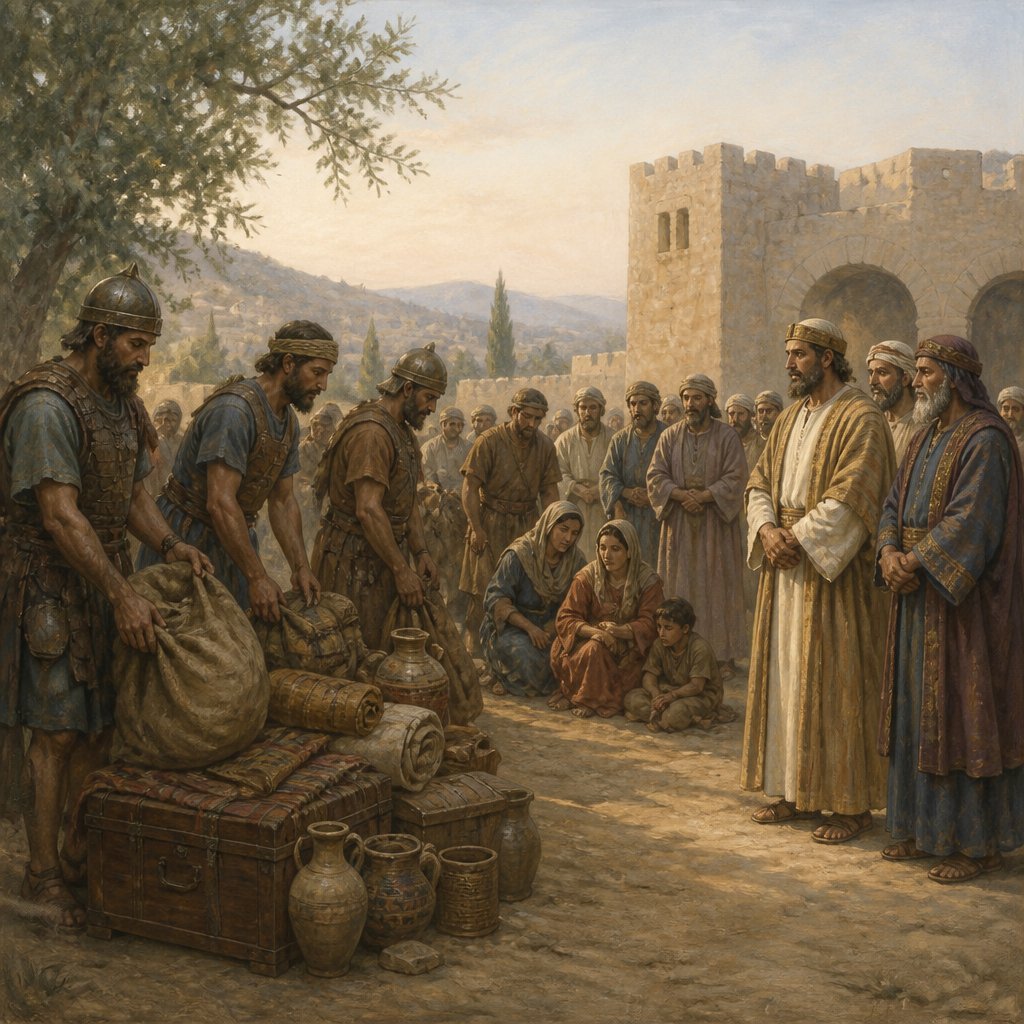
The passage we examine today is found in 2 Chronicles 28:14, which states, "So the armed men left the captives and the spoil before the princes and all the congregation." This seemingly simple verse is deeply embedded in a larger narrative, revealing the complex interplay of God's mercy, human responsibility, and the hope of redemption in the midst of chaos.
To fully appreciate the weight of this verse, we must consider the context in which it was spoken. King Ahaz of Judah was facing immense pressure and danger from both the northern kingdom of Israel and Syria. In his attempt to seek help, Ahaz made a critical error by turning to Assyria, leading to God’s judgment upon Judah. The situation arose, showcasing man’s frailty and the dire consequences of sin — a theme consistently echoed throughout Scripture.
In the chaos and turmoil created by King Ahaz’s unfaithfulness, we see a vivid picture of God's unwavering love for His people. The men, likely warriors who had just returned from battle, are moved by a sense of duty and compassion. Instead of treating the captives as mere spoils of war, they decided to leave both the captives, whom they had taken during their military campaign, and the amassed spoil before the leaders and congregation of Judah. Their actions reflect a profound moment of grace amidst devastation — a turning away from the brutality that often accompanies warfare.
At a deeper level, we may find ourselves reflecting on the nature of grace in our own lives. There are times when we encounter situations that leave us feeling like captives to our circumstances — struggles with sin, isolation, despair, or even judgment. Yet in this verse, we witness the potential for restoration. The armed men chose to release their captives, a powerful gesture that challenges us to also consider what we are holding on to that keeps us in bondage. Are there grievances, past mistakes, or relationships we refuse to let go of?
Consider the burden of unforgiveness. Is there a situation or a person in your life you've treated as a 'spoil,' holding onto resentment instead of grace? Just as these armed men chose to leave the captives with the princes, we too are called to release our burdens to God. In doing so, we will experience a lightness in our spirit, knowing that we are no longer defined by our past struggles, but by God's redeeming love.
Additionally, the involvement of "the princes and all the congregation" indicates a community of faith responding to God’s leading. When we experience deliverance, it often occurs within the framework of community. We should always strive to cultivate relationships with fellow believers who can support us through our healing processes. Encourage one another, as James 5:16 reminds us: "Confess your faults one to another, and pray one for another, that ye may be healed." Through this fellowship, we gain strength, understanding, and prayer support.
The historical account may seem distant, but the principles it showcases are timeless. The representation of captives being freed calls for action from us today. In a world rife with suffering, we are instruments of God’s peace, called to intercede for the captives around us — whether through prayer, support, or tangible acts of kindness. The spoil abandoned by the soldiers also reminds us that material possessions are insignificant compared to the value of human life and freedom.
Finally, as we meditate on this verse, let us not overlook God’s overarching plan throughout the turmoil of Ahaz’s reign. Even in his unfaithfulness, the Lord’s sovereignty was ever-present. God’s purpose included a future restoration and ultimately, the coming of the Messiah through the line of David, which reminds us that no situation is beyond His redemptive reach. He can and will bring beauty from ashes and joy from despair.
In your life today, remember the comfort found in God’s grace. May your heart be willing to release the captives within and be empowered to extend that same grace to those around you.
Want to reflect more on 2 Chronicles 28:14?
Continue your spiritual journey with Bible Chat — an AI-powered tool for exploring God's Word through conversation. Ask questions, discover connections, and deepen your understanding.
Get Our Apps


2 Chronicles 28:14 Artwork

2 Chronicles 28:14 - "So the armed men left the captives and the spoil before the princes and all the congregation."
"So the armed men left the captives and the spoil before the princes and all the congregation." - 2 Chronicles 28:14

2 Chronicles 28:3

2 Chronicles 20:28

2 Kings 14:28 - "¶ Now the rest of the acts of Jeroboam, and all that he did, and his might, how he warred, and how he recovered Damascus, and Hamath, which belonged to Judah, for Israel, are they not written in the book of the chronicles of the kings of Israel?"

2 Chronicles 28:2 - "For he walked in the ways of the kings of Israel, and made also molten images for Baalim."

2 Chronicles 20:28 - "And they came to Jerusalem with psalteries and harps and trumpets unto the house of the LORD."

2 Chronicles 9:28 - "And they brought unto Solomon horses out of Egypt, and out of all lands."

2 chronicles 7:14

2 chronicles 7:14

1 Chronicles 2:28 - "And the sons of Onam were, Shammai, and Jada. And the sons of Shammai; Nadab, and Abishur."

2 Chronicles 28:17 - "For again the Edomites had come and smitten Judah, and carried away captives."

2 Chronicles 18:28 - "So the king of Israel and Jehoshaphat the king of Judah went up to Ramoth-gilead."

2 Chronicles 28:16 - "¶ At that time did king Ahaz send unto the kings of Assyria to help him."

2 Chronicles 25:28 - "And they brought him upon horses, and buried him with his fathers in the city of Judah."

1 Chronicles 2:14 - "Nethaneel the fourth, Raddai the fifth,"

2 Chronicles 28:20 - "And Tilgath-pilneser king of Assyria came unto him, and distressed him, but strengthened him not."

2 Chronicles 14:2 - "And Asa did that which was good and right in the eyes of the LORD his God:"

2 Chronicles 28:22 - "¶ And in the time of his distress did he trespass yet more against the LORD: this is that king Ahaz."

2 Chronicles 28:4 - "He sacrificed also and burnt incense in the high places, and on the hills, and under every green tree."

2 Kings 23:28 - "Now the rest of the acts of Josiah, and all that he did, are they not written in the book of the chronicles of the kings of Judah?"

2 Chronicles 32:28 - "Storehouses also for the increase of corn, and wine, and oil; and stalls for all manner of beasts, and cotes for flocks."

2 Samuel 14:28 - "¶ So Absalom dwelt two full years in Jerusalem, and saw not the king's face."

1 Chronicles 28:14 - "He gave of gold by weight for things of gold, for all instruments of all manner of service; silver also for all instruments of silver by weight, for all instruments of every kind of service:"

2 Chronicles 29:28 - "And all the congregation worshipped, and the singers sang, and the trumpeters sounded: and all this continued until the burnt offering was finished."

2 Chronicles 28:7 - "And Zichri, a mighty man of Ephraim, slew Maaseiah the king's son, and Azrikam the governor of the house, and Elkanah that was next to the king."

2 Kings 14:18 - "And the rest of the acts of Amaziah, are they not written in the book of the chronicles of the kings of Judah?"

2 Chronicles 29:14 - "And of the sons of Heman; Jehiel, and Shimei: and of the sons of Jeduthun; Shemaiah, and Uzziel."

2 Chronicles 15:14 - "And they sware unto the LORD with a loud voice, and with shouting, and with trumpets, and with cornets."

2 Chronicles 28:26 - "¶ Now the rest of his acts and of all his ways, first and last, behold, they are written in the book of the kings of Judah and Israel."