Eyes Upon Thee: A Prayer in Times of Desperation
"O our God, wilt thou not judge them? for we have no might against this great company that cometh against us; neither know we what to do: but our eyes are upon thee." - 2 Chronicles 20:12
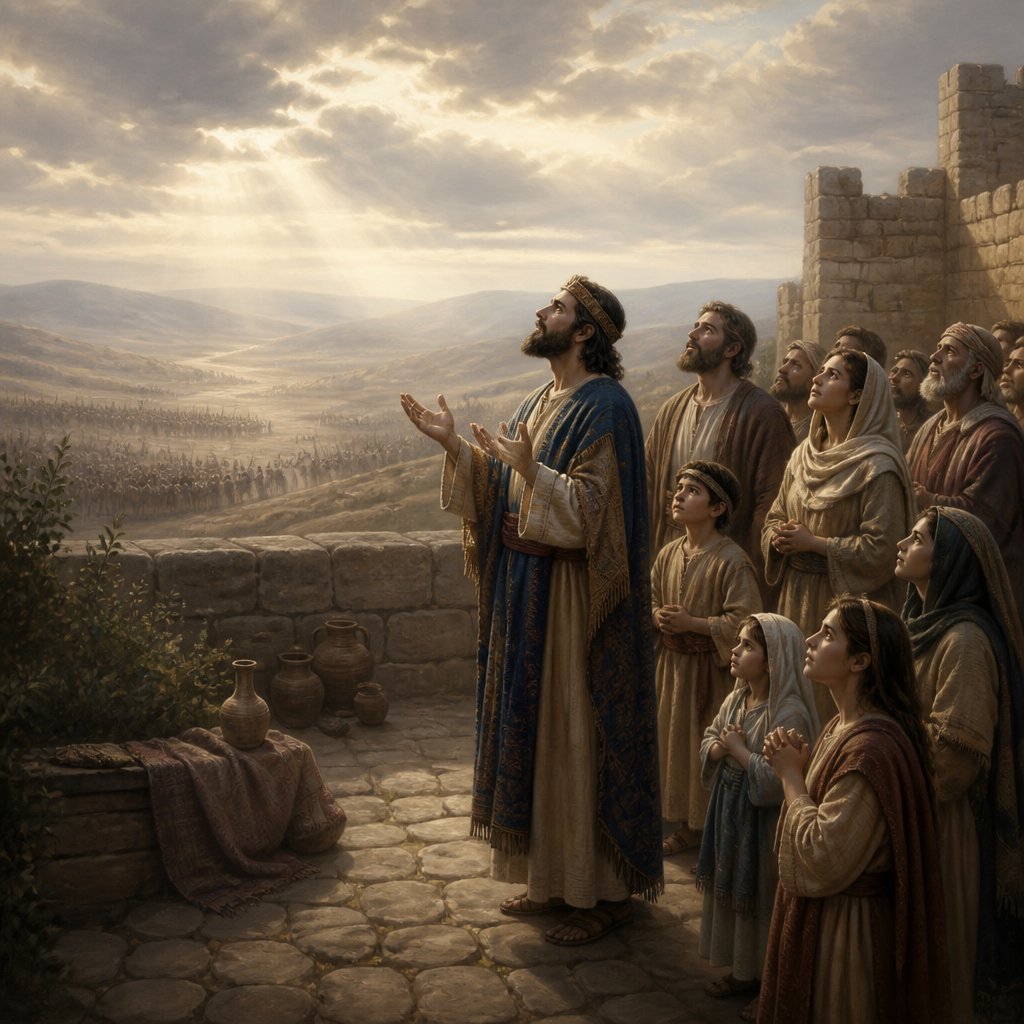
In the sphere of Christian faith, we often encounter moments that test our resolve and push us to our limits. These pivotal moments can manifest as crises in our lives, much like the situation faced by King Jehoshaphat in 2 Chronicles 20. As we delve into this powerful verse, we find profound lessons in humility, reliance, and faith. The cry of Jehoshaphat resonates with many of us: "O our God, wilt thou not judge them? for we have no might against this great company that cometh against us; neither know we what to do: but our eyes are upon thee."
### Context of the Verse
This verse is situated within a broader narrative where Judah faces an imminent threat. A vast army from Moab and Ammon was advancing towards them, leaving the people of Judah in sheer terror. Historically speaking, Israel had experienced numerous conflicts, but this particular moment was characterized by a palpable sense of hopelessness among the people. In times such as these, the instinctual response is often one of panic and despair. However, instead of succumbing to fear, Jehoshaphat models a response steeped in faith.
### The Plea for Divine Judgment
The King’s opening plea, "O our God, wilt thou not judge them?" is significant. It reveals not only Jehoshaphat's belief in God’s ultimate authority but also his recognition of God’s role as a just judge. In moments of distress, it can be tempting to assume that we are powerful enough to control the situation or to try to manage it on our own. Yet, Jehoshaphat’s declaration captures a crucial truth: there are battles that we simply cannot fight without divine intervention. How many times, as followers of Christ, do we attempt to navigate our struggles with sheer willpower? This verse serves as a gentle reminder to redirect our focus from our human limitations to God’s infinite capabilities.
### The Acknowledgment of Powerlessness
The acknowledgment of powerlessness in King Jehoshaphat's words — "for we have no might against this great company that cometh against us" — captures the essence of human vulnerability. In acknowledging our limits, we align ourselves with the reality of dependence on God. The modern Christian often finds it challenging to accept vulnerability, largely due to a societal fixation on strength and success. However, it is in our weakness where God’s strength is made perfect (2 Corinthians 12:9). Jehoshaphat’s transparency about his fear and powerlessness portrays a genuine heart, ready to surrender control to God.
### The Confession of Uncertainty
Further into the plea, he confesses, "neither know we what to do." This heartfelt admission encapsulates the human experience — the uncertainty that encompasses our daily lives. In a world laden with decisions and dilemmas, we too sometimes reach a point where we genuinely do not know the right course of action. It can be in these moments of helplessness that we feel most disconnected from God, when, in truth, these are the very moments that call us to draw closer.
### Fixing Our Eyes on God
The final part of the verse highlights Jehoshaphat’s resolute decision: "but our eyes are upon thee." In tumultuous times, when chaos surrounds us, this is perhaps the most crucial act of faith we can embody. Instead of turning inward or outward, we are beckoned to keep our gazes fixed on the Lord.
### Conclusion
With unwavering focus on God amidst trials, we begin to see His guidance, strength, and peace infused into our lives. We are reminded that while we may be powerless, our God is powerful. When we prioritize our perspectives by focusing our eyes upward, we open ourselves to His divine intervention and the miraculous ways He can work through seemingly insurmountable odds.
As you go about your day, reflect on areas where you feel overwhelmed. Like Jehoshaphat, reframe your approach by directing your fears, uncertainties, and limitations toward God. Declare together with him, "O our God," and rest assured in the knowledge that your gaze upon Him transforms the way you face life's battles.
Want to reflect more on 2 Chronicles 20:12?
Continue your spiritual journey with Bible Chat — an AI-powered tool for exploring God's Word through conversation. Ask questions, discover connections, and deepen your understanding.
Get Our Apps


2 Chronicles 20:12 Artwork

2 Chronicles 20:12 - "O our God, wilt thou not judge them? for we have no might against this great company that cometh against us; neither know we what to do: but our eyes are upon thee."
"O our God, wilt thou not judge them? for we have no might against this great company that cometh against us; neither know we what to do: but our eyes are upon thee." - 2 Chronicles 20:12

2 Chronicles 20:37

2 Chronicles 20:28

2 Chronicles 20:21

2 Chronicles 20:18

2 Chronicles 11:20

2 Chronicles 30:20 - "And the LORD hearkened to Hezekiah, and healed the people."

2 chronicles 13:12

1 Chronicles 2:20 - "And Hur begat Uri, and Uri begat Bezaleel."

2 Chronicles 20:28 - "And they came to Jerusalem with psalteries and harps and trumpets unto the house of the LORD."

1 Chronicles 12:20 - "As he went to Ziklag, there fell to him of Manasseh, Adnah, and Jozabad, and Jediael, and Michael, and Jozabad, and Elihu, and Zilthai, captains of the thousands that were of Manasseh."

2 Chronicles 20:13 - "And all Judah stood before the LORD, with their little ones, their wives, and their children."

1 Chronicles 2:12 - "And Boaz begat Obed, and Obed begat Jesse,"

2 Chronicles 32:20 - "And for this cause Hezekiah the king, and the prophet Isaiah the son of Amoz, prayed and cried to heaven."

2 Kings 20:20 - "¶ And the rest of the acts of Hezekiah, and all his might, and how he made a pool, and a conduit, and brought water into the city, are they not written in the book of the chronicles of the kings of Judah?"

2 Chronicles 20:5 - "¶ And Jehoshaphat stood in the congregation of Judah and Jerusalem, in the house of the LORD, before the new court,"

2 Chronicles 20:8 - "And they dwelt therein, and have built thee a sanctuary therein for thy name, saying,"

2 Chronicles 29:20 - "¶ Then Hezekiah the king rose early, and gathered the rulers of the city, and went up to the house of the LORD."

2 Chronicles 20:3 - "And Jehoshaphat feared, and set himself to seek the LORD, and proclaimed a fast throughout all Judah."

2 Chronicles 20:30 - "So the realm of Jehoshaphat was quiet: for his God gave him rest round about."

2 Chronicles 4:20 - "Moreover the candlesticks with their lamps, that they should burn after the manner before the oracle, of pure gold;"

2 Chronicles 28:20 - "And Tilgath-pilneser king of Assyria came unto him, and distressed him, but strengthened him not."

2 Chronicles 20:36 - "And he joined himself with him to make ships to go to Tarshish: and they made the ships in Ezion-geber."

2 Chronicles 12:6 - "Whereupon the princes of Israel and the king humbled themselves; and they said, The LORD is righteous."

2 Chronicles 12:4 - "And he took the fenced cities which pertained to Judah, and came to Jerusalem."

2 Chronicles 20:32 - "And he walked in the way of Asa his father, and departed not from it, doing that which was right in the sight of the LORD."

2 Chronicles 17:12 - "¶ And Jehoshaphat waxed great exceedingly; and he built in Judah castles, and cities of store."

2 Chronicles 13:20 - "Neither did Jeroboam recover strength again in the days of Abijah: and the LORD struck him, and he died."

2 Chronicles 15:12 - "And they entered into a covenant to seek the LORD God of their fathers with all their heart and with all their soul;"