The Voice of God: Discernment in the Midst of Deception
"And Micaiah said, If thou certainly return in peace, then hath not the LORD spoken by me. And he said, Hearken, all ye people." - 2 Chronicles 18:27
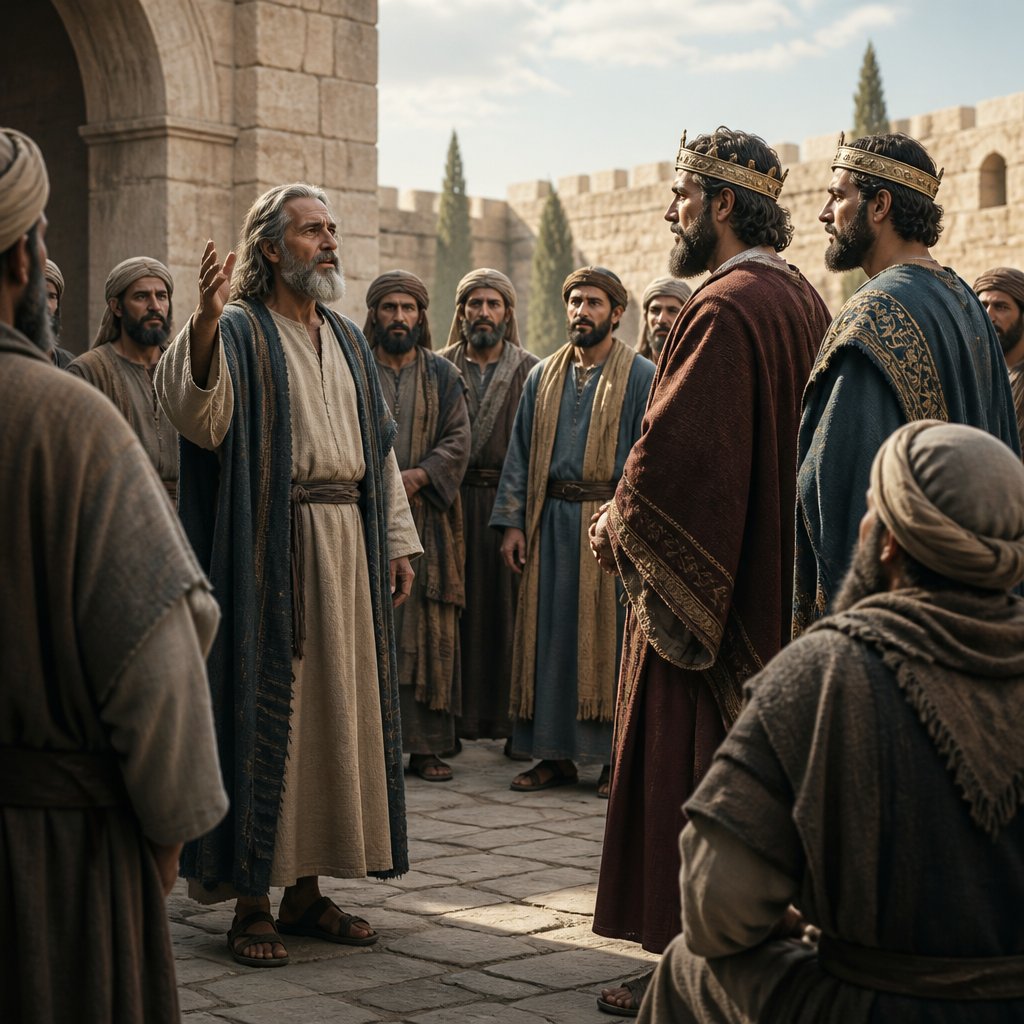
In 2 Chronicles 18:27, we find Micaiah the prophet standing before King Ahab and King Jehoshaphat, declaring a stark warning that reverberates through the ages: "And Micaiah said, If thou certainly return in peace, then hath not the LORD spoken by me. And he said, Hearken, all ye people." This verse encapsulates a moment of divine revelation and a call to genuine discernment in an era marked by false prophecies and harmful counsel. The situation surrounding this proclamation is a powerful reminder for us to examine whose voice we choose to listen to in our lives.
Micaiah was one of the few prophets who dared to speak the truth in the court of King Ahab, known for his unrighteousness and opposition to God’s will. In stark contrast to Ahab's courtiers, who filled his ears with flattering messages, Micaiah remained resolute, receiving his mandate directly from the Lord. His life reminds us that speaking the truth can often come with personal cost and risk, but it is ultimately a mark of faithfulness to God. As Christians, we are called to be witnesses of the truth, even when it is unpopular.
Ahab's request for counsel before going into battle illustrates a deeper spiritual battle—a struggle between obedience to God and yielding to temptation from worldly influences. Ahab represents those who seek validation for their desires rather than seeking God’s will, which reveals the human tendency to surround ourselves with voices that echo our own interpretations rather than challenge them. This is where discernment becomes crucial. Micaiah provides us with a model for listening to God amidst the cacophony of societal pressures and distorted truths.
Micaiah’s declaration, “If thou certainly return in peace, then hath not the LORD spoken by me,” challenges us to consider the consequences of our choices. His statement serves as a litmus test for authenticity in prophecy and guidance: genuine messages from God will bear clear fruit and lead to peace. This underscores an essential principle of Christian living—those who walk in the will of God will experience His peace even amidst trials. Every leader, every decision-maker, every believer is called to weigh the counsel they receive against the Word of God.
In Micaiah's admonition to “Hearken, all ye people,” we see a clarion call not just for the kings, but for all present. This echoes our responsibility in community; we are each accountable for the messages we uphold and the truths we disseminate. In our churches, families, workplaces, and communities, we must discern the messages we choose to amplify. Do we promote teachings that align with the Word, or do we propagate those that tickle the ears of our audience? Here lies a challenge for every believer: will we be conduits of truth, or will we remain passive spectators to the culture of deception?
The essence of Micaiah’s message implores us to be vigilant and discerning. In our prayer lives, how often do we pause to listen rather than speak? Are we genuinely seeking God’s direction, or merely attaching His name to our own choices? Just as Micaiah stood in contrast to the false prophets, we too are called to stand firm in our faith—not swayed by popular opinion or societal norms but anchored in the truth of God’s Word.
Each day presents new opportunities to listen and respond to His voice. As we approach our lives, our decisions, and our relationships, let us echo Micaiah’s resolute confidence in God’s sovereignty. Let us firmly affirm: "If the LORD has not spoken, I will not proceed," and trust that true peace will follow our obedience to His will. The Lord is speaking—may we have ears to hear and hearts willing to follow Him.
Want to reflect more on 2 Chronicles 18:27?
Continue your spiritual journey with Bible Chat — an AI-powered tool for exploring God's Word through conversation. Ask questions, discover connections, and deepen your understanding.
Get Our Apps


2 Chronicles 18:27 Artwork

2 Chronicles 18:27 - "And Micaiah said, If thou certainly return in peace, then hath not the LORD spoken by me. And he said, Hearken, all ye people."
"And Micaiah said, If thou certainly return in peace, then hath not the LORD spoken by me. And he said, Hearken, all ye people." - 2 Chronicles 18:27

1 Chronicles 27:18 - "Of Judah, Elihu, one of the brethren of David: of Issachar, Omri the son of Michael:"

2 Chronicles 18:9

2 Chronicles 18:9

2 Chronicles 20:18

1 Chronicles 2:27 - "And the sons of Ram the firstborn of Jerahmeel were, Maaz, and Jamin, and Eker."

2 Chronicles 35:27 - "And his deeds, first and last, behold, they are written in the book of the kings of Israel and Judah."

2 Chronicles 27:4 - "Moreover he built cities in the mountains of Judah, and in the forests he built castles and towers."

2 Chronicles 27:3 - "He built the high gate of the house of the LORD, and on the wall of Ophel he built much."

"Of Judah, Elihu, one of the brethren of David: of Issachar, Omri the son of Michael:" - 1 Chronicles 27:18

2 Kings 14:18 - "And the rest of the acts of Amaziah, are they not written in the book of the chronicles of the kings of Judah?"

2 Chronicles 27:6 - "So Jotham became mighty, because he prepared his ways before the LORD his God."

2 Chronicles 27:8 - "He was five and twenty years old when he began to reign, and reigned sixteen years in Jerusalem."

2 Chronicles 21:18 - "¶ And after all this the LORD smote him in his bowels with an incurable disease."

2 Chronicles 18:1 - "Now Jehoshaphat had riches and honour in abundance, and joined affinity with Ahab."

1 Chronicles 18:2 - "And he smote Moab; and the Moabites became David's servants, and brought gifts."

2 Chronicles 9:27 - "And the king made silver in Jerusalem as stones, and cedar trees made he as the sycomore trees that are in the low plains in abundance."

1 Chronicles 27:2 - "Over the first course for the first month was Jashobeam the son of Zabdiel: and in his course were twenty and four thousand."

2 Chronicles 27:9 - "¶ And Jotham slept with his fathers, and they buried him in the city of David: and Ahaz his son reigned in his stead."

2 Chronicles 17:18 - "And next him was Jehozabad, and with him an hundred and fourscore thousand ready prepared for the war."

2 Chronicles 18:6 - "But Jehoshaphat said, Is there not here a prophet of the LORD besides, that we might enquire of him?"

2 Chronicles 18:28 - "So the king of Israel and Jehoshaphat the king of Judah went up to Ramoth-gilead."

2 Chronicles 27:7 - "¶ Now the rest of the acts of Jotham, and all his wars, and his ways, lo, they are written in the book of the kings of Israel and Judah."

2 Chronicles 27:2 - "And he did that which was right in the sight of the LORD, according to all that his father Uzziah did: howbeit he entered not into the temple of the LORD. And the people did yet corruptly."

2 Chronicles 18:13 - "And Micaiah said, As the LORD liveth, even what my God saith, that will I speak."

2 Chronicles 18:8 - "And the king of Israel called for one of his officers, and said, Fetch quickly Micaiah the son of Imla."

2 Chronicles 4:18 - "Thus Solomon made all these vessels in great abundance: for the weight of the brass could not be found out."

2 Kings 1:18 - "Now the rest of the acts of Ahaziah which he did, are they not written in the book of the chronicles of the kings of Israel?"

2 Chronicles 18:4 - "¶ And Jehoshaphat said unto the king of Israel, Enquire, I pray thee, at the word of the LORD to day."