The Legacy We Leave Behind
"And they buried him in his own sepulchres, which he had made for himself in the city of David, and laid him in the bed which was filled with sweet odours and divers kinds of spices prepared by the apothecaries' art: and they made a very great burning for him." - 2 Chronicles 16:14
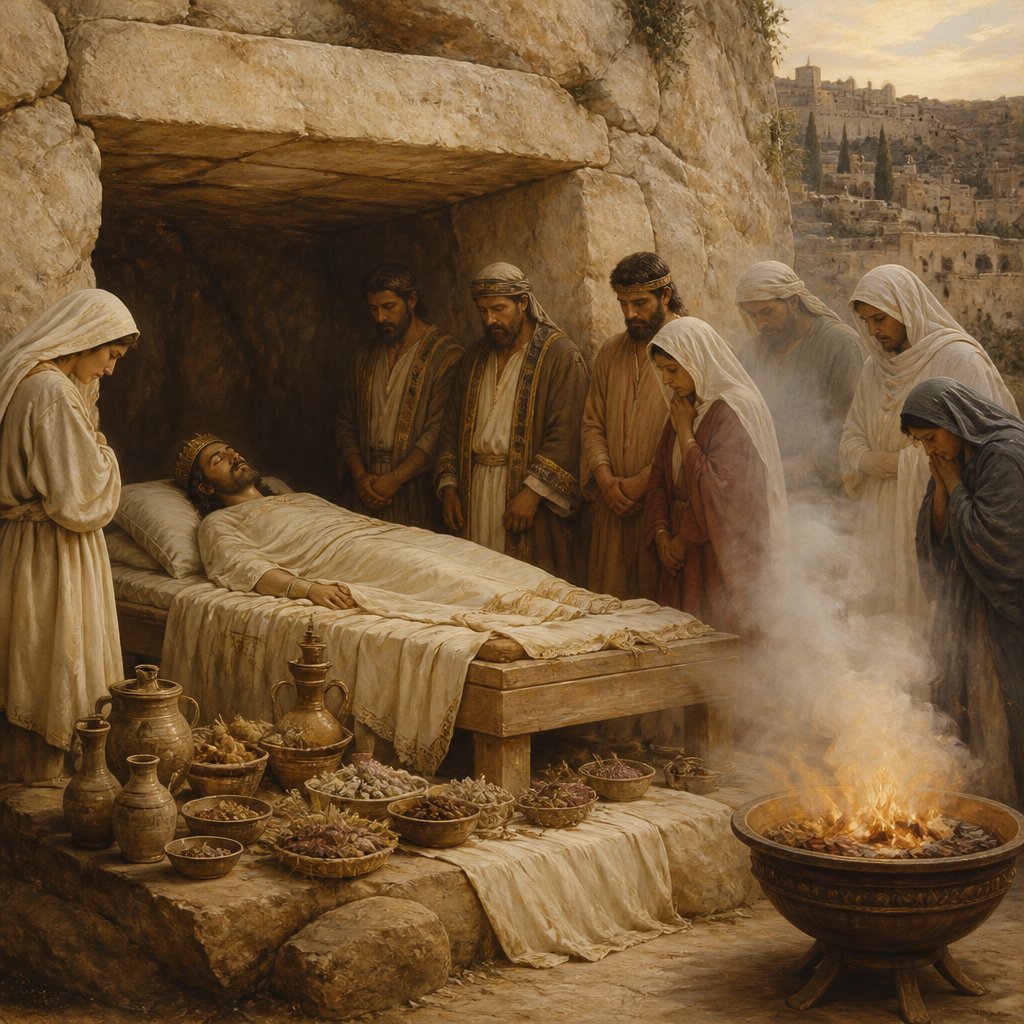
As we delve into the profound verse of 2 Chronicles 16:14, we find ourselves reflecting on the life and legacy of King Asa of Judah. The verse reads: "And they buried him in his own sepulchres, which he had made for himself in the city of David, and laid him in the bed which was filled with sweet odours and divers kinds of spices prepared by the apothecaries' art: and they made a very great burning for him."
This account may seem simple at first glance, discussing the burial of a king, yet it opens a window into significant themes central to our understanding of life, death, and the impact we have on those who come after us. Asa reigned for forty-one years and is often remembered for his reforms and commitment to God, seeking to purify the nation from idolatry and unfaithfulness. His legacy, however, is as complex as his life choices.
King Asa's sepulcher, an elaborate tomb he crafted for himself, may symbolize not just his royal status, but his aspirations and ultimate mortality. Contrary to the grand edifices we build, the true measure of our lives is not in the physical structures we leave behind, but in the spiritual heritage we cultivate in the hearts of those we impact. Asa’s tomb, beautifully adorned with spices and perfumes, speaks of his kingly status and possibly his desire to be remembered favorably. Yet, it's crucial to remember that as believers, our lasting banquet is not of spices and fragrances, but of faith, love, and good deeds.
The sweet odors and spices that filled his resting place serve as a metaphor for how we are remembered. The question that reverberates through history is not merely how we will be buried or memorialized, but what sweetness we have offered to those around us in our daily lives. Are we spreading the fragrant aroma of Christ in our words and actions?
In 2 Chronicles 16, we also observe that King Asa’s reign was not without challenges. After an impressive start as a king devoted to God, he ultimately faltered in faith when faced with adversity. He sought alliances with foreign nations rather than depending on God. In the end, despite a royal burial, what matters most is not how one dies, but how one lives and fulfills the divine purpose set before them.
In our own lives, we are often faced with two paths: to trust in our own understanding and capabilities, or to rely on the Creator who knows our future. King Asa’s story warns us that our walk of faith requires perseverance and a deep trust in God, even in times of strife. The legacy we cultivate is more than a physical monument; it is the essence of our relationship with God and those around us.
As we reflect on our own sepulchers—what we are crafting for our future—there is an invitation for introspection. The world may remember us for our achievements, but what will God remember us for? Have we invested in building relationships, sharing the Gospel, advocating for the marginalized, and loving unconditionally? A life lived in service and commitment to God becomes a sweet fragrance that transcends generations.
In closing, let us heed the life of King Asa and consider how we can cultivate a legacy of faith. Instead of preparing the spices for our own sepulcher, may we lead lives that fill others with the sweet aroma of Christ’s love and hope, leaving behind a heritage of faithfulness that will resonate in eternity. Let’s strive to live in such a way that when our time comes to rest, those who remain will create a great burning of remembrance—not of our physical dwelling places, but of the immeasurable love and truth we shared during our time on this earth.
Want to reflect more on 2 Chronicles 16:14?
Continue your spiritual journey with Bible Chat — an AI-powered tool for exploring God's Word through conversation. Ask questions, discover connections, and deepen your understanding.
Get Our Apps


2 Chronicles 16:14 Artwork

2 Chronicles 16:14 - "And they buried him in his own sepulchres, which he had made for himself in the city of David, and laid him in the bed which was filled with sweet odours and divers kinds of spices prepared by the apothecaries' art: and they made a very great burning for him."
"And they buried him in his own sepulchres, which he had made for himself in the city of David, and laid him in the bed which was filled with sweet odours and divers kinds of spices prepared by the apothecaries' art: and they made a very great burning for him." - 2 Chronicles 16:14

1 Chronicles 16:14 - "He is the LORD our God; his judgments are in all the earth."

2 chronicles 7:14

2 chronicles 7:14

1 Kings 16:14 - "Now the rest of the acts of Elah, and all that he did, are they not written in the book of the chronicles of the kings of Israel?"
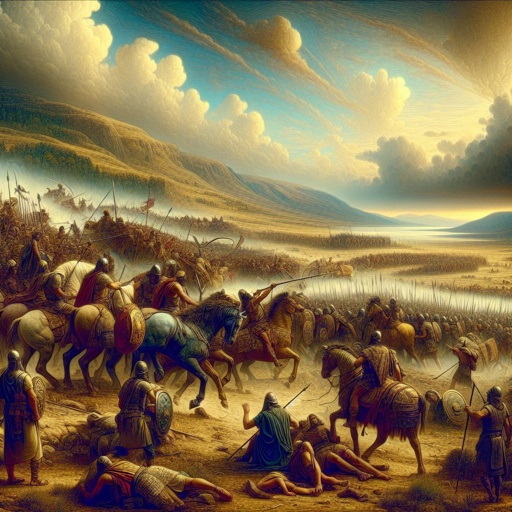
1 Chronicles 14:16 - "David therefore did as God commanded him: and they smote the host of the Philistines from Gibeon even to Gazer."

1 Chronicles 2:14 - "Nethaneel the fourth, Raddai the fifth,"

2 Chronicles 14:2 - "And Asa did that which was good and right in the eyes of the LORD his God:"

"He is the LORD our God; his judgments are in all the earth." - 1 Chronicles 16:14

2 Chronicles 13:16 - "And the children of Israel fled before Judah: and God delivered them into their hand."

2 Kings 14:18 - "And the rest of the acts of Amaziah, are they not written in the book of the chronicles of the kings of Judah?"

2 Chronicles 29:14 - "And of the sons of Heman; Jehiel, and Shimei: and of the sons of Jeduthun; Shemaiah, and Uzziel."

2 Chronicles 15:14 - "And they sware unto the LORD with a loud voice, and with shouting, and with trumpets, and with cornets."

Humble ourselves and pray 2 Chronicles 7:14

2 Chronicles 4:14 - "He made also bases, and lavers made he upon the bases;"

2 Chronicles 28:16 - "¶ At that time did king Ahaz send unto the kings of Assyria to help him."

2 Chronicles 14:4 - "And commanded Judah to seek the LORD God of their fathers, and to do the law and the commandment."

2 Chronicles 16:13 - "¶ And Asa slept with his fathers, and died in the one and fortieth year of his reign."

2 Chronicles 14:14 - "And they smote all the cities round about Gerar; for the fear of the LORD came upon them: and they spoiled all the cities; for there was exceeding much spoil in them."

2 Chronicles 28:14 - "So the armed men left the captives and the spoil before the princes and all the congregation."

2 Chronicles 14:12 - "So the LORD smote the Ethiopians before Asa, and before Judah; and the Ethiopians fled."

2 Chronicles 12:14 - "And he did evil, because he prepared not his heart to seek the LORD."

2 Chronicles 16:11 - "¶ And, behold, the acts of Asa, first and last, lo, they are written in the book of the kings of Judah and Israel."

1 Chronicles 2:16 - "Whose sisters were Zeruiah, and Abigail. And the sons of Zeruiah; Abishai, and Joab, and Asahel, three."

2 Samuel 16:14 - "And the king, and all the people that were with him, came weary, and refreshed themselves there."

2 Chronicles 3:14 - "¶ And he made the vail of blue, and purple, and crimson, and fine linen, and wrought cherubims thereon."

2 Chronicles 21:16 - "¶ Moreover the LORD stirred up against Jehoram the spirit of the Philistines, and of the Arabians, that were near the Ethiopians:"

2 Chronicles 32:16 - "And his servants spake yet more against the LORD God, and against his servant Hezekiah."

2 Kings 16:19 - "¶ Now the rest of the acts of Ahaz which he did, are they not written in the book of the chronicles of the kings of Judah?"