Strength in Numbers: Lessons from 2 Chronicles 12:3
"With twelve hundred chariots, and threescore thousand horsemen: and the people were without number that came with him out of Egypt; the Lubims, the Sukkiims, and the Ethiopians." - 2 Chronicles 12:3
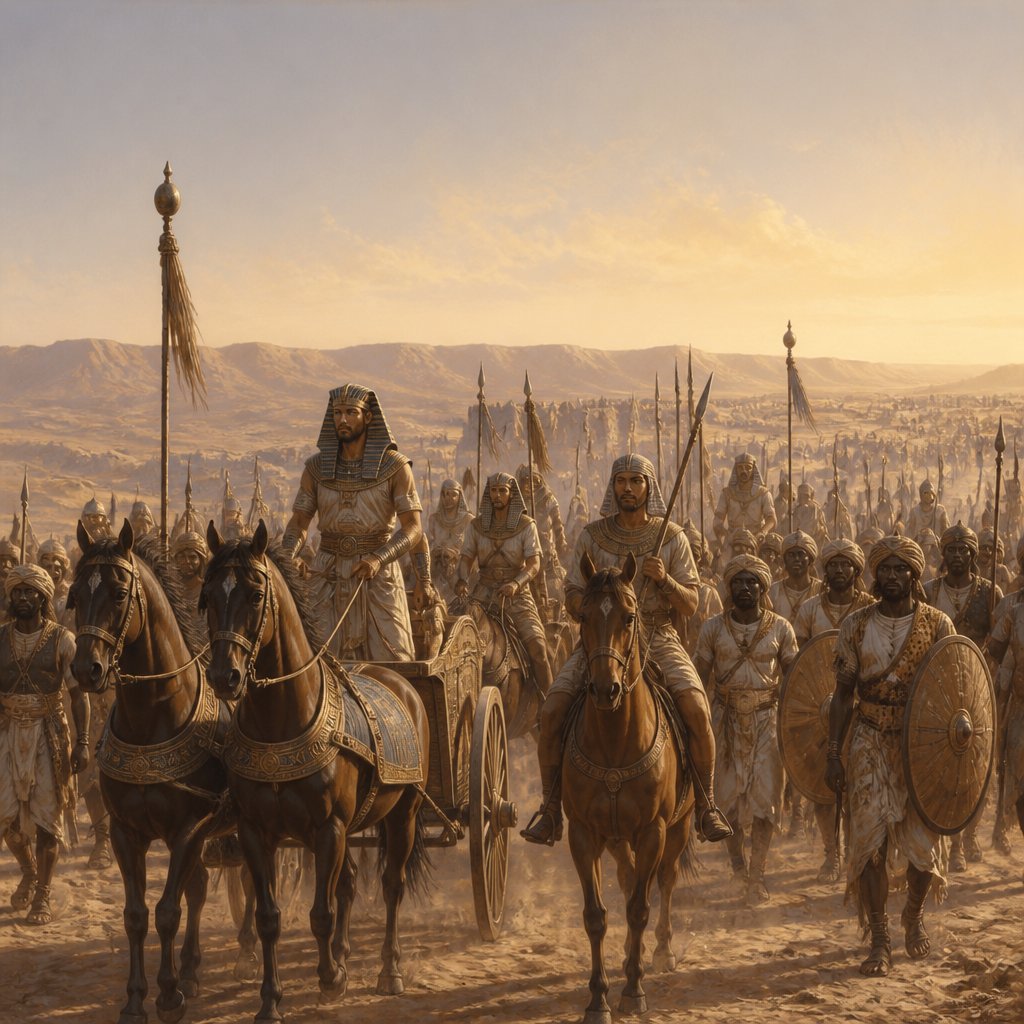
In 2 Chronicles 12:3, we encounter a remarkable scene detailed in the book, which chronicles the history of the kings of Judah. The verse reads, "With twelve hundred chariots, and threescore thousand horsemen: and the people were without number that came with him out of Egypt; the Lubims, the Sukkiims, and the Ethiopians." This scripture is not merely a historical account; it is a vivid illustration of the human inclination to rely on numbers, power, and earthly significance as measures of strength and security. Allow us to delve deeper into the context and implications of this verse.
To fully appreciate the narrative of King Rehoboam, it is crucial to reflect on what led to this moment of confrontation. Rehoboam had broken away from the wise counsel of his father Solomon and chose to rule with an iron fist, ultimately leading to the division of the kingdom (1 Kings 12). This verse highlights an impending conflict, where Rehoboam not only faced internal strife but also external threats from Egypt, led by Shishak.
The mention of "twelve hundred chariots" and "threescore thousand horsemen" signifies an overwhelming military might. Chariots in biblical times symbolized strength and sophistication in warfare. A king’s might was often assessed by the number of chariots and horsemen he commanded. Shishak's army comprised a multitude of warriors, presenting a powerful force that could easily instill fear in the hearts of the people of Judah.
Yet, herein lies a profound truth: when faced with overwhelming odds, it is easy for us to forget the true source of our strength and security. The people of Judah, despite being outnumbered and perhaps outmatched militarily, had the Almighty God on their side. However, Rehoboam's reliance on his own might, displayed through this impressive army, reflects a critical shift away from trust in God to trust in human resources.
This verse speaks to us today as we find ourselves in various battles—whether in our personal lives, careers, or spiritual journeys. How often do we gauge our strength based on our resources, education, or connections? Like Rehoboam, we can easily fall into the trap of counting the chariots and horsemen, believing they determine our victory or failure. Yet, the Bible consistently reminds us that our battles are not won by might, nor by power, but by God's Spirit (Zechariah 4:6).
As we reflect on these themes, we can draw a parallel to our spiritual lives. Just as Rehoboam’s army seemed formidable, our adversities may appear overwhelming, whether they manifest as financial struggles, health issues, or relationship turmoil. In those moments, rather than succumbing to fear or despair, we must remember that our strength lies in our relationship with God. When Goliath, a giant warrior, challenged the armies of Israel, all it took was David, a shepherd boy, armed with faith, to overcome him. God’s strength is made perfect in our weakness (2 Corinthians 12:9).
The phrase, "the people were without number," serves as another lesson in this verse. It reveals that even a vast multitude can be powerless without divine intervention. In our lives, we may often feel surrounded by deficiencies or insurmountable challenges, but we must remember that our successes and victories come from God alone. Instead of counting our chariots, let us assess our hearts, our faith, and our dependence on God.
Finally, let us consider the diversity of those who followed Shishak—"the Lubims, the Sukkiims, and the Ethiopians.” This reinforces the idea that even a coalition of varied forces cannot stand against God’s will. As we confront our own giants or worldly pressures, let us cling to faith, prayer, and the community of believers who will stand with us in trust and encouragement.
In closing, let us not be enamored by what the world values—numbers, strength, or status. Instead, may we seek to rely on God’s wisdom and might. Let this verse serve as a reminder that while the enemy may come against us with chariots and legions, we have the unmatched power of God on our side, who assures us that through Him, we are more than conquerors (Romans 8:37). Trust in Him, the ultimate source of all that we need.
Want to reflect more on 2 Chronicles 12:3?
Continue your spiritual journey with Bible Chat — an AI-powered tool for exploring God's Word through conversation. Ask questions, discover connections, and deepen your understanding.
Get Our Apps


2 Chronicles 12:3 Artwork

2 Chronicles 12:3 - "With twelve hundred chariots, and threescore thousand horsemen: and the people were without number that came with him out of Egypt; the Lubims, the Sukkiims, and the Ethiopians."
"With twelve hundred chariots, and threescore thousand horsemen: and the people were without number that came with him out of Egypt; the Lubims, the Sukkiims, and the Ethiopians." - 2 Chronicles 12:3

2 Chronicles 3:12 - "And one wing of the other cherub was five cubits, reaching to the wall of the house: and the other wing was five cubits also, joining to the wing of the other cherub."

2 chronicles 13:12

1 Chronicles 3:12 - "Amaziah his son, Azariah his son, Jotham his son,"

2 Chronicles 28:3

1 Chronicles 2:12 - "And Boaz begat Obed, and Obed begat Jesse,"

1 Chronicles 12:3 - "The chief was Ahiezer, then Joash, the sons of Shemaah the Gibeathite; and Jeziel, and Pelet, the sons of Azmaveth; and Berachah, and Jehu the Antothite,"

2 Chronicles 8:3 - "And Solomon went to Hamath-zobah, and prevailed against it."

2 Chronicles 12:6 - "Whereupon the princes of Israel and the king humbled themselves; and they said, The LORD is righteous."

2 Chronicles 3:2 - "And he began to build in the second day of the second month, in the fourth year of his reign."

2 Chronicles 12:4 - "And he took the fenced cities which pertained to Judah, and came to Jerusalem."

2 Chronicles 17:12 - "¶ And Jehoshaphat waxed great exceedingly; and he built in Judah castles, and cities of store."

2 Chronicles 14:12 - "So the LORD smote the Ethiopians before Asa, and before Judah; and the Ethiopians fled."

2 Chronicles 15:12 - "And they entered into a covenant to seek the LORD God of their fathers with all their heart and with all their soul;"

2 Chronicles 12:14 - "And he did evil, because he prepared not his heart to seek the LORD."

2 Chronicles 12:12 - "And when he humbled himself, the wrath of the LORD turned from him, that he would not destroy him altogether: and also in Judah things went well."

2 Chronicles 12:8 - "Nevertheless they shall be his servants; that they may know my service, and the service of the kingdoms of the countries."

2 Chronicles 22:12 - "And he was with them hid in the house of God six years: and Athaliah reigned over the land."

2 Kings 12:19 - "¶ And the rest of the acts of Joash, and all that he did, are they not written in the book of the chronicles of the kings of Judah?"

2 Chronicles 3:6 - "And he garnished the house with precious stones for beauty: and the gold was gold of Parvaim."

2 Chronicles 26:12 - "The whole number of the chief of the fathers of the mighty men of valour were two thousand and six hundred."

2 Chronicles 24:3 - "And Jehoiada took for him two wives; and he begat sons and daughters."

2 Chronicles 12:2 - "And it came to pass, that in the fifth year of king Rehoboam Shishak king of Egypt came up against Jerusalem, because they had transgressed against the LORD,"

2 Chronicles 3:9 - "And the weight of the nails was fifty shekels of gold. And he overlaid the upper chambers with gold."

2 Chronicles 12:16 - "And Rehoboam slept with his fathers, and was buried in the city of David: and Abijah his son reigned in his stead."

2 Chronicles 6:12 - "¶ And he stood before the altar of the LORD in the presence of all the congregation of Israel, and spread forth his hands:"

2 Chronicles 3:3 - "¶ Now these are the things wherein Solomon was instructed for the building of the house of God. The length by cubits after the first measure was threescore cubits, and the breadth twenty cubits."

2 Chronicles 27:3 - "He built the high gate of the house of the LORD, and on the wall of Ophel he built much."

2 Chronicles 10:3 - "And they sent and called him. So Jeroboam and all Israel came and spake to Rehoboam, saying,"