The Weight of Loyalty: A Reflection on Saul and His Armor-Bearer
"And when his armourbearer saw that Saul was dead, he fell likewise upon his sword, and died with him." - 1 Samuel 31:5

1 Samuel 31:5 states, "And when his armourbearer saw that Saul was dead, he fell likewise upon his sword, and died with him." This poignant moment at the end of King Saul's tumultuous reign epitomizes the depths of loyalty and despair. It urges us to reflect not only on the relationship dynamics between leadership and loyalty but also the tragic consequences of misplaced allegiance.
In the backdrop of this verse, we find ourselves at the climax of a dramatic narrative. Saul, the first king of Israel, had fallen out of favor with God and faced a devastating defeat at the hands of the Philistines. The armor-bearer, whose name is never mentioned in the Scriptures, perhaps exemplifies the quiet yet consequential presence of support and loyalty often found in leaders' lives. His life and actions encapsulate a profound truth: loyalty can sometimes lead to the most heart-wrenching of decisions.
This scene evokes deep contemplation about what it means to be loyal. In a world that glorifies strength, power, and triumph, we rarely consider the burdens of those who stand beside leaders. The armor-bearer’s choice to end his own life alongside Saul paints a tragic yet compelling picture of loyalty that goes beyond mere allegiance—it delves into the intimate bond formed through shared experiences, struggles, and the weight of leadership’s collateral damage. This armor-bearer chose to accompany his leader to death rather than face a life devoid of honor and purpose.
However, the narrative raises a poignant question: To whom do we devote our loyalty? The armor-bearer's act, though steeped in fidelity, reveals a faulty understanding of loyalty’s nature. He allowed himself to become a reflection of Saul's failures. What could have driven this loyal servant to such a grave choice? Perhaps it was despair at the fall of his king, a sense of duty that overshadowed his own well-being, or the belief that without Saul, he had lost his place in the world.
Loyalty is a double-edged sword. It can empower and uplift but can also lead to devastating consequences. As Christians, we are called to evaluate our loyalties in light of our faith and relationship with God. We must ask ourselves: am I loyal to the right people? Are my commitments leading me to despair, or do they draw me closer to the heart of God?
Looking at this tragic tale, we are reminded that our identity, purpose, and validation should not be solely tied to earthly leaders or figures. Jesus Christ is our ultimate King, and our loyalty to Him should always uplift our spirits, lead us to truth, and fill our lives with hope. Where Saul faltered, Christ fulfills—and where the armor-bearer followed a doomed king to despair, we are invited to follow a living Savior who leads us to victory.
The calling for us extends beyond mere loyalty; it urges us to invest in relationships and causes that reflect the character of Jesus. We are encouraged to support others in their achievements and struggles, but we must ensure our life choices do not simply mirror their failures. God desires our hearts to be anchored in Him first, rendering us better equipped to offer genuine support to others without sacrificing our own well-being.
As we meditate on 1 Samuel 31:5, let us contemplate the nature of our loyalties and seek after those that lead us closer to Christ. May we strive to be not just loyal followers of leaders but advocates of truth, justice, and love, holding fast to the hope that, even when earthly circumstances may crumble, our foundation in Christ remains secure. As we seek to embody such loyalty, we can navigate the complexities of relationships with grace, discernment, and ultimately, the wisdom of following the righteous path laid before us.
Want to reflect more on 1 Samuel 31:5?
Continue your spiritual journey with Bible Chat — an AI-powered tool for exploring God's Word through conversation. Ask questions, discover connections, and deepen your understanding.
Get Our Apps


1 Samuel 31:5 Artwork

1 Samuel 31:5 - "And when his armourbearer saw that Saul was dead, he fell likewise upon his sword, and died with him."

"And when his armourbearer saw that Saul was dead, he fell likewise upon his sword, and died with him." - 1 Samuel 31:5
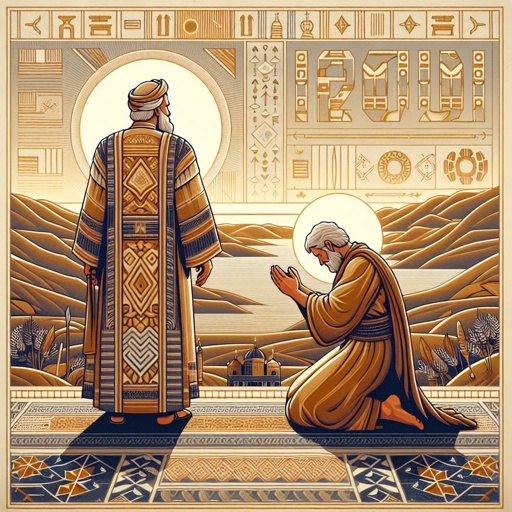
1 Samuel 15:31 - "So Samuel turned again after Saul; and Saul worshipped the LORD."

1 Samuel 31:11 - "¶ And when the inhabitants of Jabesh-gilead heard of that which the Philistines had done to Saul;"

1 Samuel 31:6 - "So Saul died, and his three sons, and his armourbearer, and all his men, that same day together."

1 Samuel 14:31 - "And they smote the Philistines that day from Michmash to Aijalon: and the people were very faint."

1 Samuel 31:13 - "And they took their bones, and buried them under a tree at Jabesh, and fasted seven days."

1 Samuel 31:3 - "And the battle went sore against Saul, and the archers hit him; and he was sore wounded of the archers."

1 Samuel 31:10 - "And they put his armour in the house of Ashtaroth: and they fastened his body to the wall of Beth-shan."

"So Samuel turned again after Saul; and Saul worshipped the LORD." - 1 Samuel 15:31

1 Samuel 31:1 - "Now the Philistines fought against Israel: and the men of Israel fled from before the Philistines, and fell down slain in mount Gilboa."

1 Samuel 17:31 - "And when the words were heard which David spake, they rehearsed them before Saul: and he sent for him."

1 Samuel 30:31 - "And to them which were in Hebron, and to all the places where David himself and his men were wont to haunt."

1 Samuel 31:8 - "And it came to pass on the morrow, when the Philistines came to strip the slain, that they found Saul and his three sons fallen in mount Gilboa."

1 Samuel 7:5 - "And Samuel said, Gather all Israel to Mizpeh, and I will pray for you unto the LORD."

1 Samuel 31:2 - "And the Philistines followed hard upon Saul and upon his sons; and the Philistines slew Jonathan, and Abinadab, and Malchi-shua, Saul's sons."

1 Samuel 3:1-10

1 Samuel 5: 3-4

1 Samuel 31:4 Saul took his own sword and fell on it. create the image in color

1 Samuel 15:5 - "And Saul came to a city of Amalek, and laid wait in the valley."

1 Samuel 2:31 - "Behold, the days come, that I will cut off thine arm, and the arm of thy father's house, that there shall not be an old man in thine house."

1 Samuel 5:1 - "And the Philistines took the ark of God, and brought it from Eben-ezer unto Ashdod."

1 Samuel 31:9 - "And they cut off his head, and stripped off his armour, and sent into the land of the Philistines round about, to publish it in the house of their idols, and among the people."

1 Samuel 5:5 - "Therefore neither the priests of Dagon, nor any that come into Dagon's house, tread on the threshold of Dagon in Ashdod unto this day."

1 Samuel 31:12 - "All the valiant men arose, and went all night, and took the body of Saul and the bodies of his sons from the wall of Beth-shan, and came to Jabesh, and burnt them there."

1 Sam 31: 12-13

"¶ And when the inhabitants of Jabesh-gilead heard of that which the Philistines had done to Saul;" - 1 Samuel 31:11

1 Samuel 28:5 - "And when Saul saw the host of the Philistines, he was afraid, and his heart greatly trembled."

1 Samuel 5:12 - "And the men that died not were smitten with the emerods: and the cry of the city went up to heaven."

1 Samuel 5:2 - "When the Philistines took the ark of God, they brought it into the house of Dagon, and set it by Dagon."