The Divine Reversal: A Lesson from Hannah's Journey
"They that were full have hired out themselves for bread; and they that were hungry ceased: so that the barren hath born seven; and she that hath many children is waxed feeble." - 1 Samuel 2:5
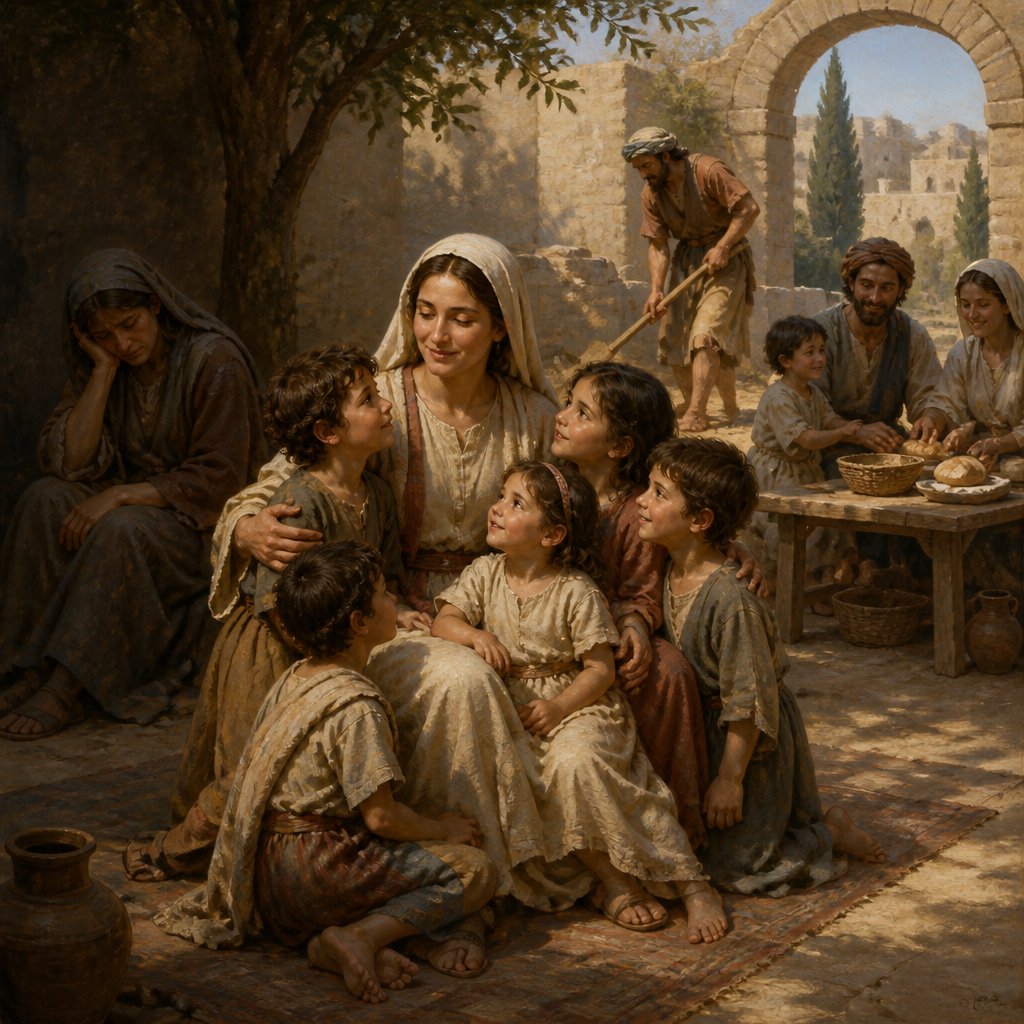
In the expanse of Scripture, we often overlook the deep lessons embedded in the cries and songs of the heart. One poignant vignette within this tapestry is captured in the prayer and praise of Hannah found in 1 Samuel 2:5. The verse states: "They that were full have hired out themselves for bread; and they that were hungry ceased: so that the barren hath born seven; and she that hath many children is waxed feeble."
This passage illustrates a profound spiritual truth: God often orchestrates a reversal of fortunes that defies human logic. It cries out for us to reflect deeply on the nature of God’s provision, mercy, and the sovereign reality of our existence.
To understand this fully, we need to delve into the context of Hannah's life. Here was a woman tormented by barrenness—a deeply shameful burden in her culture. More than just a desire for children, her plight signified spiritual and societal desolation. In her anguish, Hannah sought the Lord fervently, promising that if He granted her a son, she would dedicate him to God’s service. Her prayer was not just for the fulfillment of her desires but was steeped in a recognition of God’s character: a God who listens, sees, and acts.
When God answered Hannah’s prayer, she experienced a reversal of her condition. The once barren woman became the mother of Samuel, a prophet who would bring significant change to Israel. Yet the verse doesn’t just highlight her triumph; it underscores the broader principle of God's governance over human affairs. The rich who thought themselves secure in their prosperity found themselves in want, while the hungry were filled beyond expectation and capacity.
This divine economy suggests that what the world esteems—the proud and the mighty—could easily become the powerless and weak. It’s a theme that reverberates throughout Scripture: God chooses the foolish things of the world to confound the wise (1 Corinthians 1:27). God’s ways are not our ways, and His judgments are not only in the temporal but also in the eternal.
The statement, "the barren hath born seven," indicates complete transformation. Seven is often a number of completion in biblical numerology, demonstrating that Hannah’s blessing was more than she could have hoped for. She went from being a symbol of disgrace to one of plenitude and hope. Conversely, the one who appeared flourishing—the individual with many children—was brought low, illustrating that human accomplishment is fleeting when not rooted in reliance on God.
In this present age, how do we apply Hannah's song and the truth of 1 Samuel 2:5? We live in a society that measures worth through achievements, possessions, and outward success. Many chase after fullness—be it in wealth, status, or even experiences—believing these will satisfy the longings of the heart. Yet, like the individuals depicted in this verse, they may find themselves empty.
Conversely, those who recognize their hunger—both physically and spiritually—come to the Father seeking renewal. The hungry cease striving on their own and fit themselves into God’s narrative, allowing Him to fill them in ways that only He can. This hunger equips us to celebrate the riches of His grace, and to appreciate the blessings of abundance that are not merely physical but deeply spiritual.
In reflection, we must ask ourselves, where do we find balance between fullness and hunger? God is calling us away from the traps of self-sufficiency to a state of dependence on Him. In our weakness, He proves strong. Let us be encouraged today to trust His divine purposes, patiently waiting for His blessings. In our barrenness, we can rejoice that He can bring life. In the feebleness of what we possess, we can acknowledge God’s power to sustain us. God flips the script on what success looks like, transforming the story from barrenness into abundance.
May we, like Hannah, embrace the songs of our own journeys and become vessels through which God’s greatness is made known.
Want to reflect more on 1 Samuel 2:5?
Continue your spiritual journey with Bible Chat — an AI-powered tool for exploring God's Word through conversation. Ask questions, discover connections, and deepen your understanding.
Get Our Apps


1 Samuel 2:5 Artwork

1 Samuel 2:5 - "They that were full have hired out themselves for bread; and they that were hungry ceased: so that the barren hath born seven; and she that hath many children is waxed feeble."
"They that were full have hired out themselves for bread; and they that were hungry ceased: so that the barren hath born seven; and she that hath many children is waxed feeble." - 1 Samuel 2:5

1 Samuel 5:2 - "When the Philistines took the ark of God, they brought it into the house of Dagon, and set it by Dagon."

2 Samuel 1:5 - "And David said unto the young man that told him, How knowest thou that Saul and Jonathan his son be dead?"

2 Samuel 5:1 - "Then came all the tribes of Israel to David unto Hebron, and spake, saying, Behold, we are thy bone and thy flesh."

1 Samuel 2:12

2 Samuel 5:12

2 Samuel 5:16 - "And Elishama, and Eliada, and Eliphalet."

2 Samuel 5:15 - "Ibhar also, and Elishua, and Nepheg, and Japhia,"

1 Samuel 7:5 - "And Samuel said, Gather all Israel to Mizpeh, and I will pray for you unto the LORD."

1 Samuel 5: 3-4

2 Samuel 5:21 - "And there they left their images, and David and his men burned them."

2 Samuel 5:18 - "The Philistines also came and spread themselves in the valley of Rephaim."

1 Samuel 15:5 - "And Saul came to a city of Amalek, and laid wait in the valley."
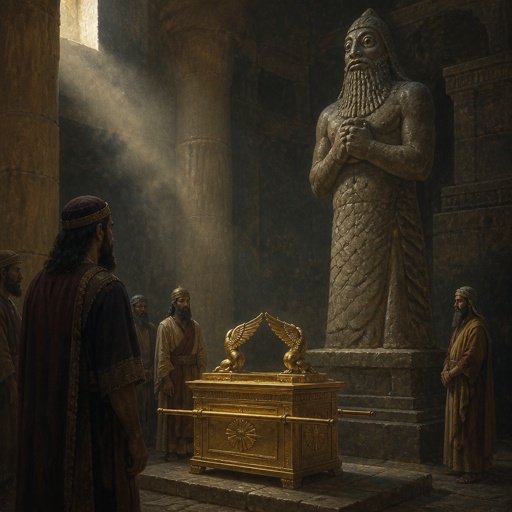
"When the Philistines took the ark of God, they brought it into the house of Dagon, and set it by Dagon." - 1 Samuel 5:2

2 Samuel 5:7 - "Nevertheless David took the strong hold of Zion: the same is the city of David."

1 Samuel 5:1 - "And the Philistines took the ark of God, and brought it from Eben-ezer unto Ashdod."

2 Samuel 5:10 - "And David went on, and grew great, and the LORD God of hosts was with him."

2 Samuel 11:5 - "And the woman conceived, and sent and told David, and said, I am with child."

2 Samuel 5:22 - "¶ And the Philistines came up yet again, and spread themselves in the valley of Rephaim."

"And Elishama, and Eliada, and Eliphalet." - 2 Samuel 5:16

2 Samuel 3:5 - "And the sixth, Ithream, by Eglah David's wife. These were born to David in Hebron."

1 Samuel 5:5 - "Therefore neither the priests of Dagon, nor any that come into Dagon's house, tread on the threshold of Dagon in Ashdod unto this day."

1 Samuel 2:26 - "And the child Samuel grew on, and was in favour both with the LORD, and also with men."
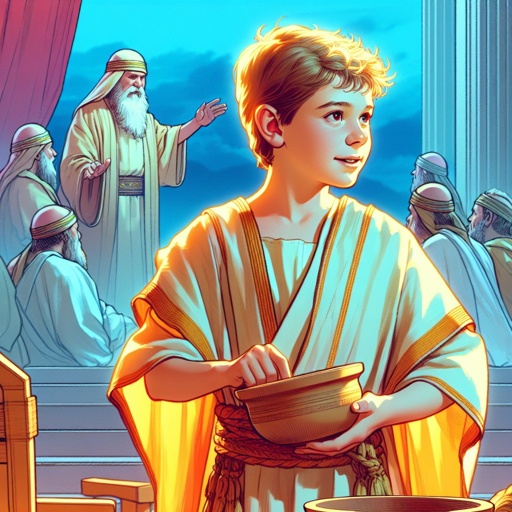
1 Samuel 2:18 - "¶ But Samuel ministered before the LORD, being a child, girded with a linen ephod."

2 Samuel 2:5 - "¶ And David sent messengers unto the men of Jabesh-gilead, and said unto them, Blessed be ye of the LORD, that ye have shewed this kindness unto your lord, even unto Saul, and have buried him."
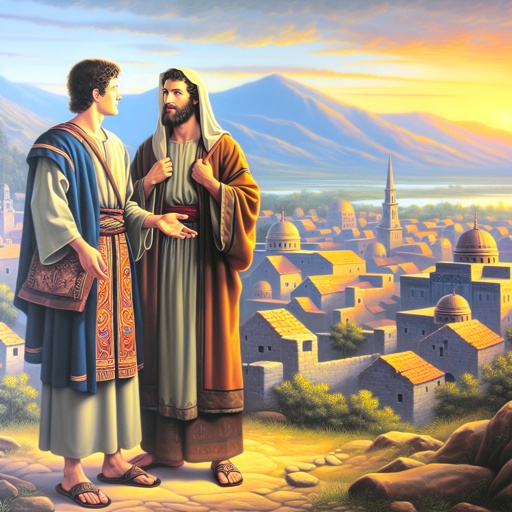
1 Samuel 9:1-2

2 Samuel 5:5 - "In Hebron he reigned over Judah seven years and six months: and in Jerusalem he reigned thirty and three years over all Israel and Judah."

2 Samuel 22:5 - "When the waves of death compassed me, the floods of ungodly men made me afraid;"

2 Samuel 5:14 - "And these be the names of those that were born unto him in Jerusalem; Shammua, and Shobab, and Nathan, and Solomon,"