Chosen for a Divine Purpose: The Call of Priestly Service
"And did I choose him out of all the tribes of Israel to be my priest, to offer upon mine altar, to burn incense, to wear an ephod before me? and did I give unto the house of thy father all the offerings made by fire of the children of Israel?" - 1 Samuel 2:28
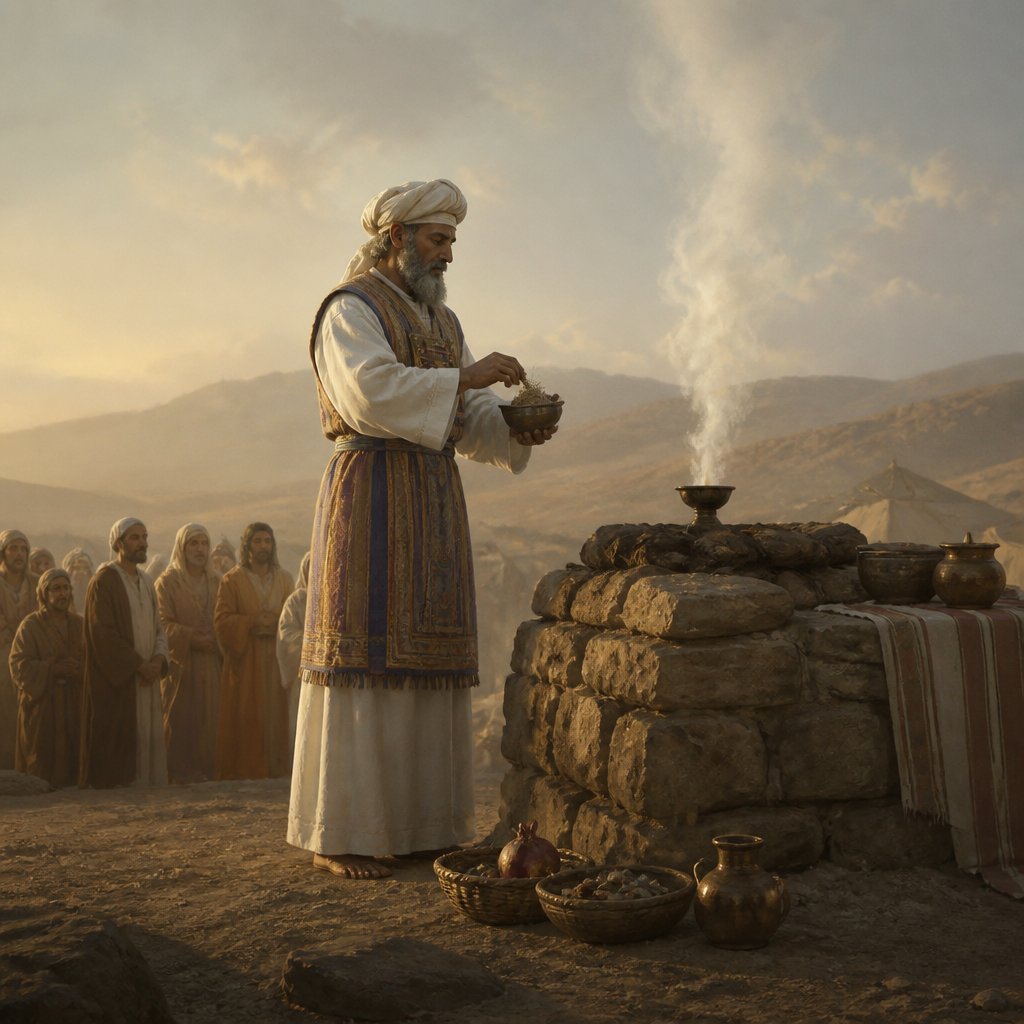
In the book of 1 Samuel, we encounter a poignant moment filled with both reverence and responsibility. The verse, "And did I choose him out of all the tribes of Israel to be my priest, to offer upon mine altar, to burn incense, to wear an ephod before me? and did I give unto the house of thy father all the offerings made by fire of the children of Israel?" (1 Samuel 2:28 KJV), reveals God’s deliberate choice of the Levitical priesthood and conveys profound truths about divine calling and human obedience.
Priestly service in ancient Israel was a position of spiritual privilege and honor. To be chosen as a priest was to be entrusted with not only the rituals and sacrifices that defined the worship of Yahweh but also the very access to God’s holiness. This verse underscores the gravity of such a calling as it reminds us that God’s appointments come with specific responsibilities. Eli's priesthood was a reflection of God's grace, yet it also set a precedent that was to be upheld with utmost seriousness by both Eli and his descendants.
As we reflect on God’s selection of leaders, we might ponder our own lives—how has God appointed us to certain roles within our communities, families, and churches? God’s choice of Eli symbolizes His sovereign plan unfolding. Through our day-to-day lives, we too carry the priestly call, as each believer is referred to as a 'royal priesthood' in 1 Peter 2:9. It is crucial to recognize that with any calling comes a commitment to holiness. God's questions directed to Eli provide a stark reminder that the privilege of serving Him comes with an expectation of righteousness and integrity.
Each offering placed upon the altar was not merely ritualistic but a tangible expression of devotion and obedience. The fires consuming those offerings represented the people's acknowledgment of God’s supremacy and the sanctity of their relationship with Him. The priest's role was to facilitate that relationship by ensuring purity and reverence in worship. Maintaining that sacred trust was vital—and failure to uphold it had dire consequences, as we see in the story of Eli and his sons.
Allowing this reflection on priestly duties to sink deeper into our hearts leads us to ask: How do we honor God's calling today? In our modern world, where distractions are aplenty and instant gratification reigns, maintaining a connection with God requires intentionality and discipline. The sacrifices of our time, talents, and treasure should reflect our understanding of being called to something greater than ourselves.
Eli's priestly lineage enjoyed the blessings and offerings of the children of Israel, yet we see a stark warning in the eventual fate of his house. Their disregard for God’s holiness ultimately led to their downfall, illustrating that while divine favor can be bestowed, it can also be withdrawn if we become complacent or corrupt. This serves as a sobering reminder that we must remain vigilant about the way we serve and lead.
Consider the weight of God's question: "Did I choose him?" As we step into this week, let’s ponder the areas in which God has called us. Are we living out our priestly duties in a manner that honors His Name? Are we offering our best to Him or settling for mere routine?
Ultimately, this verse invites us into a reverent approach to our roles—whether as parents, friends, leaders, or servants in the church. Let’s seek a deeper connection to our calling and respond with commitment, recognizing both the privilege and responsibility we hold. As we wear our metaphorical ephods, let’s do so with the understanding that we are representing God 'before Him' and to the world, embodying His love and righteousness with every step.
Want to reflect more on 1 Samuel 2:28?
Continue your spiritual journey with Bible Chat — an AI-powered tool for exploring God's Word through conversation. Ask questions, discover connections, and deepen your understanding.
Get Our Apps


1 Samuel 2:28 Artwork

1 Samuel 2:28 - "And did I choose him out of all the tribes of Israel to be my priest, to offer upon mine altar, to burn incense, to wear an ephod before me? and did I give unto the house of thy father all the offerings made by fire of the children of Israel?"
"And did I choose him out of all the tribes of Israel to be my priest, to offer upon mine altar, to burn incense, to wear an ephod before me? and did I give unto the house of thy father all the offerings made by fire of the children of Israel?" - 1 Samuel 2:28

2 Samuel 23:28 - "Zalmon the Ahohite, Maharai the Netophathite,"

1 Samuel 28:15

1 Samuel 28:7

1 Samuel 28:15-20

1 Samuel 28:15-19

1 Chronicles 6:28 - "And the sons of Samuel; the firstborn Vashni, and Abiah."

2 Samuel 2:28 - "So Joab blew a trumpet, and all the people stood still, and pursued after Israel no more, neither fought they any more."

1 Samuel 28:15 Saul is desperate

1 Samuel 28:2 - "And David said to Achish, Surely thou shalt know what thy servant can do. And Achish said to David, Therefore will I make thee keeper of mine head for ever."

1 Samuel 28:11 - "Then said the woman, Whom shall I bring up unto thee? And he said, Bring me up Samuel."

1 Samuel 28:16 - "Then said Samuel, Wherefore then dost thou ask of me, seeing the LORD is departed from thee, and is become thine enemy?"

1 Samuel 2:8 - "He raiseth up the poor out of the dust, and lifteth up the beggar from the dunghill, to set them among princes, and to make them inherit the throne of glory: for the pillars of the earth are the LORD'S, and he hath set the world upon them."

2 Samuel 14:28 - "¶ So Absalom dwelt two full years in Jerusalem, and saw not the king's face."

1 Samuel 2:12

1 Samuel 18:28 - "¶ And Saul saw and knew that the LORD was with David, and that Michal Saul's daughter loved him."

1 Samuel 28:12 - "And when the woman saw Samuel, she cried with a loud voice: and the woman spake to Saul, saying, Why hast thou deceived me? for thou art Saul."

1 Samuel 20:28 - "And Jonathan answered Saul, David earnestly asked leave of me to go to Beth-lehem:"

"Zalmon the Ahohite, Maharai the Netophathite," - 2 Samuel 23:28

1 Samuel 28:5 - "And when Saul saw the host of the Philistines, he was afraid, and his heart greatly trembled."

2 Samuel 15:28 - "See, I will tarry in the plain of the wilderness, until there come word from you to certify me."

1 Samuel 15:28 - "And Samuel said unto him, The LORD hath rent the kingdom of Israel from thee this day, and hath given it to a neighbour of thine, that is better than thou."

1 Samuel 28:10 - "And Saul sware to her by the LORD, saying, As the LORD liveth, there shall no punishment happen to thee for this thing."

1 Samuel 28:20 - "Then Saul fell straightway all along on the earth, and was sore afraid, because of the words of Samuel: and there was no strength in him; for he had eaten no bread all the day, nor all the night."

1 Samuel 28:6 - "And when Saul enquired of the LORD, the LORD answered him not, neither by dreams, nor by Urim, nor by prophets."

1 Samuel 30:28 - "And to them which were in Aroer, and to them which were in Siphmoth, and to them which were in Eshtemoa,"

2 Samuel 2:8 - "¶ But Abner the son of Ner, captain of Saul's host, took Ish-bosheth the son of Saul, and brought him over to Mahanaim;"
2 Samuel 22:28 - "And the afflicted people thou wilt save: but thine eyes are upon the haughty, that thou mayest bring them down."

2 Samuel 17:28 - "Brought beds, and basons, and earthen vessels, and wheat, and barley, and flour, and parched corn, and beans, and lentiles, and parched pulse,"