The Weight of Sacred Responsibility
"And if any man said unto him, Let them not fail to burn the fat presently, and then take as much as thy soul desireth; then he would answer him, Nay; but thou shalt give it me now: and if not, I will take it by force." - 1 Samuel 2:16
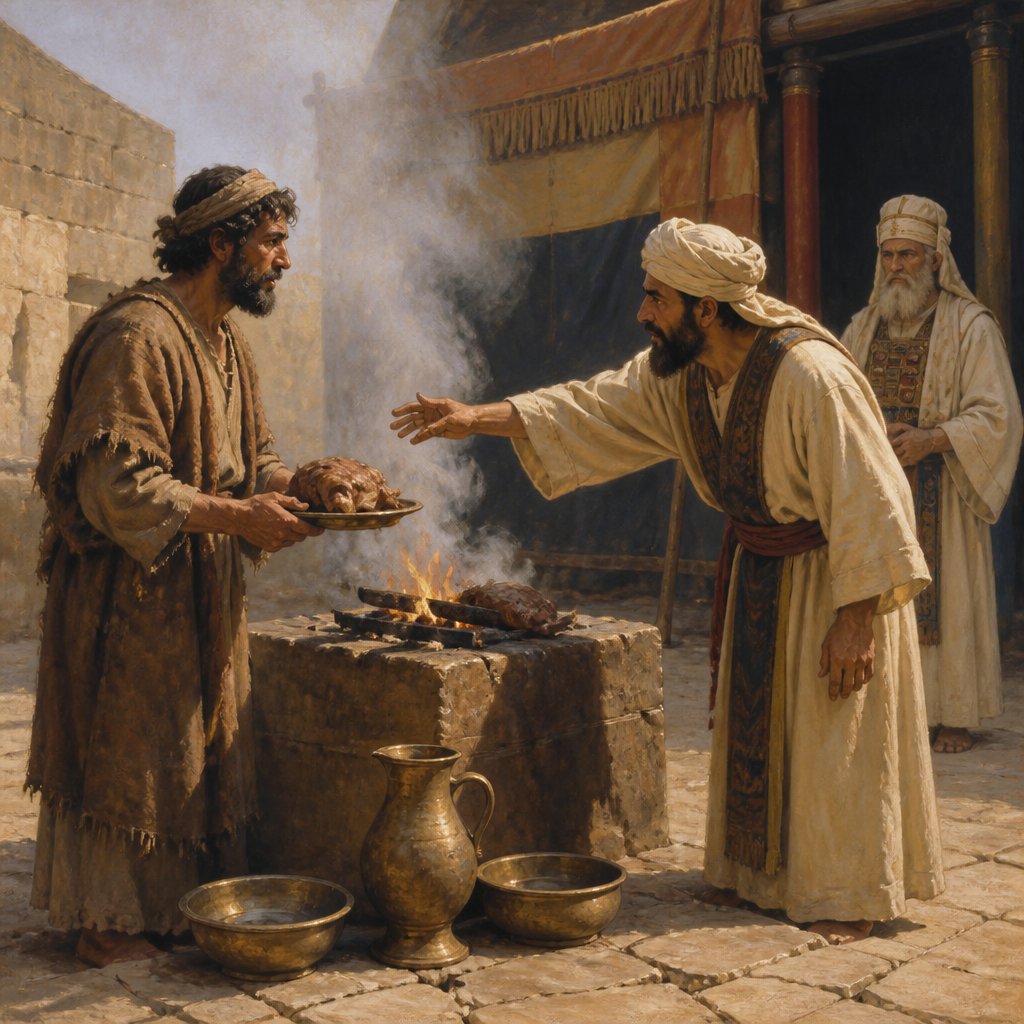
In 1 Samuel 2:16, we encounter a piercing glimpse into the corruption that had crept into the practices of the priests serving in the temple. The verse states, "And if any man said unto him, Let them not fail to burn the fat presently, and then take as much as thy soul desireth; then he would answer him, Nay; but thou shalt give it me now: and if not, I will take it by force." This narrative offers not just a historical account but a profound lesson on the sanctity of God’s provisions and the heart’s condition when it strays from divine intentions.
### Understanding the Context
To understand the gravity of this scripture, we need to consider the backdrop of sin and entitlement. Eli’s sons, Hophni and Phinehas, served as priests but had utterly misrepresented their office. They presumed upon the sacrifices that were offered to God, demanding the best parts—specifically the fat, which was supposed to be burned as an offering to the Lord before any of it was consumed by the priests or the people. Their greedy hearts could not wait for the prescribed methods of worship; they imposed their will over God’s ordained practices.
In the culture of Israel, burning the fat was a sacred act that represented the offering of the best to God. It symbolized the complete surrender of one’s life and possessions to the Almighty. Hophni and Phinehas, however, twisted this sacred act into a means to satisfy their own appetites. They clung to an attitude of entitlement, disregarding the holiness of their role.
### The Implication of ‘Taking by Force’
The phrase "if not, I will take it by force" starkly highlights the aggressive stance of these priests. Their refusal to honor the rightful order of God speaks to our propensity as humans to assert dominance over what we desire rather than to submit to God’s will. This attitude fosters a spirit of entitlement—not only in the realm of material things but also in spiritual matters.
When we begin to treat God’s blessings as our rights rather than His gifts, we risk losing sight of holiness and the framework established for our lives. The sons of Eli represent everyone who chooses self-satisfaction over God’s glory, seeking to hold onto blessings while disregarding the giver.
### Reflecting on Our Attitudes
As we reflect on this verse and its implications, we must ask ourselves: In what areas of our lives are we demanding from God rather than waiting on Him? Are we prioritizing our desires while disregarding what He has ordained? Such introspection leads to a deeper understanding of our relationship with God and our responsibilities as His people.
Jesus warned us in Matthew 7:7-8: "Ask, and it shall be given you; seek, and ye shall find; knock, and it shall be opened unto you." This promise encourages us to approach God with a sincere heart, expecting Him to fulfill His promises. However, there is a divine order in how we approach Him, rooted in reverence and respect.
### The Weight of Responsibility
As believers, our call is to steward our roles—with genuine respect for the sacredness of what God provides. We are not just consumers of His grace but are stewards of His gifts. Hophni and Phinehas displayed a reckless approach to their responsibilities in the temple; we must lean into the weight of our responsibilities by honoring God’s structure in our lives.
### Conclusion
Ultimately, 1 Samuel 2:16 challenges us to reclaim a sense of awe before God’s holiness. When we consider our desires, we must return to the foundational posture of gratitude and reverence, acknowledging that all we have belongs to God. Let us pray for hearts that are aligned with His will and that we may never let our selfish appetites take precedence over the glory of God. In doing so, we embrace the sacred responsibility that accompanies our relationship with Him and the blessings we receive.
Want to reflect more on 1 Samuel 2:16?
Continue your spiritual journey with Bible Chat — an AI-powered tool for exploring God's Word through conversation. Ask questions, discover connections, and deepen your understanding.
Get Our Apps


1 Samuel 2:16 Artwork

1 Samuel 2:16 - "And if any man said unto him, Let them not fail to burn the fat presently, and then take as much as thy soul desireth; then he would answer him, Nay; but thou shalt give it me now: and if not, I will take it by force."
"And if any man said unto him, Let them not fail to burn the fat presently, and then take as much as thy soul desireth; then he would answer him, Nay; but thou shalt give it me now: and if not, I will take it by force." - 1 Samuel 2:16

1 Samuel 16:2 - "And Samuel said, How can I go? if Saul hear it, he will kill me. And the LORD said, Take an heifer with thee, and say, I am come to sacrifice to the LORD."

1 Samuel 16:1–13

2 Samuel 5:16 - "And Elishama, and Eliada, and Eliphalet."

1 Samuel 3:16 - "Then Eli called Samuel, and said, Samuel, my son. And he answered, Here am I."

1 Samuel 2:12

2 Samuel 1:16 - "And David said unto him, Thy blood be upon thy head; for thy mouth hath testified against thee, saying, I have slain the LORD'S anointed."

1 Samuel 16:10 - "Again, Jesse made seven of his sons to pass before Samuel. And Samuel said unto Jesse, The LORD hath not chosen these."

1 Samuel 16:8 - "Then Jesse called Abinadab, and made him pass before Samuel. And he said, Neither hath the LORD chosen this."

2 Samuel 8:16 - "And Joab the son of Zeruiah was over the host; and Jehoshaphat the son of Ahilud was recorder;"

"And Elishama, and Eliada, and Eliphalet." - 2 Samuel 5:16

1 Samuel 28:16 - "Then said Samuel, Wherefore then dost thou ask of me, seeing the LORD is departed from thee, and is become thine enemy?"

2 Samuel 16:15 - "¶ And Absalom, and all the people the men of Israel, came to Jerusalem, and Ahithophel with him."

2 Samuel 16:14 - "And the king, and all the people that were with him, came weary, and refreshed themselves there."

1 Samuel 16:4 - "And Samuel did that which the LORD spake, and came to Beth-lehem. And the elders of the town trembled at his coming, and said, Comest thou peaceably?"

1 Samuel 16:13 - "Then Samuel took the horn of oil, and anointed him in the midst of his brethren: and the Spirit of the LORD came upon David from that day forward. So Samuel rose up, and went to Ramah."

1 Samuel 15:16 - "Then Samuel said unto Saul, Stay, and I will tell thee what the LORD hath said to me this night. And he said unto him, Say on."

1 Samuel 17:16 - "And the Philistine drew near morning and evening, and presented himself forty days."

1 Samuel 6:16 - "And when the five lords of the Philistines had seen it, they returned to Ekron the same day."

2 Samuel 16:16 - "And it came to pass, when Hushai the Archite, David's friend, was come unto Absalom, that Hushai said unto Absalom, God save the king, God save the king."

1 Samuel 16:14 - "¶ But the Spirit of the LORD departed from Saul, and an evil spirit from the LORD troubled him."

1 Samuel 10:16 - "And Saul said unto his uncle, He told us plainly that the asses were found. But of the matter of the kingdom, whereof Samuel spake, he told him not."

2 Samuel 16:20 - "¶ Then said Absalom to Ahithophel, Give counsel among you what we shall do."

2 Samuel 16:12 - "It may be that the LORD will look on mine affliction, and that the LORD will requite me good for his cursing this day."

1 Samuel 1:16 - "Count not thine handmaid for a daughter of Belial: for out of the abundance of my complaint and grief have I spoken hitherto."

2 Samuel 16:1 - "And when David was a little past the top of the hill, behold, Ziba the servant of Mephibosheth met him, with a couple of asses saddled, and upon them two hundred loaves of bread, and an hundred bunches of raisins, and an hundred of summer fruits, and a bottle of wine."

2 Samuel 16:17 - "And Absalom said to Hushai, Is this thy kindness to thy friend? why wentest thou not with thy friend?"

1 Samuel 16:9 - "Then Jesse made Shammah to pass by. And he said, Neither hath the LORD chosen this."

1 Samuel 2:26 - "And the child Samuel grew on, and was in favour both with the LORD, and also with men."