The Power of Mercy: Lessons from David and Saul
"And he said to David, Thou art more righteous than I: for thou hast rewarded me good, whereas I have rewarded thee evil." - 1 Samuel 24:17
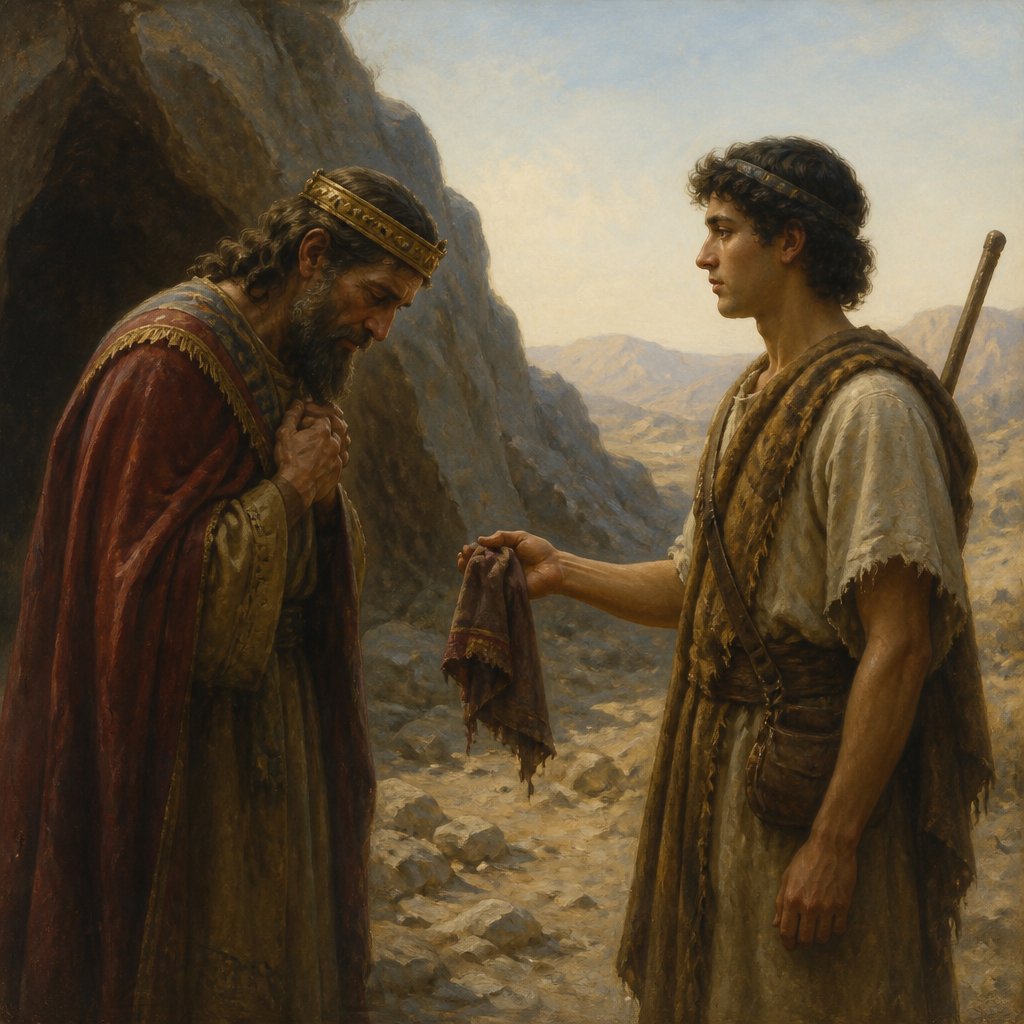
In the tapestry of Scripture, few narratives are as poignant as the relationship between David and Saul. The verse 1 Samuel 24:17 serves as a powerful reminder of the dynamics of righteousness and mercy. In this verse, King Saul acknowledges David's moral superiority amid a backdrop of conflict and betrayal: “And he said to David, Thou art more righteous than I: for thou hast rewarded me good, whereas I have rewarded thee evil.” Here, we find profound truths that challenge our perceptions of justice, accountability, and grace.
David, a once humble shepherd boy, had risen to prominence as the anointed king-in-waiting, favored by God. Yet, his ascent created envy and hostility in Saul’s heart, leading to relentless pursuit and persecution. This animosity could have easily justified in David’s eyes a response filled with vengeance when he had the opportunity to harm Saul. Instead, he responded with grace, choosing not only to spare Saul’s life but also to demonstrate kindness, effectively showing the depth of his character and the essence of his faith.
At the core of Saul's recognition of David's righteousness lies the concept of divine justice. In a world that often upholds retribution as a form of justice, David models a heart of mercy that reflects God’s own nature. The Apostle Paul would later echo this sentiment in Romans 12:21 when he writes, “Be not overcome of evil, but overcome evil with good.” This call to recognize our adversaries and respond with goodness rather than malice poses a significant challenge to our human inclinations. We often find ourselves in situations where we are wronged, and our first reaction may be one of retaliation. Yet, David's response invites us to consider an alternative that not only disarms our enemies but also builds bridges towards reconciliation.
Saul's admission is a moment of sobering clarity. It showcases the potential for self-awareness in the midst of personal betrayal. How often do we find ourselves blinded by pride and entitlement, failing to see our own shortcomings? Saul's words serve as a mirror for us, reflecting the times we have acted unjustly towards others. His recognition of David's righteousness, despite his own failings, illuminates the painful reality of ungraciousness that can exist in human relationships. It compels us to inventory our own actions and confront any unkindness we may have allowed to influence our behavior.
Moreover, the relationship between David and Saul ultimately illustrates the transformative power of mercy. David’s decision to spare Saul reveals a critical lesson: true righteousness is measured not by how we treat those who treat us well, but by how we respond to those who seek to harm us. The act of raising kindness amidst hostility is a radical expression of faith, acknowledging that vengeance belongs to the Lord (Romans 12:19). David’s political savvy might have led him to claim Saul’s throne through force; instead, he chose to endure injustice for a time, trusting that God would fulfill His promises in His own perfect timing.
In reflecting on this scripture, we are challenged to cultivate a heart of mercy. Are there individuals in our lives whom we perceive as ‘Sauls’? Those who have wronged us or stand against us? What would it look like to extend grace to them, to repay their evil with good? Let us ponder the radical nature of this choice—not only as a path to personal freedom but as a demonstration of Christ’s love within us.
As we navigate the complexities of our relationships and encounters, may we carry with us the spirit of David. Let our righteousness shine not as a means of elevating ourselves, but as a testament to the unmerited grace that has been poured into our lives through Christ. May we seek to reflect His mercy in all our dealings, knowing that every act of goodness towards others, no matter how undeserved, is a step closer to embodying the heart of God.
Want to reflect more on 1 Samuel 24:17?
Continue your spiritual journey with Bible Chat — an AI-powered tool for exploring God's Word through conversation. Ask questions, discover connections, and deepen your understanding.
Get Our Apps


1 Samuel 24:17 Artwork

1 Samuel 24:17 - "And he said to David, Thou art more righteous than I: for thou hast rewarded me good, whereas I have rewarded thee evil."
"And he said to David, Thou art more righteous than I: for thou hast rewarded me good, whereas I have rewarded thee evil." - 1 Samuel 24:17

1 Samuel 17:24 - "And all the men of Israel, when they saw the man, fled from him, and were sore afraid."

2 Samuel 17:24 - "Then David came to Mahanaim. And Absalom passed over Jordan, he and all the men of Israel with him."

Exodus 24:17

"And all the men of Israel, when they saw the man, fled from him, and were sore afraid." - 1 Samuel 17:24

1 Samuel 10:17 - "¶ And Samuel called the people together unto the LORD to Mizpeh;"

2 Samuel 24:22

2 Samuel 24:22

2 Samuel 24:22

1 Samuel 17:33

1 Samuel 1:15-17

1 Samuel 17:34-35

1 Samuel 17:49

1 Samuel 17:45

1 Samuel 17:49

1 Samuel 17:45

1 samuel 17:3

1 Samuel 17:49

1 Samuel 17:45
1 Samuel 17:49

2 Samuel 1. 17-27

1 Samuel 18:24 - "And the servants of Saul told him, saying, On this manner spake David."

1 Samuel 17:38-40

1 Samuel 17:14 - "And David was the youngest: and the three eldest followed Saul."

1 Samuel 17:45-49

1 Chronicles 24:17 - "The one and twentieth to Jachin, the two and twentieth to Gamul,"

1 Samuel 15:24 - "¶ And Saul said unto Samuel, I have sinned: for I have transgressed the commandment of the LORD, and thy words: because I feared the people, and obeyed their voice."

1 Samuel 17:56 - "And the king said, Enquire thou whose son the stripling is."

1 Samuel 9:17 - "And when Samuel saw Saul, the LORD said unto him, Behold the man whom I spake to thee of! this same shall reign over my people."