The Heart of Hannah: Trusting God in the Midst of Barrenness
"And he had two wives; the name of the one was Hannah, and the name of the other Peninnah: and Peninnah had children, but Hannah had no children." - 1 Samuel 1:2

In 1 Samuel 1:2, we encounter a profound relational dynamic that begins the story of Hannah: "And he had two wives; the name of the one was Hannah, and the name of the other Peninnah: and Peninnah had children, but Hannah had no children." This verse succinctly encapsulates a deep agony within Hannah's life, signaling not only her personal sorrow but also her plight in a familial setting. Herein lies an expansive narrative of faith, desperation, and the unwavering hope of a woman whose name means ‘favor’ or ‘grace.’
Hannah finds herself in a distressing situation, deeply contrasted by her rival, Peninnah, who bears children. In ancient Hebrew culture, children were not only a blessing but a sign of favor from God. A woman’s worth was often measured by her ability to bear offspring, creating an additional layer of social pressure for women in Hannah’s position. As Peninnah bears children, she revels in the status Hannah wishes for but cannot attain. The harsh reality of Hannah’s barrenness leads to deep emotional and spiritual turmoil.
This raw struggle of Hannah is amplified during the annual pilgrimages her household makes to Shiloh to worship. Imagine the heaviness in her heart as she enters the sacred space, greeted by joyous families, filling their arms with children and their hearts with thanksgiving. In contrast, her own arms are empty, and her heart is heavy with unanswered prayers. Her desolation extends beyond her womb; it reaches deep into her identity as a woman and her sense of worth before both God and her community.
Hannah’s narrative teaches us about the ways in which God often uses our deepest pains and longings to draw us closer to Him. What Hannah learns, and what we must also embrace, is that there is a profound difference between the physical barrenness she experiences and spiritual fruitfulness. Despite her pain, Hannah's faith remains steadfast. Instead of succumbing to jealousy or resentment towards Peninnah, she ultimately turns her sorrow into supplication. Hannah’s distress becomes the catalyst for her deepest cry out to God, compelling her to pour out her heart before Him in prayer.
In verse 10, we see a transformative moment: "And she was in bitterness of soul, and prayed unto the Lord, and wept sore." Here, amid her anguish, Hannah's cry reflects an understanding of God’s sovereignty and her relationship with Him. What she does is significant; she is vulnerable before God. In the silence of her barren womb, she finds her voice and pleads for intervention, committed to dedicating any child He blesses her with back to His service. Such a promise reveals her faith that transcends her immediate circumstances.
The story of Hannah encourages us to express our hearts and struggles to God honestly. In seasons of waiting, longing, or even painful silence, we can often feel invisible or lost. Yet, like Hannah, we are called to bring our burdens before the Lord. In this act of surrender, we can find peace even when our circumstances do not change immediately.
As believers, we also embody different forms of barrenness—be it emotional, spiritual, or relational. However, Hannah models how we can transform our sorrow into prayer. God hears our cries in the stillness; He sees our tears in silence, taking our heartfelt pleas and transforming them into renewed hope. Hannah's faith would not only eventually earn her a son, Samuel, but it would echo through the ages, showcasing that trusting God amidst our heartaches is not just a testimony of individual strength but a profound reflection of His faithfulness.
So let us reflect on the life of Hannah. In prayers of pain, may we also experience His grace. And in our barrenness, let’s remember that God can bring forth life, hope, and purpose in His perfect timing. With our hands lifted high, let us trust Him for the fruitfulness He promises.
Want to reflect more on 1 Samuel 1:2?
Continue your spiritual journey with Bible Chat — an AI-powered tool for exploring God's Word through conversation. Ask questions, discover connections, and deepen your understanding.
Get Our Apps


1 Samuel 1:2 Artwork

Trusting God and Finding Peace: 1 Samuel 1-2

Trusting God and Finding Peace 1 Samuel 1; 2

1 Samuel 1:2 - "And he had two wives; the name of the one was Hannah, and the name of the other Peninnah: and Peninnah had children, but Hannah had no children."

"And he had two wives; the name of the one was Hannah, and the name of the other Peninnah: and Peninnah had children, but Hannah had no children." - 1 Samuel 1:2

1 Samuel 9:1-2

2 Samuel 7:1–29

1 Samuel 2:26 - "And the child Samuel grew on, and was in favour both with the LORD, and also with men."

2 Samuel 24:22

2 Samuel 6:14

2 Samuel 24:22

2 Samuel 24:22
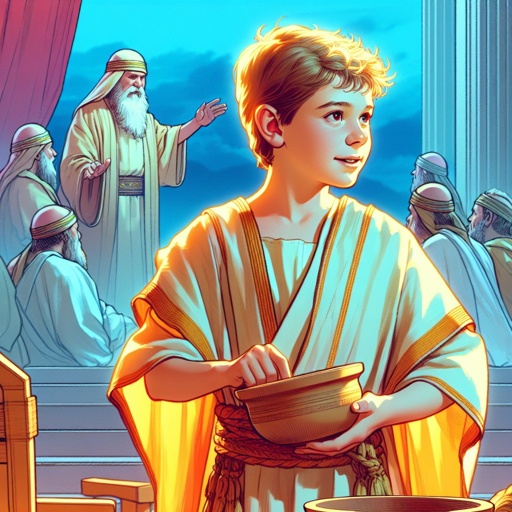
1 Samuel 2:18 - "¶ But Samuel ministered before the LORD, being a child, girded with a linen ephod."

2 samuel 9:7 fhdhdhdhhd

1 Samuel 2:12

2 Samuel 1. 17-27

2 Samuel 1:27 - "How are the mighty fallen, and the weapons of war perished!"

2 Samuel 19:1 - "And it was told Joab, Behold, the king weepeth and mourneth for Absalom."

1 Samuel 2:4 - "The bows of the mighty men are broken, and they that stumbled are girded with strength."

1 Samuel 2:2 - "There is none holy as the LORD: for there is none beside thee: neither is there any rock like our God."

2 Samuel 1:17 - "¶ And David lamented with this lamentation over Saul and over Jonathan his son:"

2 Samuel 1:1 - "Now it came to pass after the death of Saul, when David was returned from the slaughter of the Amalekites, and David had abode two days in Ziklag;"

1 Samuel 2:21 - "And the LORD visited Hannah, so that she conceived, and bare three sons and two daughters. And the child Samuel grew before the LORD."

1 Samuel 2:12 - "¶ Now the sons of Eli were sons of Belial; they knew not the LORD."

1 Samuel 10:1 Samuel anoniting Saul

1 Samuel 1:15-17

2 Samuel 14:1 - "Now Joab the son of Zeruiah perceived that the king's heart was toward Absalom."

1 Samuel 2:7 - "The LORD maketh poor, and maketh rich: he bringeth low, and lifteth up."

2 Samuel 6:1 - "Again, David gathered together all the chosen men of Israel, thirty thousand."

1 Samuel 5:2 - "When the Philistines took the ark of God, they brought it into the house of Dagon, and set it by Dagon."

2 Samuel 1:19 - "The beauty of Israel is slain upon thy high places: how are the mighty fallen!"