Valiant in the Battles of the Lord
"¶ And Saul said to David, Behold my elder daughter Merab, her will I give thee to wife: only be thou valiant for me, and fight the LORD'S battles. For Saul said, Let not mine hand be upon him, but let the hand of the Philistines be upon him." - 1 Samuel 18:17
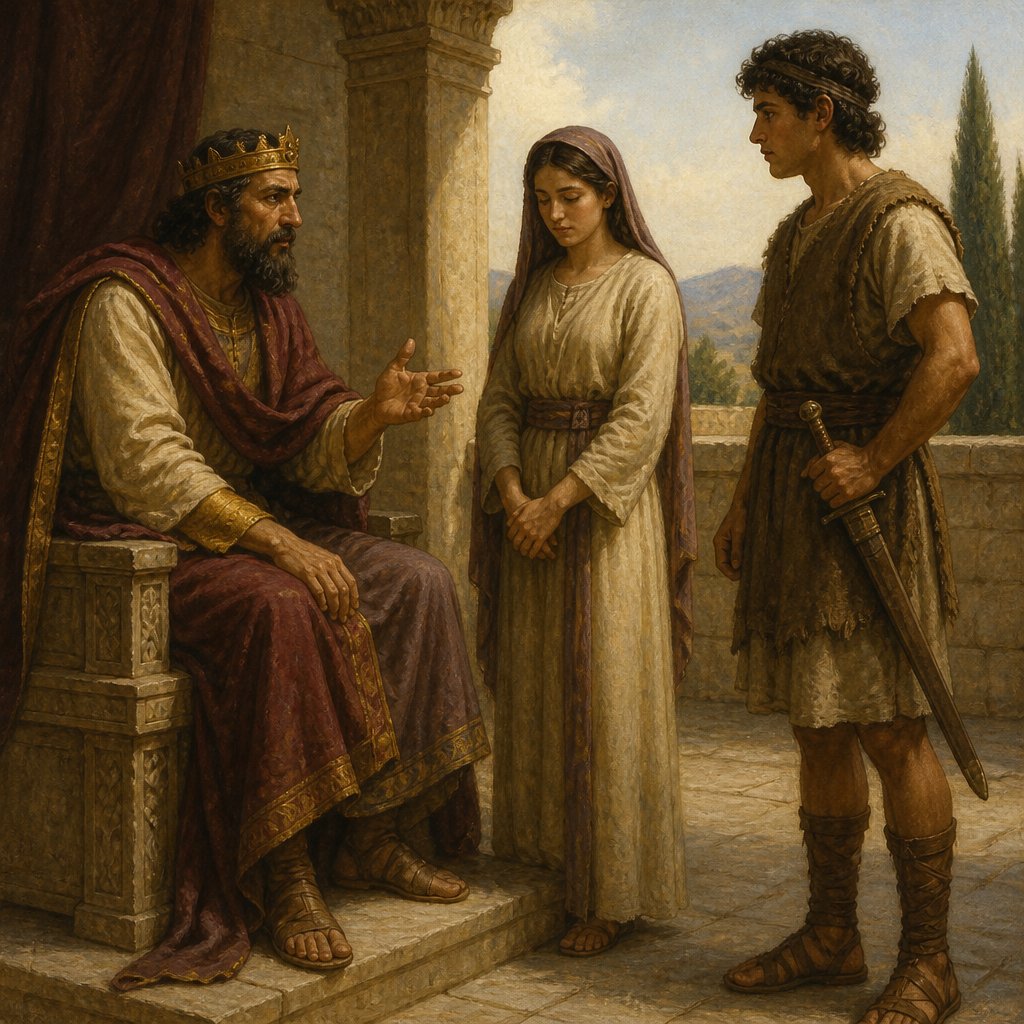
In the world of David and Saul, we find a poignant moment captured in 1 Samuel 18:17, where the dynamics of loyalty, ambition, and divine providence intertwine. The verse states: "And Saul said to David, Behold my elder daughter Merab, her will I give thee to wife: only be thou valiant for me, and fight the LORD'S battles. For Saul said, Let not mine hand be upon him, but let the hand of the Philistines be upon him." Here we discover layers of meaning, rich with spiritual truth and lessons applicable even in our modern context.
To understand the significance of Saul's statement, it is essential to recognize the backdrop of this narrative. David had recently gained immense fame after defeating Goliath, the giant from Gath. The women of Israel sang praises of David, declaring that he had slain thousands, while Saul had only slain hundreds (1 Samuel 18:7). This fame bred jealousy in King Saul’s heart, as he began to perceive David not as a loyal servant but as a rival to his throne.
Saul’s proposal to give his daughter Merab to David as a wife should thus be interpreted with caution. On the surface, it appears to be an honorable gesture—a display of gratitude for David's bravery against the Philistines. However, it is laden with ulterior motives. Saul wanted David to prove his worth by continuing to face the Philistines, in hopes that David might fall in battle. It is a heart-wrenching reminder of how perceived loyalty can often mask selfish ambition and treachery.
The phrase, "only be thou valiant for me, and fight the LORD'S battles," strikes at the core of what it means to be valiant. David is encouraged to be courageous not merely for the sake of the king but for the glory of God—"the LORD'S battles." This delineation is crucial. In our lives, we may find ourselves in situations where loyalty to earthly authorities and divine duty clash. We may be called to fight battles that align with God’s will rather than the desires of those in power.
Furthermore, it is telling that Saul desires to distance himself from the consequences of this battle. His words, "Let not mine hand be upon him, but let the hand of the Philistines be upon him," reveal his internal conflict. He does not want to bear the responsibility of David’s downfall, which reflects a cowardice and manipulation deeply rooted in fear. In contrast, David's courage rests in trusting God’s protection and guidance rather than the faltering supports of men.
As followers of Christ, we too are called into battles—not battles of flesh and blood but spiritual warfare. Ephesians 6:12 reminds us that "For we wrestle not against flesh and blood, but against principalities, against powers, against the rulers of the darkness of this world, against spiritual wickedness in high places." Like David, we are invited into a life of valor where our fight ultimately glorifies God and upholds His Kingdom.
In accepting Saul's challenge, David not only demonstrated physical courage but also revealed his unwavering faith in God. To be valiant means to act in the face of danger, guided by a deep trust in divine providence. Our battles today may not be with swords and shields, but involve standing firm in truth, extending grace in the face of animosity, and manifesting love when it feels least deserved.
In conclusion, the story of David and Saul prompts us to ponder our own motivations in the battles we face. Are we fighting for personal glory, or are we committed to the cause of Christ? Let this scripture serve as a reminder to be valiant in every circumstance, always aligning our battles with those fought for the Kingdom of God. May we echo David's faithfulness, embodying bravery that rests in the assurance that when we fight for the Lord, we fight with the mightiest shield—the presence of our God.
Want to reflect more on 1 Samuel 18:17?
Continue your spiritual journey with Bible Chat — an AI-powered tool for exploring God's Word through conversation. Ask questions, discover connections, and deepen your understanding.
Get Our Apps


1 Samuel 18:17 Artwork

1 Samuel 18:17 - "¶ And Saul said to David, Behold my elder daughter Merab, her will I give thee to wife: only be thou valiant for me, and fight the LORD'S battles. For Saul said, Let not mine hand be upon him, but let the hand of the Philistines be upon him."
"¶ And Saul said to David, Behold my elder daughter Merab, her will I give thee to wife: only be thou valiant for me, and fight the LORD'S battles. For Saul said, Let not mine hand be upon him, but let the hand of the Philistines be upon him." - 1 Samuel 18:17

1 Samuel 17:18 - "And carry these ten cheeses unto the captain of their thousand, and look how thy brethren fare, and take their pledge."

1 Samuel 10:17 - "¶ And Samuel called the people together unto the LORD to Mizpeh;"

1 Samuel 17:33

1 Samuel 1:15-17
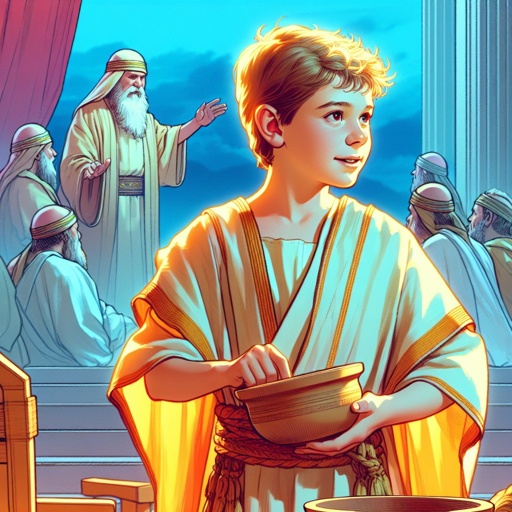
1 Samuel 2:18 - "¶ But Samuel ministered before the LORD, being a child, girded with a linen ephod."

1 Samuel 17:34-35

1 Samuel 17:49

1 Samuel 17:45

1 Samuel 17:49

1 Samuel 17:45

1 samuel 17:3

1 Samuel 17:49

1 Samuel 17:45
1 Samuel 17:49

1 Samuel 30:18
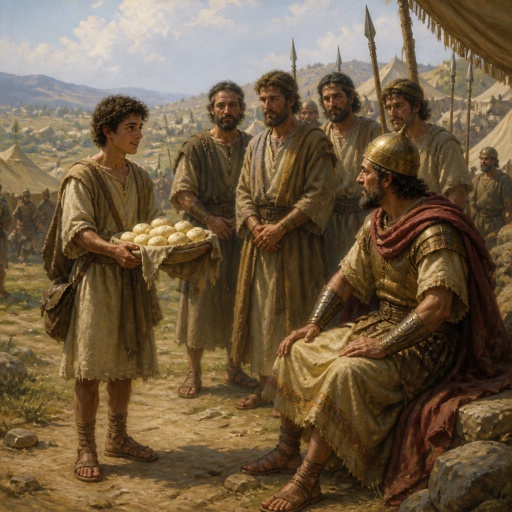
"And carry these ten cheeses unto the captain of their thousand, and look how thy brethren fare, and take their pledge." - 1 Samuel 17:18

1 Samuel 12:18 - "So Samuel called unto the LORD; and the LORD sent thunder and rain that day: and all the people greatly feared the LORD and Samuel."

2 Samuel 1. 17-27

1 Samuel 19:18 - "¶ So David fled, and escaped, and came to Samuel to Ramah, and told him all that Saul had done to him. And he and Samuel went and dwelt in Naioth."

1 Samuel 9:18 - "Then Saul drew near to Samuel in the gate, and said, Tell me, I pray thee, where the seer's house is."

1 Samuel 17:38-40

1 Samuel 17:14 - "And David was the youngest: and the three eldest followed Saul."

1 Samuel 17:45-49

1 Samuel 18:9 - "And Saul eyed David from that day and forward."

1 Samuel 6:17-18 And these are the golden emerods which the Philistines returned for a trespass offering unto the LORD; for Ashdod one, for Gaza one, for Askelon one, for Gath one, for Ekron one; And the golden mice, according to the number of all the cities

1 Samuel 18:24 - "And the servants of Saul told him, saying, On this manner spake David."

1 Samuel 17:56 - "And the king said, Enquire thou whose son the stripling is."

1 Samuel 18:12 - "¶ And Saul was afraid of David, because the LORD was with him, and was departed from Saul."