The Stones of Faith: Unveiling the Power Within
"And David put his hand in his bag, and took thence a stone, and slang it, and smote the Philistine in his forehead, that the stone sunk into his forehead; and he fell upon his face to the earth." - 1 Samuel 17:49
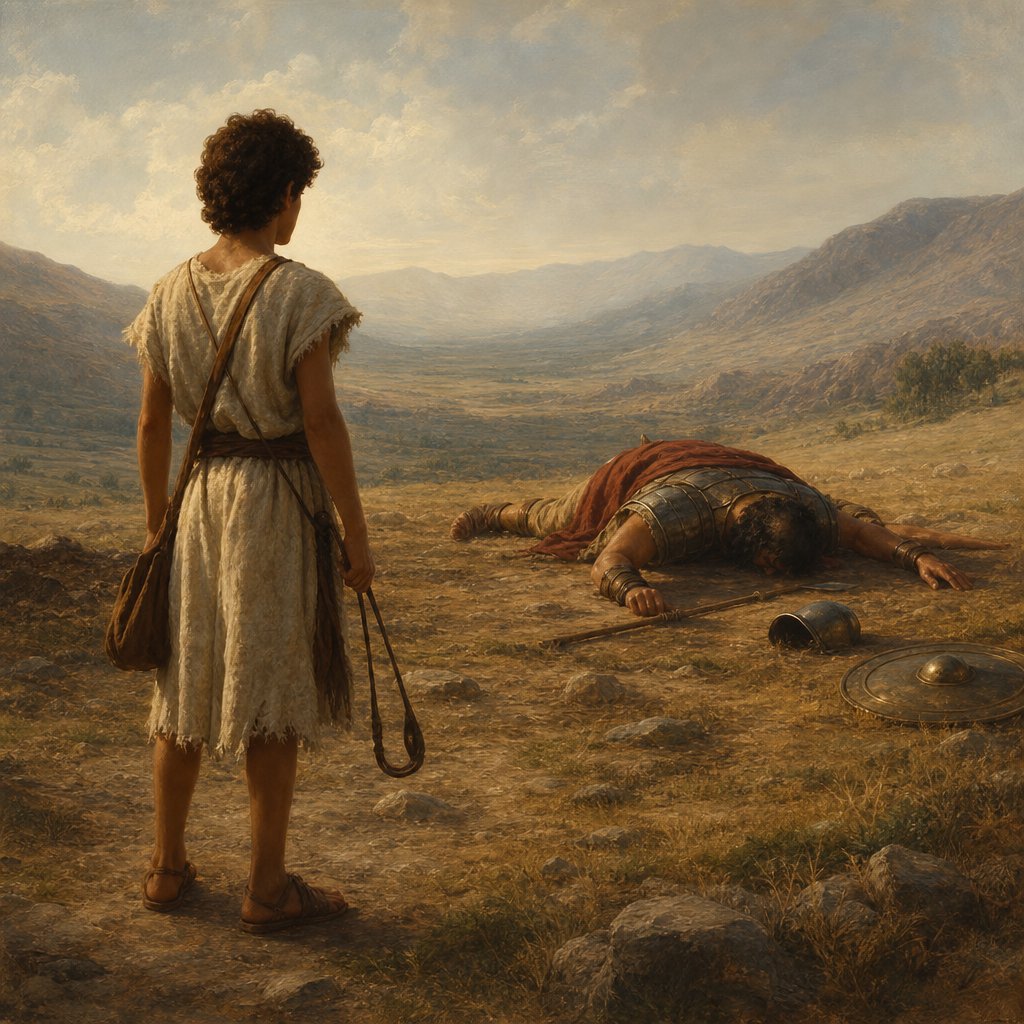
The narrative of David and Goliath in 1 Samuel 17 is one that echoes through time, representing the eternal battle between faith and fear, between the seemingly insurmountable challenges of life and the unshakeable trust in God’s providence. The verse, "And David put his hand in his bag, and took thence a stone, and slang it, and smote the Philistine in his forehead; that the stone sunk into his forehead; and he fell upon his face to the earth" (1 Samuel 17:49, KJV), captures a moment of divine empowerment—a moment where a simple stone in the hands of a faithful young shepherd became a vessel of God’s might.
As we dive into this narrative, we must first understand the context of David's confrontation with Goliath. The Israelites were paralyzed by fear, unable to face the champion of the Philistines. Goliath stood as a symbol of everything that seemed powerful and dominating, a giant that taunted the people of God. In the midst of the chaos, there arose David, a mere shepherd boy, bringing supplies to his brothers and infused with the audacity of faith. Here lies the first lesson—God often chooses the weak and the humble to shatter our assumptions about strength and capability.
What David had was not just bravery; it was faith that God would deliver him. He had witnessed God’s hand in his past—who else but a young man who had guarded his sheep against lions and bears would confidently face a giant? How many times in our own lives can we reflect upon our past experiences where we have seen God’s provision and power? These moments are stones in our own spiritual bags that we must remember in times of challenge.
When David reached into his bag, he did not seek a sword or a shield. Instead, he chose a stone—a simple, seemingly insignificant object. This reminds us that God does not need elaborate tools or immense resources to work wonders in our lives. What He seeks is our faith and our willingness to act. The stone can be seen as a metaphor for our own resources, which may seem small and inadequate, yet with God, they can become instruments of victory. We must grasp the significance of this—what are the stones you have in your bag? Are they your talents, your experiences, or perhaps the promises of God found in Scripture?
Additionally, the act of slinging the stone teaches us about the importance of action in faith. David didn’t merely stand there, praying for Goliath to fall. He took his stone, and with confidence, he slung it. This is critical: faith requires action. In our lives, we often await miraculous interventions; however, God invites us to step forward, to act with the faith we profess. It may take the form of starting a new project, apologizing to someone in need, or stepping out in trust when everything around us seems chaotic.
When the stone struck Goliath, it sunk into his forehead, leading to his downfall. This illustrates how God’s power can turn the simplest actions into profound results. Similarly, when we act in faith, God causes our seemingly small acts to yield great outcomes. He transforms our weaknesses into strengths and our small efforts into significant victories.
Finally, the resultant posture of Goliath—falling upon his face—reminds us that when we face our giants with God, they are bound to fall just as they have in the past. It signals the triumph of faith over fear, God’s power over human limitations.
As we reflect on this verse today, let us consider what giants we face. What stones do we have in our bags? Are we willing to take the step of faith needed to confront our challenges? Like David, may we remember that it is not the size of our opponent that matters but the size of our God. Let us embrace the stones that represent our faith, act with confidence, and trust in the Lord who is with us—even against the mightiest foes. Amen.
Want to reflect more on 1 Samuel 17:49?
Continue your spiritual journey with Bible Chat — an AI-powered tool for exploring God's Word through conversation. Ask questions, discover connections, and deepen your understanding.
Get Our Apps


1 Samuel 17:49 Artwork

1 Samuel 17:49
1 Samuel 17:49

1 Samuel 17:49

1 Samuel 17:49

1 Samuel 17:49 – "David reached into his bag and took out a stone; he slung it and struck the Philistine on the forehead."

1 Samuel 17:49 – "David reached into his bag and took out a stone; he slung it and struck the Philistine on the forehead."

1 Samuel 17:49 – "David reached into his bag and took out a stone; he slung it and struck the Philistine on the forehead."
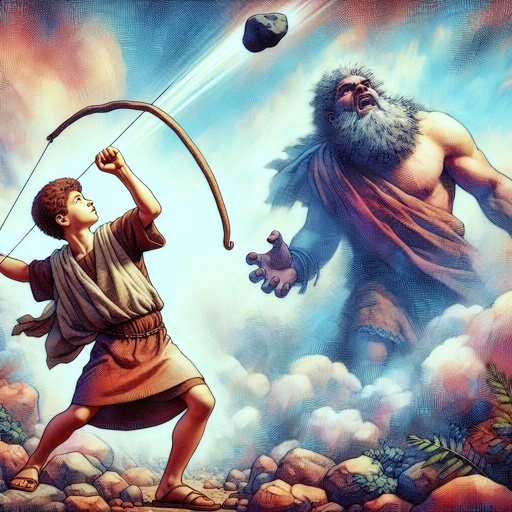
1 Samuel 17:49 – "David put his hand in his bag and took out a stone; he slung it and struck the Philistine on the forehead."
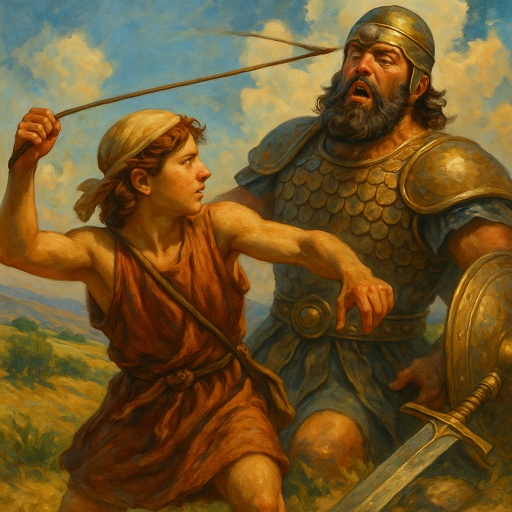
"And David put his hand in his bag, and took thence a stone, and slang it, and smote the Philistine in his forehead, that the stone sunk into his forehead; and he fell upon his face to the earth." - 1 Samuel 17:49

"And David put his hand in his bag, and took thence a stone, and slang it, and smote the Philistine in his forehead, that the stone sunk into his forehead; and he fell upon his face to the earth." - 1 Samuel 17:49

1 Samuel 17:49 – "David reached into his bag and took out a stone; he slung it and struck the Philistine on the forehead."

1 Samuel 17:49 - "And David put his hand in his bag, and took thence a stone, and slang it, and smote the Philistine in his forehead, that the stone sunk into his forehead; and he fell upon his face to the earth."

"And David put his hand in his bag, and took thence a stone, and slang it, and smote the Philistine in his forehead, that the stone sunk into his forehead; and he fell upon his face to the earth." - 1 Samuel 17:49
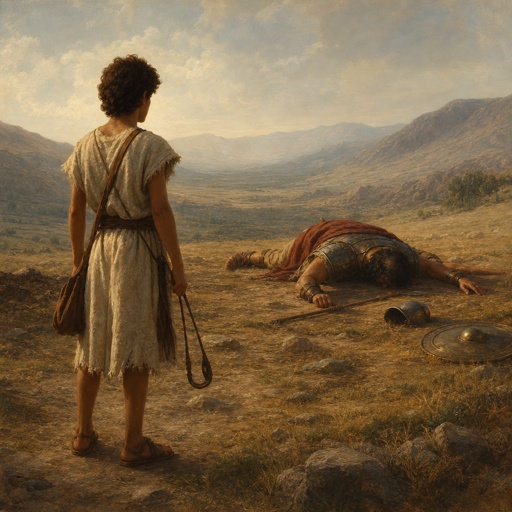
"And David put his hand in his bag, and took thence a stone, and slang it, and smote the Philistine in his forehead, that the stone sunk into his forehead; and he fell upon his face to the earth." - 1 Samuel 17:49

1 Samuel 17:45-49

1 Samuel 14:49 - "Now the sons of Saul were Jonathan, and Ishui, and Melchi-shua: and the names of his two daughters were these; the name of the firstborn Merab, and the name of the younger Michal:"

1 Samuel 10:17 - "¶ And Samuel called the people together unto the LORD to Mizpeh;"

1 Samuel 17:33

1 Samuel 1:15-17

1 Samuel 17:34-35

1 Samuel 17:45

1 Samuel 17:45

1 samuel 17:3

1 Samuel 17:45

2 Samuel 1. 17-27

1 Samuel 17:38-40

1 Samuel 17:14 - "And David was the youngest: and the three eldest followed Saul."

1 Samuel 17:56 - "And the king said, Enquire thou whose son the stripling is."

1 Samuel 9:17 - "And when Samuel saw Saul, the LORD said unto him, Behold the man whom I spake to thee of! this same shall reign over my people."

2 Samuel 1:17 - "¶ And David lamented with this lamentation over Saul and over Jonathan his son:"