The Courage to Speak: David's Boldness Before Saul
"And when the words were heard which David spake, they rehearsed them before Saul: and he sent for him." - 1 Samuel 17:31

In 1 Samuel 17:31, we witness a pivotal moment in the life of young David, a shepherd boy who had just delivered words of faith and bravery in the face of Goliath, the fearsome giant. The verse states, "And when the words were heard which David spake, they rehearsed them before Saul: and he sent for him." This particular moment serves as a profound reminder of the impact that our words can have, especially when they are rooted in faith.
David was no ordinary shepherd; he had a heart that sought after God. While the Israelite army trembled in fear at the sight of Goliath, David, filled with divine courage, stepped forth with a conviction that was clearly different from the soldiers surrounding him. His words weren't merely expressions of bravado; they were declarations of faith fortified by his past experiences of God’s deliverance. David recounted how he had killed lions and bears with his own hands, attributing these victories to God’s strength working through him. In this moment, we learn that before David became a warrior, he was a communicant of truth — a bearer of a message that, through faith, the seemingly impossible could be achieved.
When the soldiers heard David speak, they knew that his words were significant. They rushed to present David’s fervent declarations before King Saul. What a key moment this was! David’s testimony was not just a spontaneous outpouring; it was a reflection of his deep trust in God. This instance prompts a question for us: Are our words carrying the weight of our beliefs and convictions?
In our often despondent world, we encounter various forms of giants — whether they be personal struggles, societal injustices, fears, or doubts. Like David, we are called to confront these giants not with timidity but with the assurance that comes from a relationship with God. When circumstances seem insurmountable, what do we speak? Do we proclaim defeat, or do we declare victory in faith? Each time we choose to speak life and hope — like David did — we assert our belief in a God who can do all things.
This narrative teaches us about the courage to be heard. David didn't wait for an invitation to speak; instead, he stepped forward with clarity of purpose. This boldness invites us to reflect on our own willingness to stand up for what we believe in. How often do we shy away from voicing our faith amidst doubt? When pressure mounts, we might feel an urge to remain silent for fear of rejection or ridicule.
Yet, remember this: Sometimes, it only takes one voice to spark a movement. When Saul sent for David, he opened the door for a transformation that would lead to the downfall of the giant and ultimately, change the course of Israel’s history. Your words, when spoken in faith, can echo far beyond your immediate circle. You may be the one God has chosen to share His liberating truth.
As we reflect on this passage, let us cultivate a spirit like David’s. May we be encouraged to dive deep into the well of our faith, finding strength and courage to speak out. When we do so, we not only motivate ourselves but also inspire others. What a powerful chain reaction can occur when we choose to speak God's truth into our lives and the lives of those around us.
In closing, let us remember that our call is not only to speak but to live out our faith boldly before others. As we engage the giants in our own lives, let us recall David's actions — honoring God with every word we choose to say.
Want to reflect more on 1 Samuel 17:31?
Continue your spiritual journey with Bible Chat — an AI-powered tool for exploring God's Word through conversation. Ask questions, discover connections, and deepen your understanding.
Get Our Apps


1 Samuel 17:31 Artwork

1 Samuel 17:31 - "And when the words were heard which David spake, they rehearsed them before Saul: and he sent for him."

"And when the words were heard which David spake, they rehearsed them before Saul: and he sent for him." - 1 Samuel 17:31
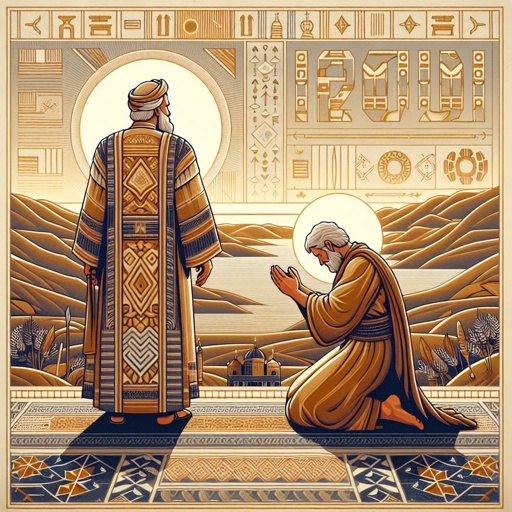
1 Samuel 15:31 - "So Samuel turned again after Saul; and Saul worshipped the LORD."

1 Samuel 10:17 - "¶ And Samuel called the people together unto the LORD to Mizpeh;"

1 Samuel 17:33

1 Samuel 1:15-17

1 Samuel 31:11 - "¶ And when the inhabitants of Jabesh-gilead heard of that which the Philistines had done to Saul;"

1 Samuel 17:34-35

1 Samuel 17:49

1 Samuel 17:45

1 Samuel 17:49

1 Samuel 17:45

1 samuel 17:3

1 Samuel 17:49

1 Samuel 17:45
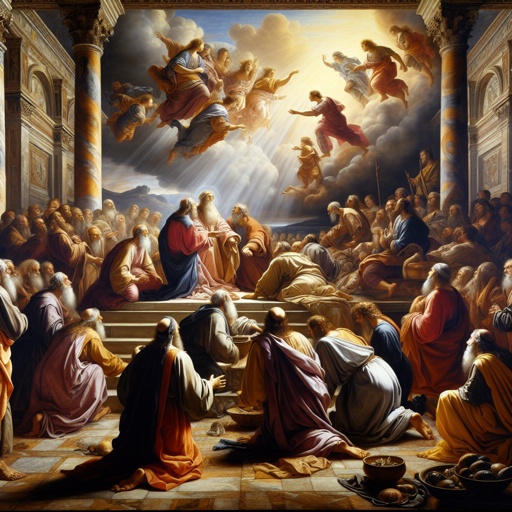
1 Samuel 17:49

1 Samuel 14:31 - "And they smote the Philistines that day from Michmash to Aijalon: and the people were very faint."

1 Samuel 31:13 - "And they took their bones, and buried them under a tree at Jabesh, and fasted seven days."

1 Samuel 31:3 - "And the battle went sore against Saul, and the archers hit him; and he was sore wounded of the archers."

1 Samuel 31:10 - "And they put his armour in the house of Ashtaroth: and they fastened his body to the wall of Beth-shan."

"So Samuel turned again after Saul; and Saul worshipped the LORD." - 1 Samuel 15:31

1 Samuel 31:6 - "So Saul died, and his three sons, and his armourbearer, and all his men, that same day together."

2 Samuel 1. 17-27

1 Samuel 31:1 - "Now the Philistines fought against Israel: and the men of Israel fled from before the Philistines, and fell down slain in mount Gilboa."

1 Samuel 17:38-40

1 Samuel 17:14 - "And David was the youngest: and the three eldest followed Saul."

1 Samuel 17:45-49

1 Samuel 31:5 - "And when his armourbearer saw that Saul was dead, he fell likewise upon his sword, and died with him."

1 Samuel 30:31 - "And to them which were in Hebron, and to all the places where David himself and his men were wont to haunt."

1 Samuel 31:8 - "And it came to pass on the morrow, when the Philistines came to strip the slain, that they found Saul and his three sons fallen in mount Gilboa."