The Sweetness of Defiance: A Lesson from Jonathan
"Then Saul said to Jonathan, Tell me what thou hast done. And Jonathan told him, and said, I did but taste a little honey with the end of the rod that was in mine hand, and, lo, I must die." - 1 Samuel 14:43
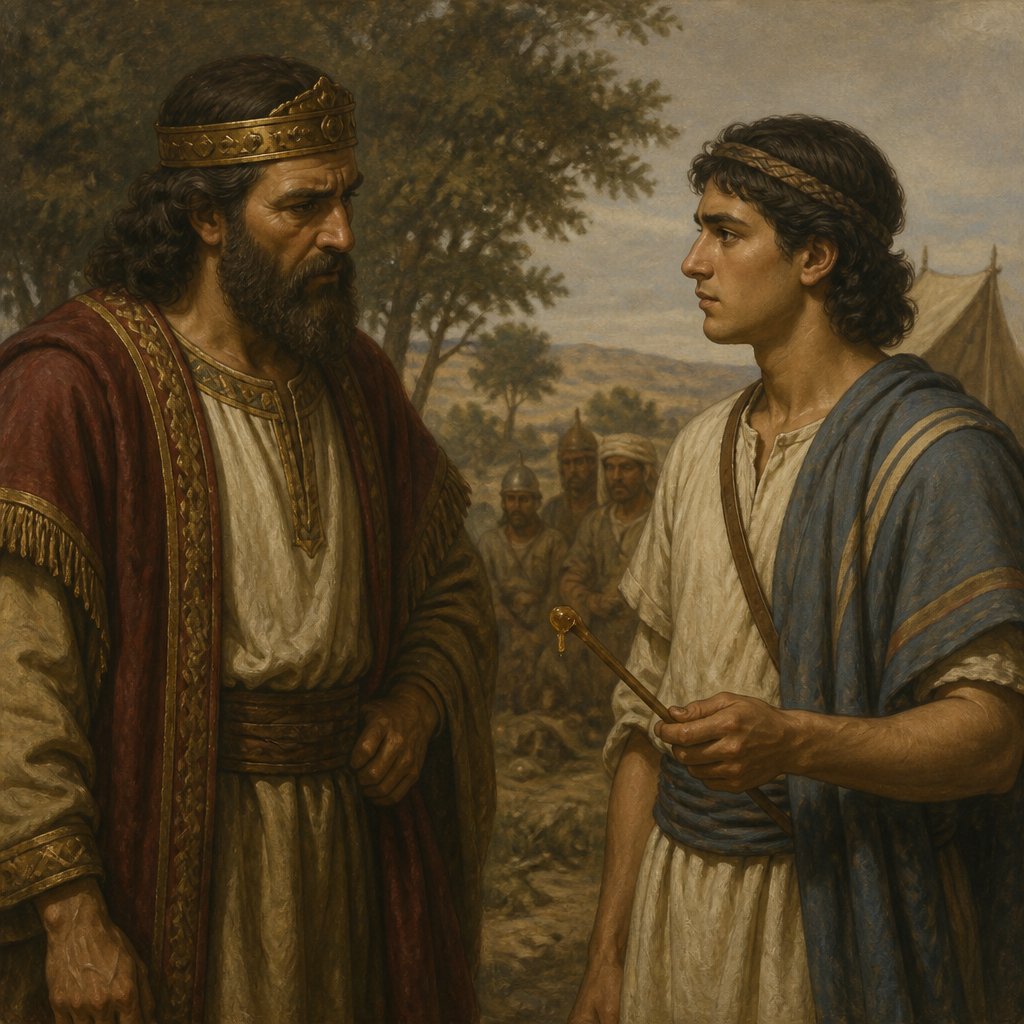
In 1 Samuel 14:43, we encounter a moment of profound consequence that reflects not only the dynamics of family and leadership but also the delicate balance between obedience and personal conscience. The verse states: "Then Saul said to Jonathan, Tell me what thou hast done. And Jonathan told him, and said, I did but taste a little honey with the end of the rod that was in mine hand, and, lo, I must die." This reference invites us to delve into the lessons of obedience, leadership, and personal integrity.
At the heart of this story is King Saul, who had imposed a hasty and harsh oath upon his troops during a critical battle against the Philistines, proclaiming that anyone who ate before evening would be cursed. However, unbeknownst to Saul, his son Jonathan had not heard this decree. When Jonathan encountered honey in the woods, he was weary and faint from battle, and instinctively, he tasted a little. This moment of sweetness amidst bitterness is layered with profound implications, especially considering the impending consequences.
Jonathan's act was innocent, yet it stands in stark contrast to his father’s foolish edict. His response to Saul’s accusation, "I did but taste a little honey with the end of the rod that was in mine hand," exposes the absurdity of Saul's decree. This moment challenges us to consider the intentions behind our actions and the balance of law and grace in our lives as believers. Should we ever let outdated edicts or harsh interpretations of rules prevent us from nourishing our spirits?
This interaction serves as a powerful illustration of the complexity of familial and leadership relationships. As a leader, Saul's authority should compel him to exercise wisdom and discernment, recognizing the strength of his son. Unfortunately, Saul’s rigid adherence to his own decree blinds him to Jonathan’s plight. It begs the question: how often do we uphold rules or expectations to the detriment of our relationships with those we love? Are we, like Saul, imposing burdens rather than uplifting those around us?
Moreover, Jonathan's willingness to openly confess his actions illustrates a crucial component of integrity. In a world filled with complicated motives and hidden agendas, being forthright and honest takes great courage. Jonathan’s response reveals humility; he does not evade accountability. Rather, he accepts the potential consequences of his actions sincerely and without resentment. Such character echoes the heart we should embody as followers of Christ—acknowledging our sins and shortcomings before the Lord and accepting responsibility.
The phrase "lo, I must die" resonates on multiple levels, representing the tangible threat of Saul’s words and the symbolic death of Jonathan’s innocence in a system of flawed leadership. Herein lies a reminder that when individuals in authority misuse it, the consequences can be far-reaching and affect those who are not even directly involved. It prompts us to reflect on the kind of leadership we exhibit in our own lives. Are we fostering a culture of fear or one of grace?
As we meditate on this passage, let us contemplate the sweetness that God provides through His grace, even amidst the bitterness of our circumstances. Jonathan's small act was an innocent moment of life, a contrast to the suffocating declaration of death from his father. In our spiritual journey, let us never forget that, despite the injustices and burdens placed upon us by others, we can always turn to the Lord, who lifts our souls and restores our joy.
Let us strive to imbibe the sweet honey of God’s love and grace in our lives, even when surrounded by the bitter herbs of rigid rule or unfair judgment. As we navigate the complexities of leadership, accountability, and relationship, let us choose to embody honesty and integrity, emulating Jonathan's example. In every decision and every action, let us feel the weight of God’s commandment to love while trusting in His greater plan.
Want to reflect more on 1 Samuel 14:43?
Continue your spiritual journey with Bible Chat — an AI-powered tool for exploring God's Word through conversation. Ask questions, discover connections, and deepen your understanding.
Get Our Apps


1 Samuel 14:43 Artwork

1 Samuel 14:43 - "Then Saul said to Jonathan, Tell me what thou hast done. And Jonathan told him, and said, I did but taste a little honey with the end of the rod that was in mine hand, and, lo, I must die."
"Then Saul said to Jonathan, Tell me what thou hast done. And Jonathan told him, and said, I did but taste a little honey with the end of the rod that was in mine hand, and, lo, I must die." - 1 Samuel 14:43

1 Samuel 25:43 - "David also took Ahinoam of Jezreel; and they were also both of them his wives."

1 Samuel 17:43 - "And the Philistine said unto David, Am I a dog, that thou comest to me with staves? And the Philistine cursed David by his gods."

1 Samuel 14:6

1 Samuel 14:7

1 Samuel 14:27

2 Samuel 6:14

1 Samuel 11:14 - "Then said Samuel to the people, Come, and let us go to Gilgal, and renew the kingdom there."

1 Samuel 17:14 - "And David was the youngest: and the three eldest followed Saul."

1 Samuel 15:14 - "And Samuel said, What meaneth then this bleating of the sheep in mine ears, and the lowing of the oxen which I hear?"

"David also took Ahinoam of Jezreel; and they were also both of them his wives." - 1 Samuel 25:43

1 Samuel 14:51 - "And Kish was the father of Saul; and Ner the father of Abner was the son of Abiel."

1 Samuel 14:25 - "And all they of the land came to a wood; and there was honey upon the ground."

1 Samuel 9:14 - "And they went up into the city: and when they were come into the city, behold, Samuel came out against them, for to go up to the high place."

1 Samuel 19:14 - "And when Saul sent messengers to take David, she said, He is sick."

1 Samuel 14:46 - "Then Saul went up from following the Philistines: and the Philistines went to their own place."

1 Samuel 14:35 - "And Saul built an altar unto the LORD: the same was the first altar that he built unto the LORD."

1 Samuel 18:14 - "And David behaved himself wisely in all his ways; and the LORD was with him."

2 Samuel 14:1 - "Now Joab the son of Zeruiah perceived that the king's heart was toward Absalom."

1 Samuel 16:14 - "¶ But the Spirit of the LORD departed from Saul, and an evil spirit from the LORD troubled him."

1 Samuel 14:42 - "And Saul said, Cast lots between me and Jonathan my son. And Jonathan was taken."

1 Samuel 14:31 - "And they smote the Philistines that day from Michmash to Aijalon: and the people were very faint."

1 Samuel 1:14 - "And Eli said unto her, How long wilt thou be drunken? put away thy wine from thee."

1 Samuel 14:44 - "And Saul answered, God do so and more also: for thou shalt surely die, Jonathan."

1 Samuel 14:14 - "And that first slaughter, which Jonathan and his armourbearer made, was about twenty men, within as it were an half acre of land, which a yoke of oxen might plow."

1 Samuel 14:18 - "And Saul said unto Ahiah, Bring hither the ark of God. For the ark of God was at that time with the children of Israel."

1 Samuel 10:14 - "¶ And Saul's uncle said unto him and to his servant, Whither went ye? And he said, To seek the asses: and when we saw that they were no where, we came to Samuel."

1 Samuel 14:48 - "And he gathered an host, and smote the Amalekites, and delivered Israel out of the hands of them that spoiled them."

1 Samuel 14:5 - "The forefront of the one was situate northward over against Michmash, and the other southward over against Gibeah."