The Dangers of Legalism: A Lesson from 1 Samuel 14:30
"How much more, if haply the people had eaten freely to day of the spoil of their enemies which they found? for had there not been now a much greater slaughter among the Philistines?" - 1 Samuel 14:30
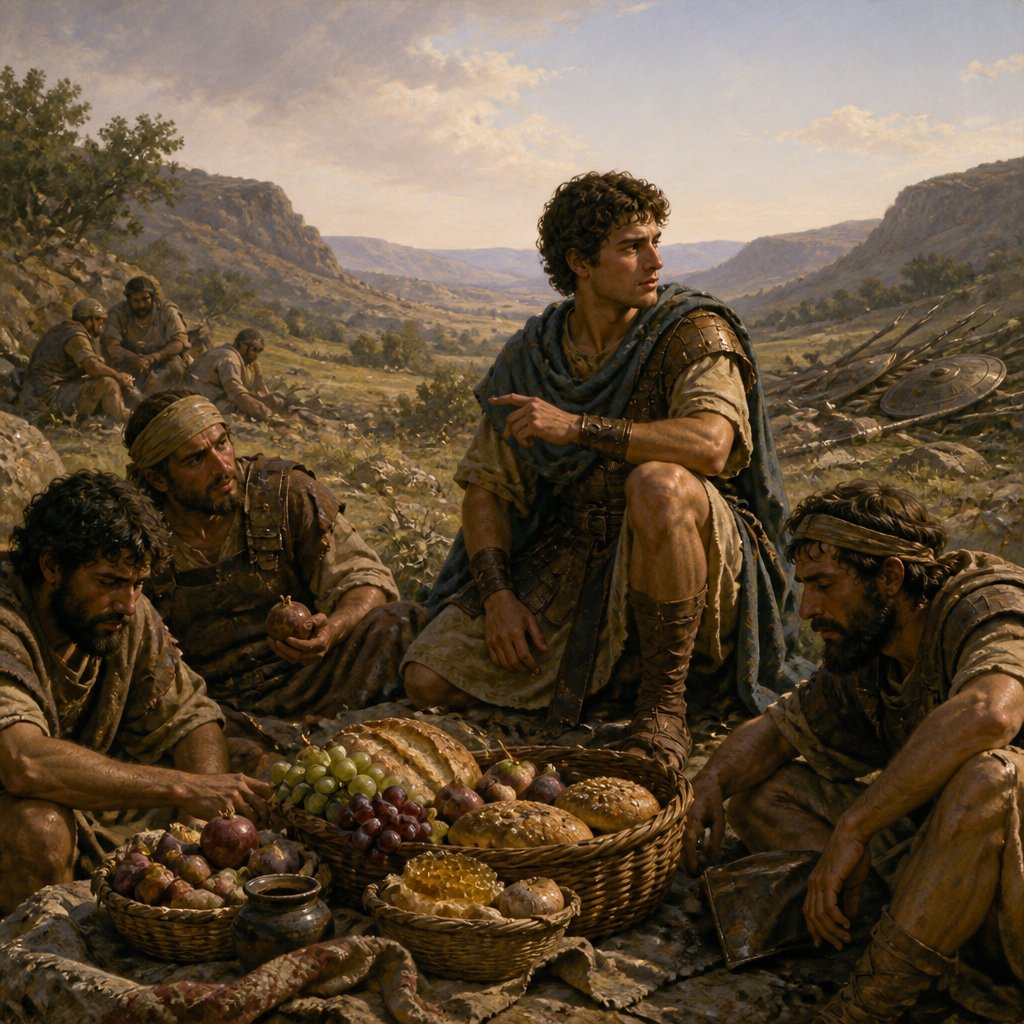
In the context of 1 Samuel 14, we find ourselves amidst a visceral battle between the Israelites and the Philistines. King Saul's command, driven by an intense desire to subdue the enemy, has resulted in a day of great victory—yet it has also set the stage for a profound lesson on the implications of rigid adherence to rules over the heart of understanding. In 1 Samuel 14:30, we read, "How much more, if haply the people had eaten freely to day of the spoil of their enemies which they found? for had there not been now a much greater slaughter among the Philistines?" This scripture provokes us to reflect on the interplay between rules and relationship as we engage with God's commands in our own lives.
King Saul, in his zeal, imposed a fast on his men, essentially suppressing their natural urge to eat after a vigorous battle. While on the surface, Saul's command appeared to be one of discipline and allegiance to the Lord, it ultimately became an act of legalism that overshadowed the very essence of victory which God had granted them. The consequence of this action was that the men were weakened and felt burdened, overlooking the reward of God’s provision—namely, the spoils taken from the defeated enemies.
When we consider Saul's leadership choices, it becomes apparent that his fixation on regulations over the wellbeing of his warriors resulted in diminished effectiveness. This moment of reflection beckons us to ask ourselves how often do we impose religious structure on ourselves and others that disregards grace, mercy, and the spirit of the commandments? Jesus rebuked this mindset during His ministry when He challenged the religious leaders of His time, highlighting that the Sabbath was made for man, not man for the Sabbath. My friends, let us not become entangled in a cycle where we confuse tradition, rules, and rituals with the life-giving essence of following God.
The phrase "if haply the people had eaten freely" beckons us to contemplate the opportunities we forfeit through our rigid dictations. The abundance of blessings that God provides could lead to remarkable growth and spiritual victories if we allow our hearts and lives to be open to His provisions instead of merely adhering to man-made decrees. In our own lives, we might find ourselves in similar situations where restrictions placed on us or that we impose upon ourselves prevent us from fully experiencing the blessings God has for us. Long-standing traditions, societal expectations, or even personal insecurities can manifest as barriers that obstruct the very grace intended for our maximum flourishing in Christ.
Furthermore, Saul’s leadership question—"had there not been now a much greater slaughter among the Philistines?"—reveals an important truth about the power of God’s favor and the resultant victories we can attain when we trust in His plan rather than in our constructs. The text implies that had the soldiers been nourished, it might have led to an even greater defeat of their enemies—a reminder that delay in grasping God's provisions can slow down the progress of His work. How often do we see a promise of fruitfulness over our lives stifled by the constraints we uphold? Imagine the potential we could fulfill if we leaned into God's grace!
As we meditate on this profound verse, let us be encouraged to examine our own hearts for instances of legalism and rigidity that may obscure the beauty of our faith. Instead of binding ourselves to performances, let us cultivate a deeper relationship with God that embraces freedom and growth. Recognize the value of God’s provision and welcome His ability to perform wonders through those who embrace Him fully. May we eat freely at His table, recognize His blessings, and rejoice in the victories He has granted—not just for our sake, but for the glory of His Name. In this, we remain anchored in the truth that legalism holds no place in a relationship steeped in grace.
Want to reflect more on 1 Samuel 14:30?
Continue your spiritual journey with Bible Chat — an AI-powered tool for exploring God's Word through conversation. Ask questions, discover connections, and deepen your understanding.
Get Our Apps


1 Samuel 14:30 Artwork
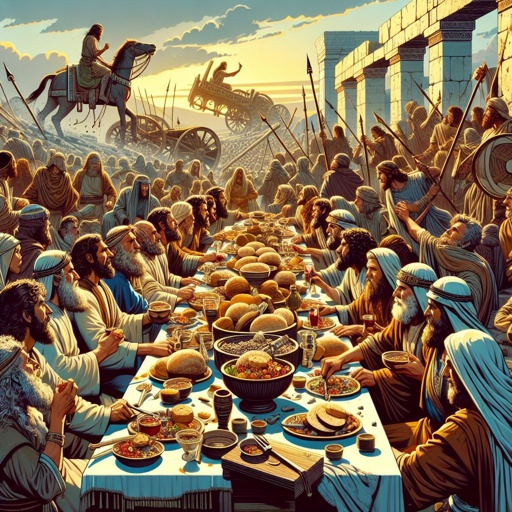
1 Samuel 14:30 - "How much more, if haply the people had eaten freely to day of the spoil of their enemies which they found? for had there not been now a much greater slaughter among the Philistines?"
"How much more, if haply the people had eaten freely to day of the spoil of their enemies which they found? for had there not been now a much greater slaughter among the Philistines?" - 1 Samuel 14:30

1 Samuel 30:14 - "We made an invasion upon the south of the Cherethites, and upon the coast which belongeth to Judah, and upon the south of Caleb; and we burned Ziklag with fire."

1.samuel 15:30

1 Samuel 30:18

1.samuel 15:30

1 Samuel 30:30 - "And to them which were in Hormah, and to them which were in Chorashan, and to them which were in Athach,"
1 Samuel 20:27-30

1 Samuel 14:6

1 Kings 14:30 - "And there was war between Rehoboam and Jeroboam all their days."

1 Samuel 14:7

1 Samuel 14:27

2 Samuel 6:14

1 Samuel 11:14 - "Then said Samuel to the people, Come, and let us go to Gilgal, and renew the kingdom there."

1 Samuel 30:25 - "And it was so from that day forward, that he made it a statute and an ordinance for Israel unto this day."

2 Samuel 14:30 - "Therefore he said unto his servants, See, Joab's field is near mine, and he hath barley there; go and set it on fire. And Absalom's servants set the field on fire."

1 Samuel 30:28 - "And to them which were in Aroer, and to them which were in Siphmoth, and to them which were in Eshtemoa,"

1 Samuel 30:18 - "And David recovered all that the Amalekites had carried away: and David rescued his two wives."

1 Samuel 30:5 - "And David's two wives were taken captives, Ahinoam the Jezreelitess, and Abigail the wife of Nabal the Carmelite."

1 Samuel 17:14 - "And David was the youngest: and the three eldest followed Saul."

1 Samuel 30:4 - "Then David and the people that were with him lifted up their voice and wept, until they had no more power to weep."

1 Samuel 15:14 - "And Samuel said, What meaneth then this bleating of the sheep in mine ears, and the lowing of the oxen which I hear?"

1 Corinthians 14:30 - "If any thing be revealed to another that sitteth by, let the first hold his peace."

1 Samuel 30:29 - "And to them which were in Rachal, and to them which were in the cities of the Jerahmeelites, and to them which were in the cities of the Kenites,"

1 Samuel 30:31 - "And to them which were in Hebron, and to all the places where David himself and his men were wont to haunt."

1 Samuel 30:27 - "To them which were in Beth-el, and to them which were in south Ramoth, and to them which were in Jattir,"

1 Samuel 30:20 - "And David took all the flocks and the herds, which they drave before those other cattle, and said, This is David's spoil."
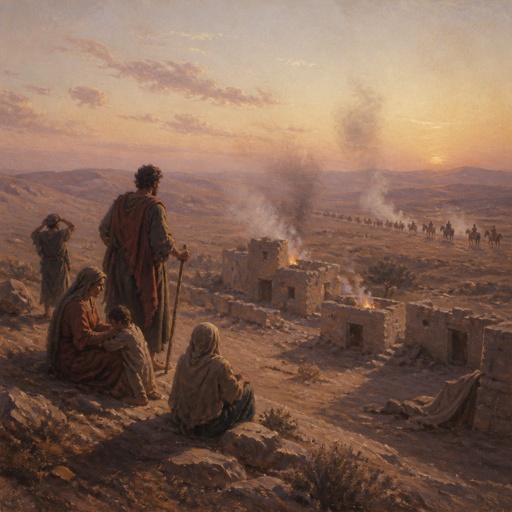
"We made an invasion upon the south of the Cherethites, and upon the coast which belongeth to Judah, and upon the south of Caleb; and we burned Ziklag with fire." - 1 Samuel 30:14

1 Samuel 30:1 - "And it came to pass, when David and his men were come to Ziklag on the third day, that the Amalekites had invaded the south, and Ziklag, and smitten Ziklag, and burned it with fire;"

1 Samuel 14:51 - "And Kish was the father of Saul; and Ner the father of Abner was the son of Abiel."