The Consequences of Fear: Learning from King Saul's Mistake
"¶ And Samuel said, What hast thou done? And Saul said, Because I saw that the people were scattered from me, and that thou camest not within the days appointed, and that the Philistines gathered themselves together at Michmash;" - 1 Samuel 13:11
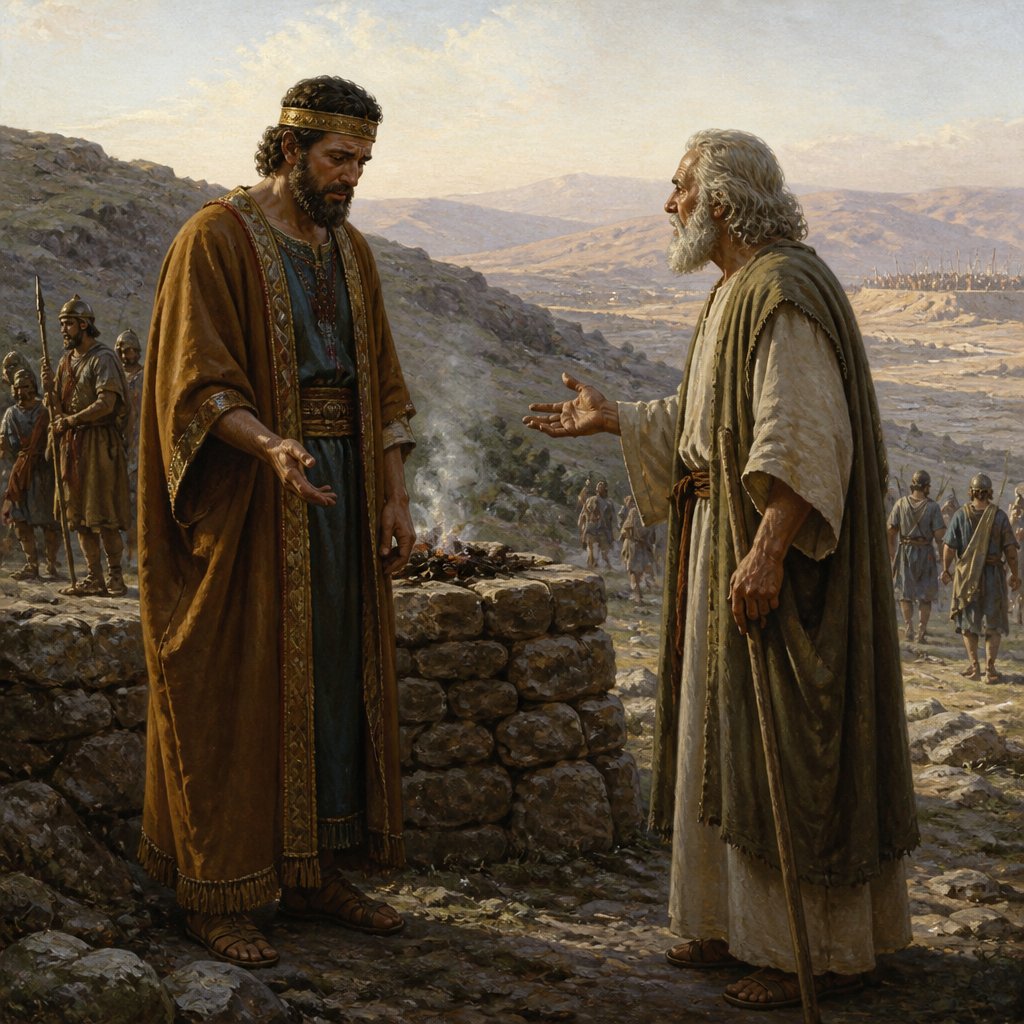
In the unfolding narrative of Israel's early monarchy, the figure of King Saul stands as a poignant reminder of the perils of fear and disobedience. 1 Samuel 13:11 reveals a critical moment in Saul’s reign, where the weight of pressure led him to step outside the bounds of his authority: "And Samuel said, What hast thou done? And Saul said, Because I saw that the people were scattered from me, and that thou camest not within the days appointed, and that the Philistines gathered themselves together at Michmash."
This verse encapsulates not only Saul's misstep but also the psychological burdens of leadership. Saul was caught in a perfect storm of fear, delay, and impatience. As the Philistines amassed their forces, he faced a moment of truth that would ultimately lead to his downfall. The king's decision to offer a burnt sacrifice in absence of the prophet Samuel – a role strictly reserved for the priesthood – starkly illustrates the conflict between divine authority and human anxiety.
Saul's delay in the arrival of Samuel had left him in a vulnerable position with his troops dwindling and the enemy threatening. This scenario is all too familiar. How many times have we found ourselves fretting over our circumstances, visualizing the potential havoc that may soon unfold? In those instances, we might try to take matters into our own hands, believing that the end justifies the means. Saul represents the quintessential struggle that many believers face when confronted with adverse circumstances: the temptation to craft our own solution when God's timing seems delayed.
The departure of his followers exemplifies how fear can cloud our judgment. Saul viewed the scattering of his men as a direct threat to his kingship. In doing so, Saul allowed fear to dictate his actions rather than remaining steadfast in faith. This serves as a vital lesson for us in the modern age: during moments of uncertainty, we must remember that our view of reality might be obscured by our immediate fears. From Saul’s perspective, the path was clear: act quickly and protect what is his. Yet, therein lay the fatal flaw – a lack of reliance on God.
Samuel’s inquiry – "What hast thou done?" – is not merely an interrogation of Saul’s actions but a profound commentary on the consequences of deviating from God’s appointed order. It underscores the reality that our choices have ramifications that extend beyond our immediate circumstances. Saul's preemptive actions led to his eventual rejection by God as king, a chastening reminder that our autonomous decisions may carry eternal weight.
We are encouraged to reflect: how often do we act in haste, driven by fear, instead of waiting patiently for God’s guidance? In moments of desperation, we may be tempted to resort to decisions that contradict our values and religious convictions. God is patient with us, wishing for us to call upon Him in prayer and seek His wisdom – even when we feel time is slipping through our fingers.
In our own lives, let us strive to cultivate a heart of waiting – letting go of the urgency to move ahead without God’s blessing. Let us remember to nurture a prayerful heart in times of distress. Like Saul, we may encounter moments that test our faith and patience. However, instead of following the path of fear and impulsivity, let us root ourselves in the truth of God’s Word and His perfect timing.
Ultimately, Saul’s story reminds us that our decisions may become tainted by fear if we fail to remain anchored in the assurance of God’s sovereign plan. We must seek His face earnestly, trusting that He will guide us through the challenges of leadership, relationships, and everyday life. May we learn from Saul’s mistakes and embrace a dependence on God that stands firm even when the world around us seems chaotic.
Want to reflect more on 1 Samuel 13:11?
Continue your spiritual journey with Bible Chat — an AI-powered tool for exploring God's Word through conversation. Ask questions, discover connections, and deepen your understanding.
Get Our Apps


1 Samuel 13:11 Artwork

1 Samuel 13:11 - "¶ And Samuel said, What hast thou done? And Saul said, Because I saw that the people were scattered from me, and that thou camest not within the days appointed, and that the Philistines gathered themselves together at Michmash;"
"¶ And Samuel said, What hast thou done? And Saul said, Because I saw that the people were scattered from me, and that thou camest not within the days appointed, and that the Philistines gathered themselves together at Michmash;" - 1 Samuel 13:11

1 Samuel 22:11-13

1 Samuel 11:13 - "And Saul said, There shall not a man be put to death this day: for to day the LORD hath wrought salvation in Israel."

1 Samuel 16:1–13

1 Samuel 13:12 Saul's disobedience

1 Samuel 12:13

1 Samuel 12:13

1 Samuel 11:14 - "Then said Samuel to the people, Come, and let us go to Gilgal, and renew the kingdom there."

1 kings 11:11-13

1 Kings 11:11-13

1 Kings 11:11-13
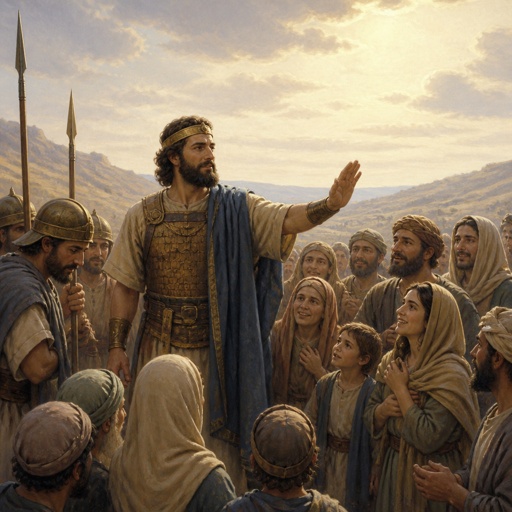
"And Saul said, There shall not a man be put to death this day: for to day the LORD hath wrought salvation in Israel." - 1 Samuel 11:13

1 Samuel 15:13 - "And Samuel came to Saul: and Saul said unto him, Blessed be thou of the LORD: I have performed the commandment of the LORD."

1 Samuel 13:8 - "¶ And he tarried seven days, according to the set time that Samuel had appointed: but Samuel came not to Gilgal; and the people were scattered from him."

Nehemiah 11:13

1 Samuel 13:12 No face of persons

1 Samuel 13:23 - "And the garrison of the Philistines went out to the passage of Michmash."

1 Samuel 13:1 - "Saul reigned one year; and when he had reigned two years over Israel,"

1 Samuel 13:13 - "And Samuel said to Saul, Thou hast done foolishly: thou hast not kept the commandment of the LORD thy God, which he commanded thee: for now would the LORD have established thy kingdom upon Israel for ever."

1 Samuel 7:13 - "¶ So the Philistines were subdued, and they came no more into the coast of Israel: and the hand of the LORD was against the Philistines all the days of Samuel."

1 Kings 11:13

1 Kings 11:13

1 Samuel 8:13 - "And he will take your daughters to be confectionaries, and to be cooks, and to be bakers."

1 Samuel 28:11 - "Then said the woman, Whom shall I bring up unto thee? And he said, Bring me up Samuel."

1 Samuel 3:11 - "¶ And the LORD said to Samuel, Behold, I will do a thing in Israel, at which both the ears of every one that heareth it shall tingle."

1 Samuel 16:13 - "Then Samuel took the horn of oil, and anointed him in the midst of his brethren: and the Spirit of the LORD came upon David from that day forward. So Samuel rose up, and went to Ramah."

1 Samuel 12:11 - "And the LORD sent Jerubbaal, and Bedan, and Jephthah, and Samuel, and delivered you out of the hand of your enemies on every side, and ye dwelled safe."

1 Samuel 11:12 - "¶ And the people said unto Samuel, Who is he that said, Shall Saul reign over us? bring the men, that we may put them to death."

1 Samuel 13:15 - "And Samuel arose, and gat him up from Gilgal unto Gibeah of Benjamin. And Saul numbered the people that were present with him, about six hundred men."