The Weight of Oaths: A Reflection on Justice and Mercy
"¶ If any man trespass against his neighbour, and an oath be laid upon him to cause him to swear, and the oath come before thine altar in this house:" - 1 Kings 8:31
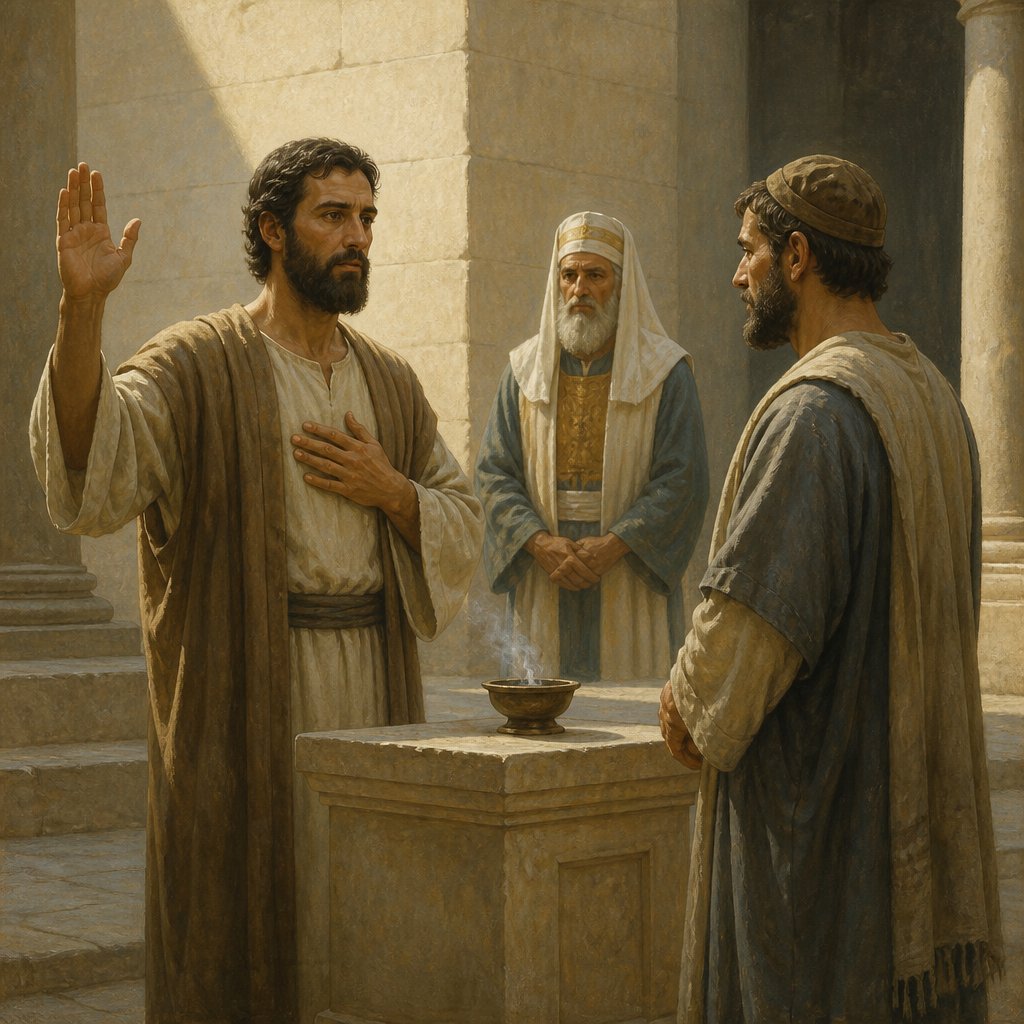
In 1 Kings 8:31, we encounter a profound illustration of justice and the sanctity of oaths: "If any man trespass against his neighbour, and an oath be laid upon him to cause him to swear, and the oath come before thine altar in this house:" This verse unfolds in the context of King Solomon’s prayer of dedication for the temple of the Lord, a moment where worship and divine justice coalesce. It sets forth a reminder of our human responsibilities toward one another, mediated through the seriousness of oaths and the sacredness of God’s presence.
To trespass against one's neighbor is to violate trust, to harm another, or to act contrary to the principles of love and respect which ought to govern our interactions. In our daily lives, we may not put pen to paper in formal agreements; rather, it's the promise of our words and the intent of our hearts that manifest our commitments. Solomon acknowledges that not only do our actions have consequences, but solemn oaths carry a further weight. When one is called to swear an oath before God’s altar, it indicates a plea for divine acknowledgment of truthfulness. An oath becomes an extension of our character – a refined declaration of integrity that should not be taken lightly.
The altar symbolizes the presence of God, the ultimate witness to our intentions and actions. In Old Testament times, bringing an oath before the altar was a public act, signifying accountability and the gravity of one’s word. It reminds us that God is intimately aware of our dealings. Every promise, every breach of trust, and every act of injustice is seen by the all-knowing eye of the Almighty.
In a world that often feels fragmented by deceit and broken relationships, the call to honor our commitments stands firm. As followers of Christ, we are urged to foster a culture of honesty and accountability in our dealings with one another. James 5:12 reminds us, "But above all things, my brethren, swear not, neither by heaven, neither by the earth, neither by any other oath: but let your yea be yea; and your nay, nay; lest ye fall into condemnation." This highlights an important aspect of integrity — that our words should suffice. If we are people of God, our promises should not require embellishment or further affirmation.
Moreover, Solomon's prayer reminds us that when we confront one another regarding wrongs, we do so recognizing that grace must accompany justice. While the law calls for accountability, it also enables reconciliation and healing. Oaths taken in solemnity can pave the way for restoration, provided they are backed by a sincere heart that is willing to make amends. Thus, the act of laying an oath before God not only signifies our intent to comply with justice but also invites the spirit of mercy to reign in our hearts.
In our prayer life, we must take time to reflect on our own oaths—those spoken and unspoken. Are we living up to the commitments we have made? Whether in family, church, or community, have we extended grace and forgiven those who have wronged us? It's most telling that God does not only require justice but also desires mercy. In Micah 6:8, we are instructed to act justly, love mercy, and walk humbly with God.
So as we delve into this text, let's consider how we can embody the sacredness of oaths in our lives. If we have wronged someone, let us seek forgiveness. If we have been unjustly wronged, may we find it in our hearts to forgive. Oaths made before God, conveyed in honesty and upheld by love, can lead to healing in a world in desperate need of God’s grace. Thus, may our lives reflect the character of Christ, who fulfilled every promise and bore our ultimate punishment to restore our brokenness.
Want to reflect more on 1 Kings 8:31?
Continue your spiritual journey with Bible Chat — an AI-powered tool for exploring God's Word through conversation. Ask questions, discover connections, and deepen your understanding.
Get Our Apps


1 Kings 8:31 Artwork

1 Kings 8:31 - "¶ If any man trespass against his neighbour, and an oath be laid upon him to cause him to swear, and the oath come before thine altar in this house:"
"¶ If any man trespass against his neighbour, and an oath be laid upon him to cause him to swear, and the oath come before thine altar in this house:" - 1 Kings 8:31

1 Kings 11:30-31

1 Kings 11:30-31

1 Kings 11:30-31

1 Chronicles 8:31 - "And Gedor, and Ahio, and Zacher."

Numbers 31:8 - "And they slew the kings of Midian, beside the rest of them that were slain; namely, Evi, and Rekem, and Zur, and Hur, and Reba, five kings of Midian: Balaam also the son of Beor they slew with the sword."

1 Kings 15:31 - "¶ Now the rest of the acts of Nadab, and all that he did, are they not written in the book of the chronicles of the kings of Israel?"

1 Kings 8:6-8

1 Kings 8:10

1 Kings 8:21

1 Kings 8:21

1 Kings 8:10

1 kings 8:7

1 Kings 8:10

1 Kings 8:10

1 Kings 8:7

1 Kings 8:21

1 Kings 8:10

1 Kings 1:31 - "Then Bath-sheba bowed with her face to the earth, and did reverence to the king, and said, Let my lord king David live for ever."

1 Kings 8:10

1 kings 8:7

1 Kings 8:22

1 Kings 8:21

1 Kings 8:10

"And Gedor, and Ahio, and Zacher." - 1 Chronicles 8:31

1 Kings 12:31 - "And he made an house of high places, and made priests of the lowest of the people, which were not of the sons of Levi."

1 Kings 6:31 - "¶ And for the entering of the oracle he made doors of olive tree: the lintel and side posts were a fifth part of the wall."

1 Kings 4:8 - "And these are their names: The son of Hur, in mount Ephraim:"

1 Kings 17:8 - "¶ And the word of the LORD came unto him, saying,"