The Clash of Spirits: A Journey Between Truth and Deception
"But Zedekiah the son of Chenaanah went near, and smote Micaiah on the cheek, and said, Which way went the Spirit of the LORD from me to speak unto thee?" - 1 Kings 22:24
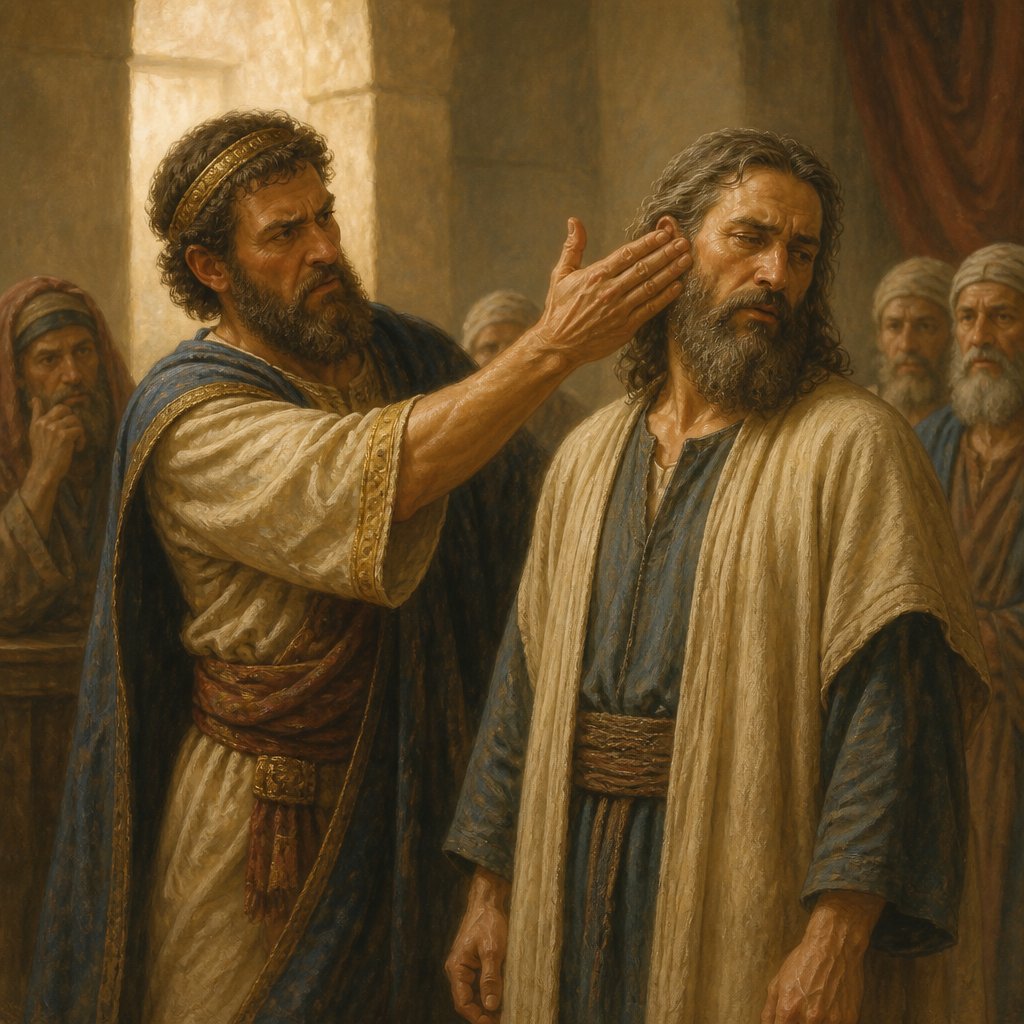
The story of Micaiah and Zedekiah in 1 Kings 22 provides a poignant lesson in discerning truth amidst conflicting voices, particularly in the context of spiritual authority and the political machinations of leadership. The verse in focus reads, "But Zedekiah the son of Chenaanah went near, and smote Micaiah on the cheek, and said, Which way went the Spirit of the LORD from me to speak unto thee?" This scene is rife with implications and challenges that are relevant to our lives today.
First, let's understand the background of our text. King Ahab of Israel solicits prophetic guidance regarding going into battle against Ramoth-Gilead. Many prophets, motivated by the political desires of the king, prophesy victory. Yet, amidst all the affirmations, Micaiah stands as a solitary voice of truth. When he speaks, he challenges the consensus, exposing the deception swirling around Ahab. In essence, Micaiah embodies a commitment to divine truth, which brings him into conflict with Zedekiah.
Zedekiah’s violent act against Micaiah—hitting him on the cheek—may symbolize the hostility faced by those who uphold truth in an environment saturated with lies. In our world, this holds significant application as well; often, voices of truth encounter aggression and disdain. People may react defensively when their beliefs are challenged. Micaiah’s unwavering stance reminds us that standing for the truth, especially when it diverges from public opinion or popular sentiment, can lead to personal repercussions. The challenge lies in the willingness to endure adversity for the sake of righteousness.
Secondly, Zedekiah’s question, "Which way went the Spirit of the LORD from me to speak unto thee?" reflects a deeper spiritual crisis. He asserts his prophetic legitimacy while questioning Micaiah's. This indicates the danger of deluding oneself into believing that one possesses the Divine's favor without a sincere connection to the truth. Zedekiah, serving the whims of Ahab, embodies the misplaced confidence that can arise when one departs from the path of God's will. His query challenges us: Are we truly aligned with the Spirit of the Lord, or are we merely echoing what is convenient or popular?
In our own lives, we may find ourselves surrounded by a chorus of voices—some calling us to align with the status quo, others beckoning us toward authentic faith. Zedekiah represents those who may hold positions of influence but compromise their integrity and prophetic voice for acceptance or gain. This prompts a vital self-examination: Do we seek the voice of the Lord through the noise, or do we allow the opinions of others to dictate our faith? The need to cultivate personal discernment is crucial; we should not rely solely on others’ interpretations but seek God’s guidance through prayer, scripture, and the leading of the Holy Spirit.
Moreover, Micaiah’s resilience sets an important example for believers today. In a culture where tolerance often overshadows truth, Micaiah’s ability to articulate what the Lord has said, even in the face of opposition, encourages us to understand that proclaiming God’s word is not always met with acceptance or kindness. We are called to be steadfast in our faith, ensuring our convictions are rooted in God’s promises rather than in societal acceptance. Just as Micaiah stood firm, we too must commit ourselves to seek and speak the truth, regardless of the consequences that may ensue.
In conclusion, as we dwell on the confrontation between Zedekiah and Micaiah, let us commit ourselves to the pursuit of God’s truth. May we not shy away from the hard path of honesty, even when it is unpopular. Let us strive to be voices for God in a world filled with conflicting and often deceptive narratives. Like Micaiah, let us be brave enough to confront our contemporary ‘Zedekiahs’—those who might attempt to silence the voice of truth. Ultimately, our allegiance must rest with the Spirit of the Lord, who guides us into all truth, leading us away from the crowd and toward the heart of God.
Want to reflect more on 1 Kings 22:24?
Continue your spiritual journey with Bible Chat — an AI-powered tool for exploring God's Word through conversation. Ask questions, discover connections, and deepen your understanding.
Get Our Apps


1 Kings 22:24 Artwork

1 Kings 22:24 - "But Zedekiah the son of Chenaanah went near, and smote Micaiah on the cheek, and said, Which way went the Spirit of the LORD from me to speak unto thee?"
"But Zedekiah the son of Chenaanah went near, and smote Micaiah on the cheek, and said, Which way went the Spirit of the LORD from me to speak unto thee?" - 1 Kings 22:24

James 2:2-4

2 Samuel 24:22

2 Samuel 24:22

2 Samuel 24:22

1 kings 22:19

1 Kings 8:22

1 Kings 22:47 - "There was then no king in Edom: a deputy was king."

1 Chronicles 24:22 - "Of the Izharites; Shelomoth: of the sons of Shelomoth; Jahath."

1 Kings 22:44 - "And Jehoshaphat made peace with the king of Israel."

1 Kings 20:24 - "And do this thing, Take the kings away, every man out of his place, and put captains in their rooms:"

1 Kings 22:1 - "And they continued three years without war between Syria and Israel."

1 Kings 1:22 - "¶ And, lo, while she yet talked with the king, Nathan the prophet also came in."

1 Kings 3:24 - "And the king said, Bring me a sword. And they brought a sword before the king."

1 Kings 22:37 - "¶ So the king died, and was brought to Samaria; and they buried the king in Samaria."

1 Kings 22:29 - "So the king of Israel and Jehoshaphat the king of Judah went up to Ramoth-gilead."

1 Kings 22:45 - "Now the rest of the acts of Jehoshaphat, and his might that he shewed, and how he warred, are they not written in the book of the chronicles of the kings of Judah?"

1 Kings 12:22 - "But the word of God came unto Shemaiah the man of God, saying,"

"There was then no king in Edom: a deputy was king." - 1 Kings 22:47

1 Kings 22:9 - "Then the king of Israel called an officer, and said, Hasten hither Micaiah the son of Imlah."

1 Kings 22:2 - "And it came to pass in the third year, that Jehoshaphat the king of Judah came down to the king of Israel."

1 Kings 7:22 - "And upon the top of the pillars was lily work: so was the work of the pillars finished."

1 Kings 22:39 - "Now the rest of the acts of Ahab, and all that he did, and the ivory house which he made, and all the cities that he built, are they not written in the book of the chronicles of the kings of Israel?"

1 Kings 22:21 - "And there came forth a spirit, and stood before the LORD, and said, I will persuade him."

1 Kings 22:7 - "And Jehoshaphat said, Is there not here a prophet of the LORD besides, that we might enquire of him?"

"Of the Izharites; Shelomoth: of the sons of Shelomoth; Jahath." - 1 Chronicles 24:22

1 Kings 22:41 - "¶ And Jehoshaphat the son of Asa began to reign over Judah in the fourth year of Ahab king of Israel."

1 Kings 22:5 - "And Jehoshaphat said unto the king of Israel, Enquire, I pray thee, at the word of the LORD to day."

"And Jehoshaphat made peace with the king of Israel." - 1 Kings 22:44