Horns of Iron: A Call to Courage in Conflict
"And Zedekiah the son of Chenaanah made him horns of iron: and he said, Thus saith the LORD, With these shalt thou push the Syrians, until thou have consumed them." - 1 Kings 22:11
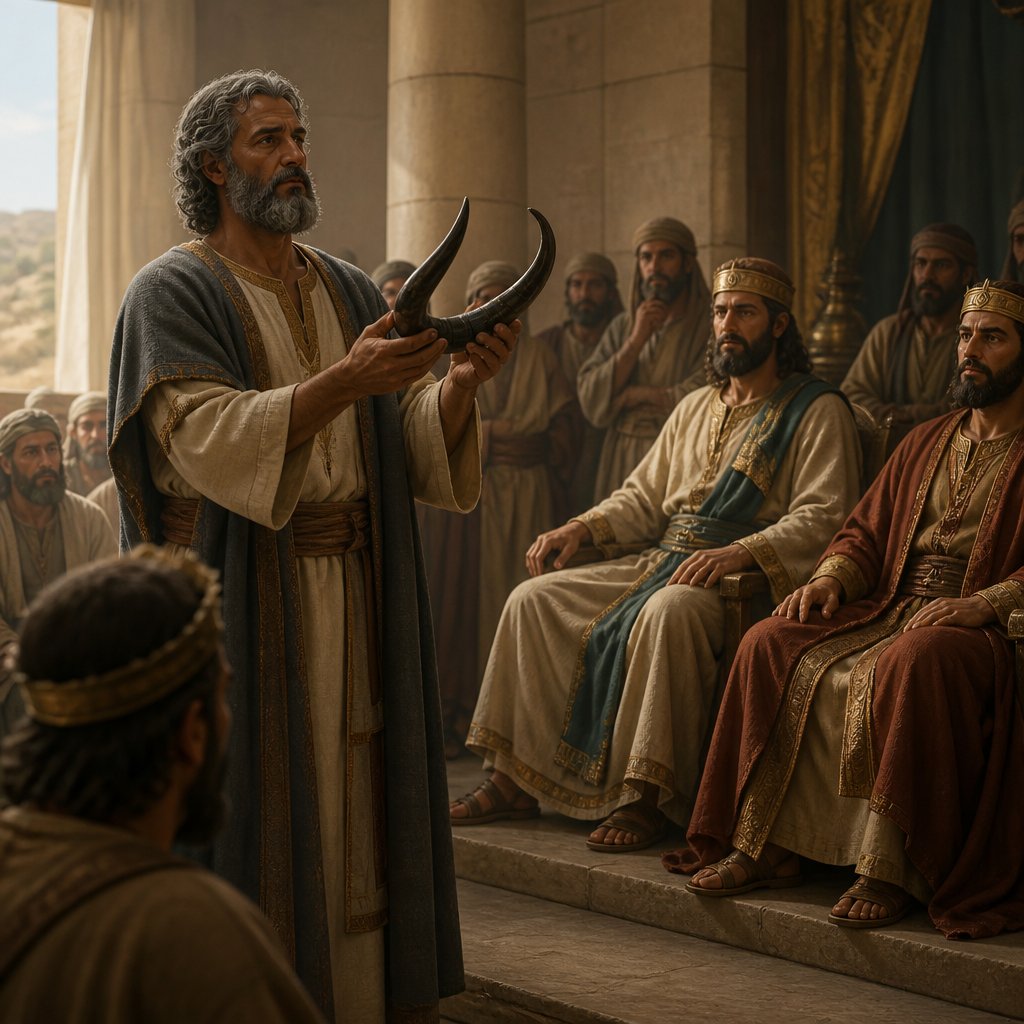
In 1 Kings 22:11, we find a dramatic scene where Zedekiah the son of Chenaanah, one of the prophets, crafts horns of iron and boldly declares, "Thus saith the LORD, With these shalt thou push the Syrians, until thou have consumed them." This moment in the scriptures captures not only the prophetic act of Zedekiah but also the intense spiritual and moral conflict that surrounds decision-making in leadership, particularly when it comes to warfare, prophecy, and the weight of divine guidance.
Zedekiah’s horns of iron serve as a powerful symbol of strength, aggression, and divine empowerment. In the ancient world, horns were often associated with power and might — they represent an extension of one’s influence. In this case, Zedekiah is not simply providing a theatrical display; he is invoking God's authority behind the act. It reminds us that God equips His servants for battle, be it a physical confrontation or a spiritual struggle. The direct words "Thus saith the LORD" underline an essential truth: when God speaks, His message carries with it the force of divine will and omnipotence.
However, one must pause to consider the context of this bold declaration. King Ahab, who sought the counsel of prophets, was about to engage in a battle against the Syrians, believing that he could reclaim Ramoth-gilead. Amid this decision, the voices he hears are mixed. While Zedekiah's proclamation exudes confidence, the opposing voice of Micaiah, another prophet who prophesies doom for Ahab, reveals a stark contrast — a warning against proceeding with the war. The interplay between Zedekiah's confident horns and Micaiah's somber prediction demonstrates the critical importance of discernment in our spiritual journeys.
As modern believers, we often face similar dilemmas. We may not be holding physical horns of iron, but we are regularly confronted with decisions that can lead to conflict or challenge. In such instances, we must ask ourselves: Are we seeking the Lord’s will, or are we merely amplifying our own desires and ambitions? Zedekiah's act could easily be interpreted as a display of emotional zeal lacking the true inward conviction of God's ultimate plan.
The Lord invites us into a deeper relationship that nurtures profound understanding and authenticity. While Zedekiah pressed forward with a feeling of certainty, the reality was that Ahab’s path was one leading to his destruction. This bears a lesson for us today — just because something sounds right and appears to have divine backing doesn’t always mean it truly aligns with God’s will.
In our own lives, we may feel a divine push to act or to respond to situations. However, it is crucial to remain in prayer, seeking God’s direction rather than jumping to conclusions based solely on our interpretation or the confident declarations of others. As the KJV translates in Proverbs 3:5-6, "Trust in the LORD with all thine heart; and lean not unto thy own understanding. In all thy ways acknowledge him, and he shall direct thy paths." Leaning on our understanding can lead to the creation of our own ‘horns of iron’ that might not be truly grounded in the truth of God’s design.
As we meditate on Zedekiah’s proclamation, let us strive to embody the qualities of wisdom, humility, and obedience. May we continually seek the Lord’s presence and guidance — understanding that true strength is less about our power and more about our surrender to His will. In doing so, we may find that our battles become easier to navigate, imbued with the grace and clarity that only comes from a life committed to following the Lord. With authentic obedience, He will equip us not with iron horns but with hearts that are courageous and aligned with His purposes.
Want to reflect more on 1 Kings 22:11?
Continue your spiritual journey with Bible Chat — an AI-powered tool for exploring God's Word through conversation. Ask questions, discover connections, and deepen your understanding.
Get Our Apps


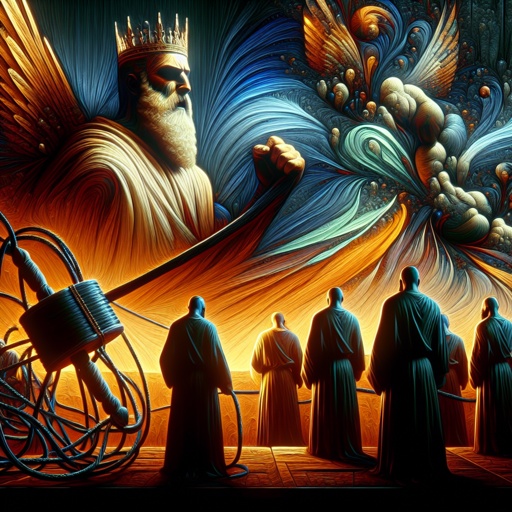
1 Kings 22:11 Artwork
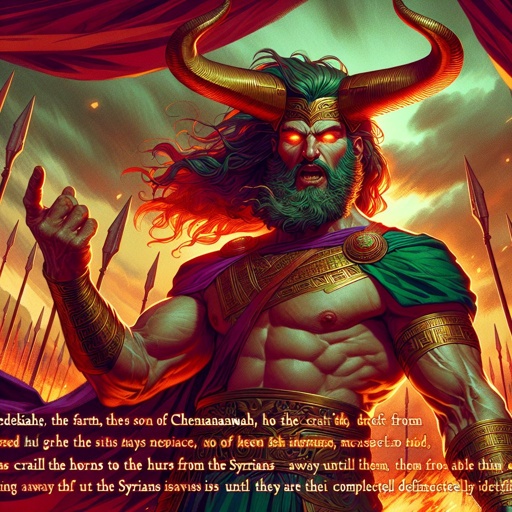
1 Kings 22:11 - "And Zedekiah the son of Chenaanah made him horns of iron: and he said, Thus saith the LORD, With these shalt thou push the Syrians, until thou have consumed them."
"And Zedekiah the son of Chenaanah made him horns of iron: and he said, Thus saith the LORD, With these shalt thou push the Syrians, until thou have consumed them." - 1 Kings 22:11

1 Kings 11:11

1 Kings 11:11

1 Kings 11:11

1 Kings 11:11
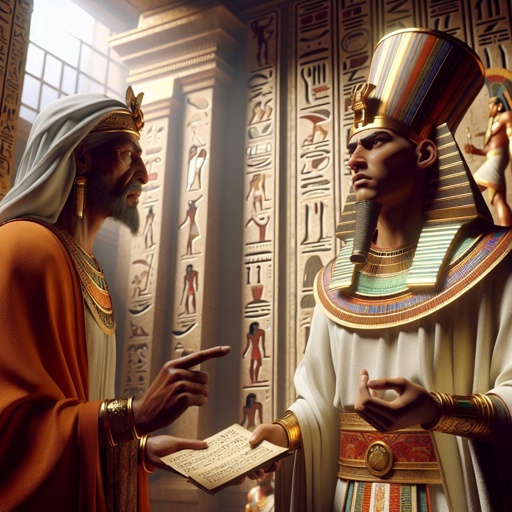
1 Kings 11:22 - "Then Pharaoh said unto him, But what hast thou lacked with me, that, behold, thou seekest to go to thine own country? And he answered, Nothing: howbeit let me go in any wise."

1 Kings 11:11

1 kings 22:19

1 Kings 8:22

1 Kings 22:47 - "There was then no king in Edom: a deputy was king."

2 Kings 22:11 - "And it came to pass, when the king had heard the words of the book of the law, that he rent his clothes."

1 kings 11:11-13

1 Kings 11:11-13

1 Kings 11:11-13

1 Kings 22:44 - "And Jehoshaphat made peace with the king of Israel."

1 Kings 11:1-5

1 Kings 22:1 - "And they continued three years without war between Syria and Israel."

1 Kings 1:22 - "¶ And, lo, while she yet talked with the king, Nathan the prophet also came in."

1 Kings 12:11

1 Kings 11:13

1 Kings 12:11

1 Kings 11:5

1 Kings 11:13

1 Kings 22:37 - "¶ So the king died, and was brought to Samaria; and they buried the king in Samaria."

1 Kings 12:11
1 Kings 12:11

1 Kings 12:11

1 Samuel 22:11-13

1 Kings 22:29 - "So the king of Israel and Jehoshaphat the king of Judah went up to Ramoth-gilead."