The Depth of Repentance: Ahab's Brokenness
"And it came to pass, when Ahab heard those words, that he rent his clothes, and put sackcloth upon his flesh, and fasted, and lay in sackcloth, and went softly." - 1 Kings 21:27
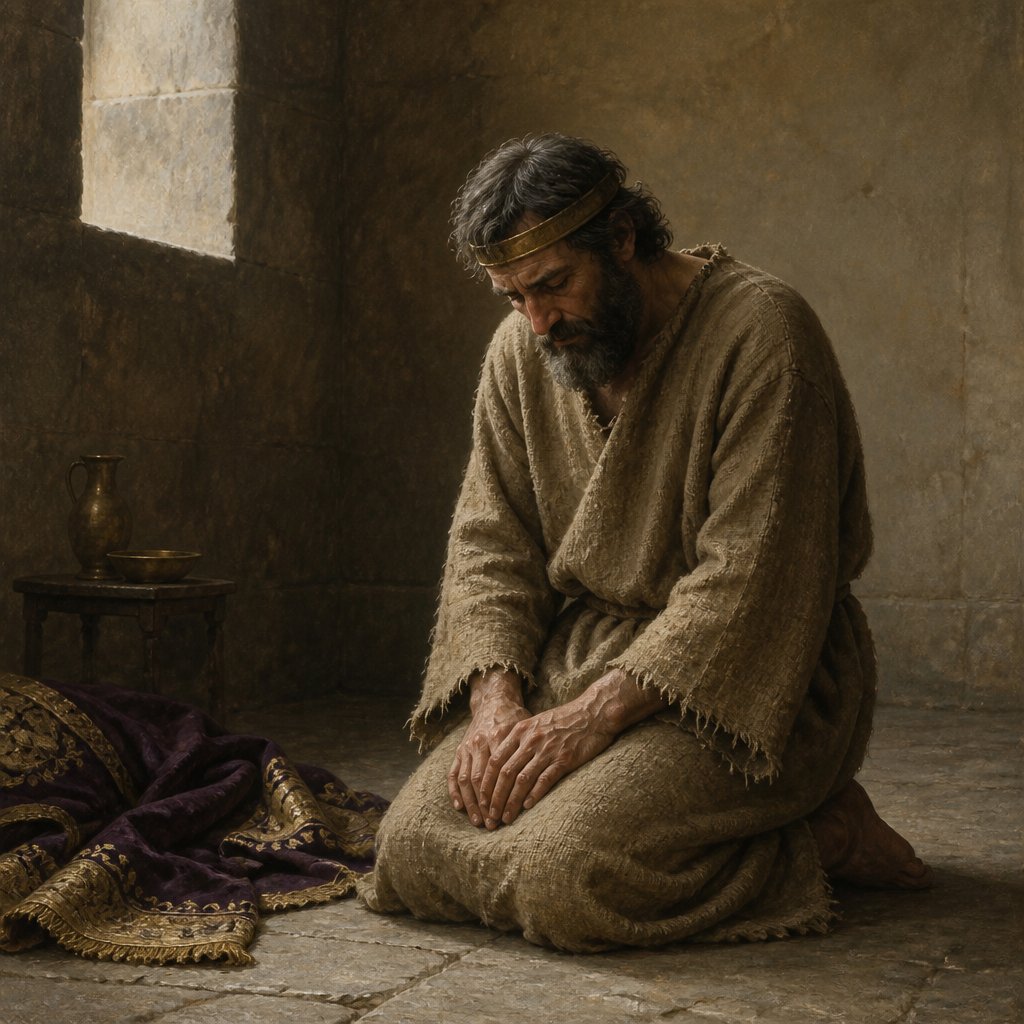
The story of Ahab in 1 Kings 21 is one of the most poignant narratives in the Bible, revealing the complexities of human sin and the haunting realities of true contrition. In verse 27, we find a significant moment in Ahab's life: "And it came to pass, when Ahab heard those words, that he rent his clothes, and put sackcloth upon his flesh, and fasted, and lay in sackcloth, and went softly.” This depiction of Ahab’s response to God’s pronouncement through Elijah is a heartfelt display of repentance that we can glean much wisdom from.
Ahab, the king of Israel, is often remembered for his disobedience and pursuit of evil, especially in leading the nation away from the worship of the true God towards Baal worship. His reign was marked by idolatry and moral decay, but in this moment, as he hears the judgment proclaimed due to his sins, we see an unexpected side of him—a response that is deeply human and profoundly instructive.
The first action Ahab takes upon hearing the word of the Lord is to "rent his clothes." This act of tearing one’s garments was a common expression of sorrow and mourning in the ancient Near East—a powerful physical sign of one’s inner grief and lamentation. Ahab's act symbolizes not just a superficial sorrow, but a recognition of the weight of his sin and the dire consequences he would face. It serves as a reminder that genuine repentance often comes through a visceral acknowledgment of one's wrongs.
Next, Ahab puts on sackcloth upon his flesh. Sackcloth is coarse material, often associated with mourning and penitence. By dressing in sackcloth, Ahab is making a statement of humility; he is identifying himself with the posture of one who is desperate for mercy. The image here is stark—a king, highly placed and powerful, humbling himself to the extent of donning rags meant for the poorest and most afflicted. It brings to light how the posture of our heart before God is more important than our station in life.
Following this, Ahab fasts and lays in sackcloth. The significance of fasting in the Biblical context cannot be overstated. It is an act of denial, a way of saying to God—"I need You more than I need this food. My soul is in peril, and I seek Your mercy more than I seek comfort." Ahab is demonstrating a significant shift from his previous arrogance and self-sufficiency to a posture of dependence on God. In these moments, he is stripped of all pride and is left naked before the Lord, acknowledging his desperate need for divine grace.
Finally, Ahab "went softly." This phrase is laden with meaning; it indicates not only the demeanor with which he approached God but reflects a heart that is tender in its submission and recognition of consequence. Contrast this with the brashness he often exhibited as king—the hard-heartedness that had led him down a path of idolatry and rebellion. Going softly suggests a life turned around, a newfound sensitivity towards the things of God and a willingness to listen and comply with the divine will.
The life of Ahab teaches us that repentance is a process that encompasses sorrow, humility, and a turning away from sin. It challenges us to consider our own responses to the conviction of the Holy Spirit. Do we, like Ahab, recognize the weight of our transgressions? Do we approach God in humility and genuine remorse? And finally, do we strive to walk softly before Him, embodying a spirit of submission and a desire for His presence in our lives?
Let us take Ahab's moment of brokenness as a reminder that it’s never too late to turn back to God. In our own lives, we may have areas where we need to rend our hearts rather than our garments, putting on the sackcloth of humility and fasting from the distractions that pull us away from our relationship with God. True repentance is transformative; may we seek it daily, approaching God not with hardened hearts but with the brokenness that invites His mercy and grace.
Want to reflect more on 1 Kings 21:27?
Continue your spiritual journey with Bible Chat — an AI-powered tool for exploring God's Word through conversation. Ask questions, discover connections, and deepen your understanding.
Get Our Apps


1 Kings 21:27 Artwork

1 Kings 21:27 - "And it came to pass, when Ahab heard those words, that he rent his clothes, and put sackcloth upon his flesh, and fasted, and lay in sackcloth, and went softly."
"And it came to pass, when Ahab heard those words, that he rent his clothes, and put sackcloth upon his flesh, and fasted, and lay in sackcloth, and went softly." - 1 Kings 21:27

Exodus 27:19-21

1 Kings 7:27-38

1 Kings 7:27-38

1 Kings 8:21

1 Kings 8:21

1 Kings 8:21

1 Kings 8:21

1 Kings 16:27 - "Now the rest of the acts of Omri which he did, and his might that he shewed, are they not written in the book of the chronicles of the kings of Israel?"

1 Kings 21:14 - "Then they sent to Jezebel, saying, Naboth is stoned, and is dead."

1 Kings 13:27 - "And he spake to his sons, saying, Saddle me the ass. And they saddled him."

1 Kings 21:28 - "And the word of the LORD came to Elijah the Tishbite, saying,"

1 Kings 21:17 - "¶ And the word of the LORD came to Elijah the Tishbite, saying,"

1 Chronicles 21:27 - "And the LORD commanded the angel; and he put up his sword again into the sheath thereof."

1 Chronicles 27:21 - "Of the half tribe of Manasseh in Gilead, Iddo the son of Zechariah: of Benjamin, Jaasiel the son of Abner:"

1 Kings 10:27 - "And the king made silver to be in Jerusalem as stones, and cedars made he to be as the sycomore trees that are in the vale, for abundance."

1 Kings 3:27 - "Then the king answered and said, Give her the living child, and in no wise slay it: she is the mother thereof."

1 Kings 9:27 - "And Hiram sent in the navy his servants, shipmen that had knowledge of the sea, with the servants of Solomon."

1 Kings 21:12 - "They proclaimed a fast, and set Naboth on high among the people."

1 Kings 1:27 - "Is this thing done by my lord the king, and thou hast not shewed it unto thy servant, who should sit on the throne of my lord the king after him?"

1 Kings 21:1 - "And it came to pass after these things, that Naboth the Jezreelite had a vineyard, which was in Jezreel, hard by the palace of Ahab king of Samaria."

1 Kings 20:21 - "And the king of Israel went out, and smote the horses and chariots, and slew the Syrians with a great slaughter."

1 Kings 14:27 - "And king Rehoboam made in their stead brasen shields, and committed them unto the hands of the chief of the guard, which kept the door of the king's house."

1 Samuel 27:6 - "Then Achish gave him Ziklag that day: wherefore Ziklag pertaineth unto the kings of Judah unto this day."

1 Kings 22:21 - "And there came forth a spirit, and stood before the LORD, and said, I will persuade him."

1 Kings 2:21 - "And she said, Let Abishag the Shunammite be given to Adonijah thy brother to wife."

1 Chronicles 16:21 - "He suffered no man to do them wrong: yea, he reproved kings for their sakes,"

1 Kings 21:9 - "And she wrote in the letters, saying, Proclaim a fast, and set Naboth on high among the people:"

1 Kings 22:27 - "And say, Thus saith the king, Put this fellow in the prison, and feed him with bread of affliction and with water of affliction, until I come in peace."