The Persistence of Faith: Lessons from 1 Kings 18:43
"And said to his servant, Go up now, look toward the sea. And he went up, and looked, and said, There is nothing. And he said, Go again seven times." - 1 Kings 18:43
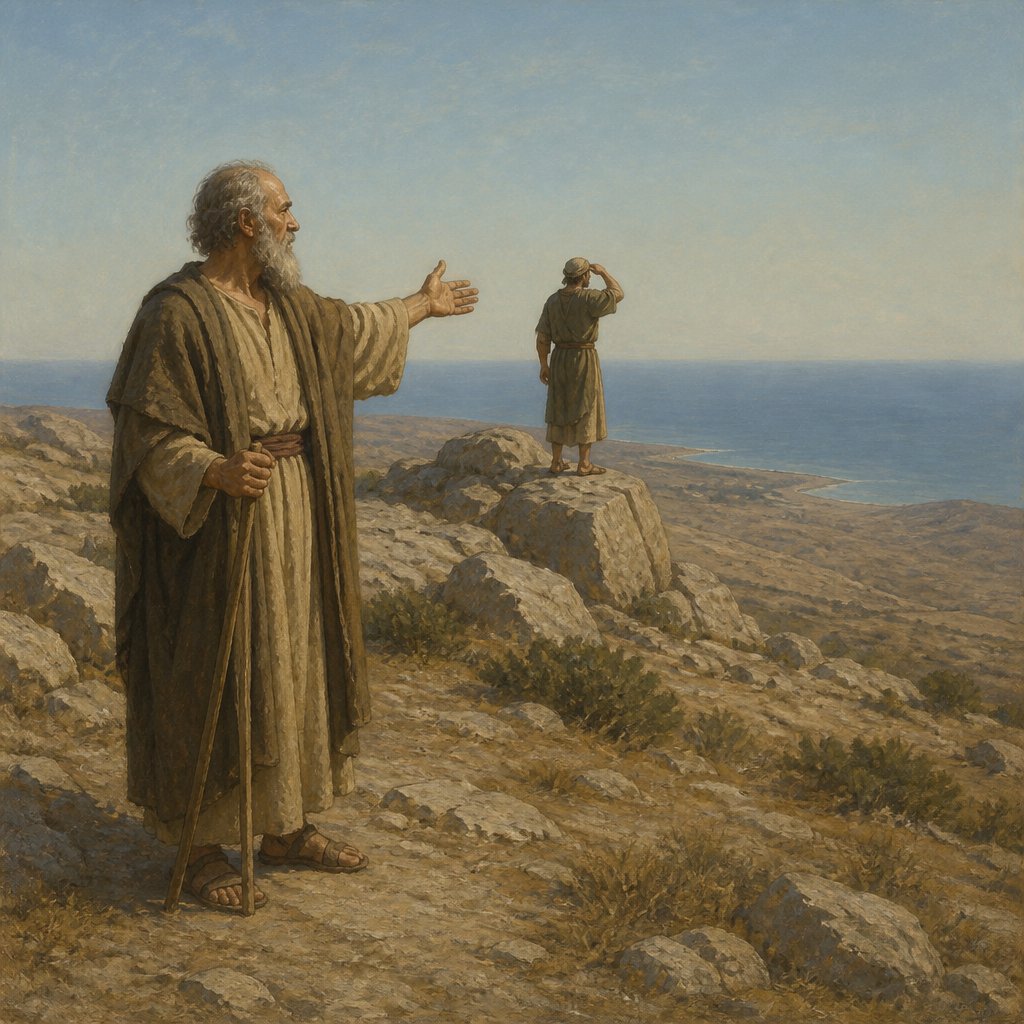
In the midst of spiritual and physical drought, the story of Elijah on Mount Carmel teaches us profound lessons about faith, expectation, and perseverance. The verse from 1 Kings 18:43 states, "And said to his servant, Go up now, look toward the sea. And he went up, and looked, and said, There is nothing. And he said, Go again seven times."
At this moment, Elijah was not merely responding to a personal crisis; he was standing at the forefront of a national revival in Israel. After three years of drought, Elijah had just confronted the prophets of Baal and witnessed God’s fiery display on the altar. Now, like a watchman looking for signs, he turned his attention to the horizon, expectant of rain, signifying God’s mercy and restoration.
**Looking for the Promise**
Elijah’s command to his servant to go and look toward the sea is a powerful testament to faith. While the servant’s eyes only saw barren land and cloudless skies, Elijah’s assurance was rooted in God’s promise of rain. This is a critical moment for us all—how often do we find ourselves in a situation where everything around us looks bleak and devoid of hope? When we pray for change, for God to move in our lives or in the lives of others, do we allow ourselves to keep looking for His promises?
The phrase "There is nothing" speaks to the reality that sometimes, despite our prayers and hopes, the tangible results of our faith seem to be non-existent. Yet Elijah’s response was not one of despair but of continued faithfulness. He instructed the servant, "Go again seven times." This persistence is a crucial aspect of our faith journey. We are often called to act not based on what we see, but on what we believe. How many of us give up after the first, or perhaps the second, lack of visible results? Jesus spoke on this very matter when He taught about the necessity of persistent prayer (Luke 18:1).
**The Symbolism of Seven**
The number seven holds great significance throughout the Bible. It often represents completeness or divine perfection. When Elijah asked his servant to return seven times, it symbolized not only the fullness of God’s promise but also the complete trust in His timing and plan.
In our spiritual walk, we must remember that God is rarely in a rush to fulfill His promises. His timing is perfect, and though we may feel weary, we must persist and remain faithful in seeking Him. The servant going up and down the mountain signifies the human endeavor; we are called to take action, to keep on watching, praying, and believing, even when our circumstances do not initially show signs of change.
**The Eighth Time: The Visible Cloud**
When the servant finally returns after the seventh time, his report was different: "Behold, there ariseth a little cloud out of the sea, like a man's hand" (1 Kings 18:44). How profound it is that God's answers often begin in the most modest forms. It is easy to overlook or discount the small beginnings; however, they are frequently precursors to substantial transformations.
What small signs of hope are you witnessing in your life? Are there faint whispers of God’s movement that you might be disregarding due to disappointment?
**Conclusion**
As Elijah stood firm, encouraging steadfastness and vigilance in the face of adversity, we too are called to be people of persistent faith. Remember that faith sometimes asks us to look toward the sea repeatedly until at last, we can see the slight shift on the horizon. Let us not grow weary in asking, seeking, and knocking until we witness the miraculous workings of God in our lives. In all things, trust in His faithfulness, and expect to see His blessings, even if they begin as a mere cloud the size of a man’s hand.
Want to reflect more on 1 Kings 18:43?
Continue your spiritual journey with Bible Chat — an AI-powered tool for exploring God's Word through conversation. Ask questions, discover connections, and deepen your understanding.
Get Our Apps


1 Kings 18:43 Artwork

1 Kings 18:43 - "And said to his servant, Go up now, look toward the sea. And he went up, and looked, and said, There is nothing. And he said, Go again seven times."
"And said to his servant, Go up now, look toward the sea. And he went up, and looked, and said, There is nothing. And he said, Go again seven times." - 1 Kings 18:43

1 Kings 7:43 - "And the ten bases, and ten lavers on the bases;"

1 Kings 20:43 - "And the king of Israel went to his house heavy and displeased, and came to Samaria."

1 Kings 1:43 - "And Jonathan answered and said to Adonijah, Verily our lord king David hath made Solomon king."

1 Kings 2:43 - "Why then hast thou not kept the oath of the LORD, and the commandment that I have charged thee with?"

"And the ten bases, and ten lavers on the bases;" - 1 Kings 7:43

1 Chronicles 1:43 - "¶ Now these are the kings that reigned in the land of Edom before any king reigned over the children of Israel; Bela the son of Beor: and the name of his city was Dinhabah."

1 Kings 11:43 - "And Solomon slept with his fathers, and was buried in the city of David his father: and Rehoboam his son reigned in his stead."

Isaiah 43:18-19

1 Kings 19:1-18

Isaiah 43:18-19

"And the king of Israel went to his house heavy and displeased, and came to Samaria." - 1 Kings 20:43

1 Kings 4:18 - "Shimei the son of Elah, in Benjamin:"

1 Kings 9:18 - "And Baalath, and Tadmor in the wilderness, in the land,"

2 Kings 1:18 - "Now the rest of the acts of Ahaziah which he did, are they not written in the book of the chronicles of the kings of Israel?"

1 Kings 1:18 - "And now, behold, Adonijah reigneth; and now, my lord the king, thou knowest it not:"

"And Jonathan answered and said to Adonijah, Verily our lord king David hath made Solomon king." - 1 Kings 1:43

Isaiah 43:18 - "¶ Remember ye not the former things, neither consider the things of old."

1 Kings 10:18 - "¶ Moreover the king made a great throne of ivory, and overlaid it with the best gold."

"Why then hast thou not kept the oath of the LORD, and the commandment that I have charged thee with?" - 1 Kings 2:43

1 Kings 2:18 - "And Bath-sheba said, Well; I will speak for thee unto the king."

Elijah in the scene 1 Kings 18:36–38

1 Kings 18:2 - "And Elijah went to shew himself unto Ahab. And there was a sore famine in Samaria."

1 Kings 18:35 - "And the water ran round about the altar; and he filled the trench also with water."

1 Kings 18:11 - "And now thou sayest, Go, tell thy lord, Behold, Elijah is here."

1 Kings 18:18 - "And he answered, I have not troubled Israel; but thou, and thy father's house, in that ye have forsaken the commandments of the LORD, and thou hast followed Baalim."

"Shimei the son of Elah, in Benjamin:" - 1 Kings 4:18

"And Baalath, and Tadmor in the wilderness, in the land," - 1 Kings 9:18

1 Kings 22:43 - "And he walked in all the ways of Asa his father; he turned not aside from it, doing that which was right in the eyes of the LORD: nevertheless the high places were not taken away; for the people offered and burnt incense yet in the high places."