The Power of Intercession: A Cry for Life
"And he stretched himself upon the child three times, and cried unto the LORD, and said, O LORD my God, I pray thee, let this child's soul come into him again." - 1 Kings 17:21
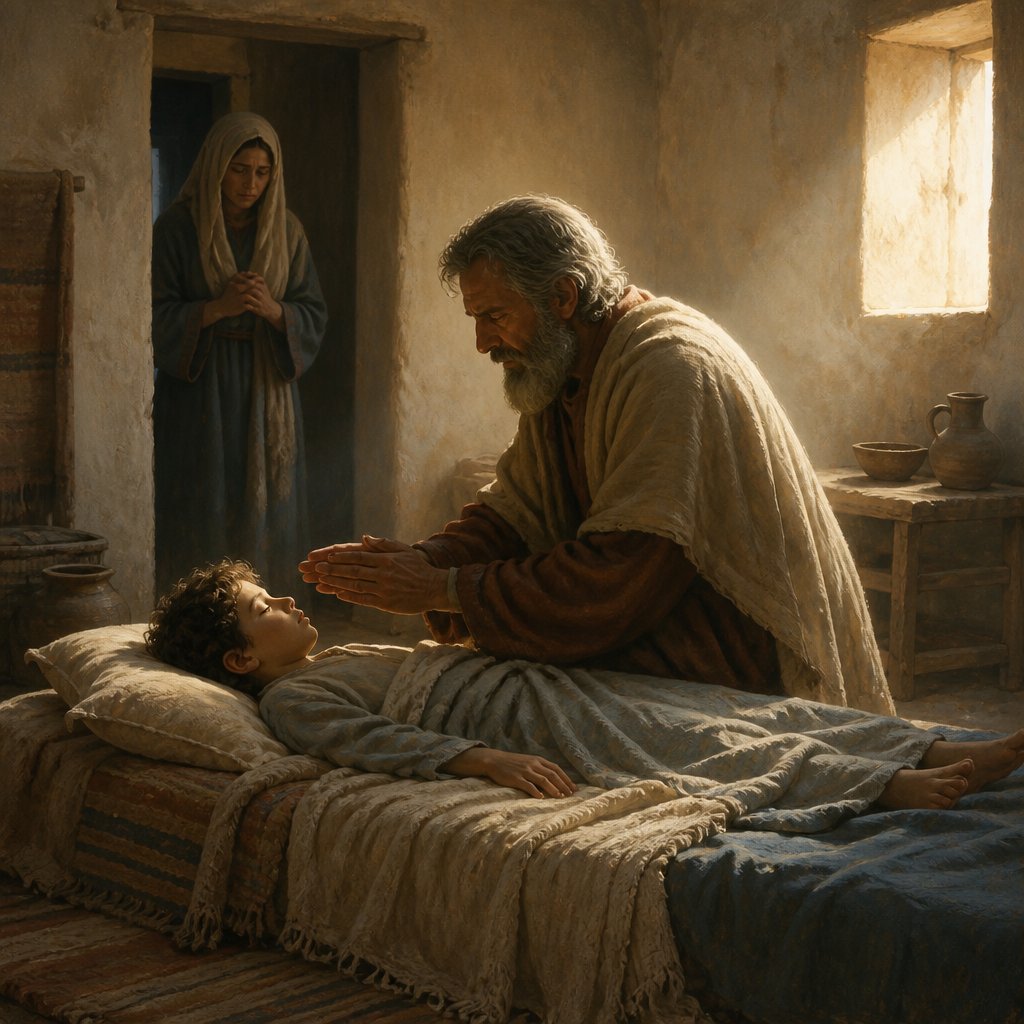
In the annals of Scripture, there are countless stories that reveal the intimate relationship between humanity and divinity. Among these, 1 Kings 17:21 stands as a profound testament to the power of prayer and the deep compassion embedded in the very fabric of God’s being. The verse reads: “And he stretched himself upon the child three times, and cried unto the LORD, and said, O LORD my God, I pray thee, let this child's soul come into him again.”
This moment belongs to the prophet Elijah, a man of God who lived in a time of great apostasy and drought in Israel. God had called him to confront kings and proclaim His message of repentance and return. Yet amidst his powerful ministry, Elijah experienced not only the heights of prophetic power but also the depths of personal pain. This passage comes right after a significant miracle; Elijah had been staying with the widow of Zarephath, where God miraculously provided for them during a time of severe famine. However, the joy of provision was abruptly interrupted by tragedy when the widow’s son fell ill and died.
Elijah’s response to this heart-wrenching situation invites us to explore the dynamics of intercession. In his sorrow and confusion, he took the lifeless body of the child into his own arms and brought him to the upper chamber, a place of solitude. The text does not record any initial words of comfort or assurance. Instead, Elijah first shows a physical act of complete vulnerability and desperation: he stretched himself upon the child three times.
Why three times? In Biblical symbolism, the number three represents completeness and wholeness. It is as if Elijah was embracing the child, pouring out his heart, mind, and soul, demonstrating an unwavering commitment to the life of this boy. His action was not mere physical gesture but a full identification with the child's suffering. In doing so, we witness a powerful model of intercession—taking the burdens of another upon oneself, lifting them to God in earnest prayer.
Elijah cried out to the LORD with a passionate plea, echoing the soul's cry of every parent, healer, and intercessor: “O LORD my God, I pray thee, let this child's soul come into him again.” This moment is not just a desperate plea for physical life; it is a blazing proclamation of hope in the face of hopelessness. Elijah was not merely asking God to perform a miracle; he was appealing directly to God’s character, His goodness, mercy, and power to restore. This prayer is steeped in a personal relationship with God; it presupposes faith that God hears and will respond.
In our lives, we are often confronted by despair and death—whether spiritually, emotionally, or physically. We, too, stand in places where we must intercede for those who cannot cry out for themselves. Like Elijah, our invitation is to stretch ourselves in prayer, to go beyond mere words and engage our spirits and hearts in the fight for another’s wellbeing.
Furthermore, this passage teaches us about the breath of life—the very essence of existence that is firmly in God’s hands. When Elijah prayed, God responded powerfully, and His spirit returned to the boy, bringing him back to life. This transformation through prayer reminds us that no situation is too dire for God's intervention.
In conclusion, may we embody the spirit of Elijah in our prayers. Let us stretch ourselves not only for those who suffer but also in the pursuit of God's heart in intercession. May our prayers reflect both desperation and firm belief in God’s power to restore life. Remember this: God hears our cries and more importantly, God responds to them. In our petitions for others, let us have faith that He is capable of bringing dead things back to life, all for His glory and our good.
Let us pray earnestly for the souls around us, inviting God's transformative power into our lives and the lives of all those we hold dear.
Want to reflect more on 1 Kings 17:21?
Continue your spiritual journey with Bible Chat — an AI-powered tool for exploring God's Word through conversation. Ask questions, discover connections, and deepen your understanding.
Get Our Apps


1 Kings 17:21 Artwork

1 Kings 17:21 - "And he stretched himself upon the child three times, and cried unto the LORD, and said, O LORD my God, I pray thee, let this child's soul come into him again."
"And he stretched himself upon the child three times, and cried unto the LORD, and said, O LORD my God, I pray thee, let this child's soul come into him again." - 1 Kings 17:21

1 Kings 21:17 - "¶ And the word of the LORD came to Elijah the Tishbite, saying,"

"¶ And the word of the LORD came to Elijah the Tishbite, saying," - 1 Kings 21:17

1 Timothy 2:1-7

2 Kings 21:17 - "¶ Now the rest of the acts of Manasseh, and all that he did, and his sin that he sinned, are they not written in the book of the chronicles of the kings of Judah?"

1 Timothy 2:1-7

1 Kings 8:21

1 Kings 8:21

1 Kings 8:21

1 Kings 8:21

1 Kings 4:17 - "Jehoshaphat the son of Paruah, in Issachar:"

1 Kings 21:14 - "Then they sent to Jezebel, saying, Naboth is stoned, and is dead."

1 Kings 21:28 - "And the word of the LORD came to Elijah the Tishbite, saying,"

1 Kings 6:17 - "And the house, that is, the temple before it, was forty cubits long."

1 Kings 17:2 - "And the word of the LORD came unto him, saying,"

1 Kings 17:8 - "¶ And the word of the LORD came unto him, saying,"

1 Kings 9:17 - "And Solomon built Gezer, and Beth-horon the nether,"

1 Kings 21:12 - "They proclaimed a fast, and set Naboth on high among the people."

2 Kings 17:21 - "For he rent Israel from the house of David; and they made Jeroboam the son of Nebat king: and Jeroboam drave Israel from following the LORD, and made them sin a great sin."

1 Samuel 17:21 - "For Israel and the Philistines had put the battle in array, army against army."

1 Kings 17:17 - "¶ And it came to pass after these things, that the son of the woman, the mistress of the house, fell sick; and his sickness was so sore, that there was no breath left in him."

1 Kings 21:1 - "And it came to pass after these things, that Naboth the Jezreelite had a vineyard, which was in Jezreel, hard by the palace of Ahab king of Samaria."

1 Kings 20:21 - "And the king of Israel went out, and smote the horses and chariots, and slew the Syrians with a great slaughter."

1 Kings 22:21 - "And there came forth a spirit, and stood before the LORD, and said, I will persuade him."

1 Kings 2:21 - "And she said, Let Abishag the Shunammite be given to Adonijah thy brother to wife."

1 Kings 16:17 - "And Omri went up from Gibbethon, and all Israel with him, and they besieged Tirzah."

1 Kings 12:17 - "But as for the children of Israel which dwelt in the cities of Judah, Rehoboam reigned over them."

1 Chronicles 16:21 - "He suffered no man to do them wrong: yea, he reproved kings for their sakes,"

1 Kings 21:9 - "And she wrote in the letters, saying, Proclaim a fast, and set Naboth on high among the people:"