Judgment of the Unfaithful: A Reflection on 1 Kings 16:4
"Him that dieth of Baasha in the city shall the dogs eat; and him that dieth of his in the fields shall the fowls of the air eat." - 1 Kings 16:4
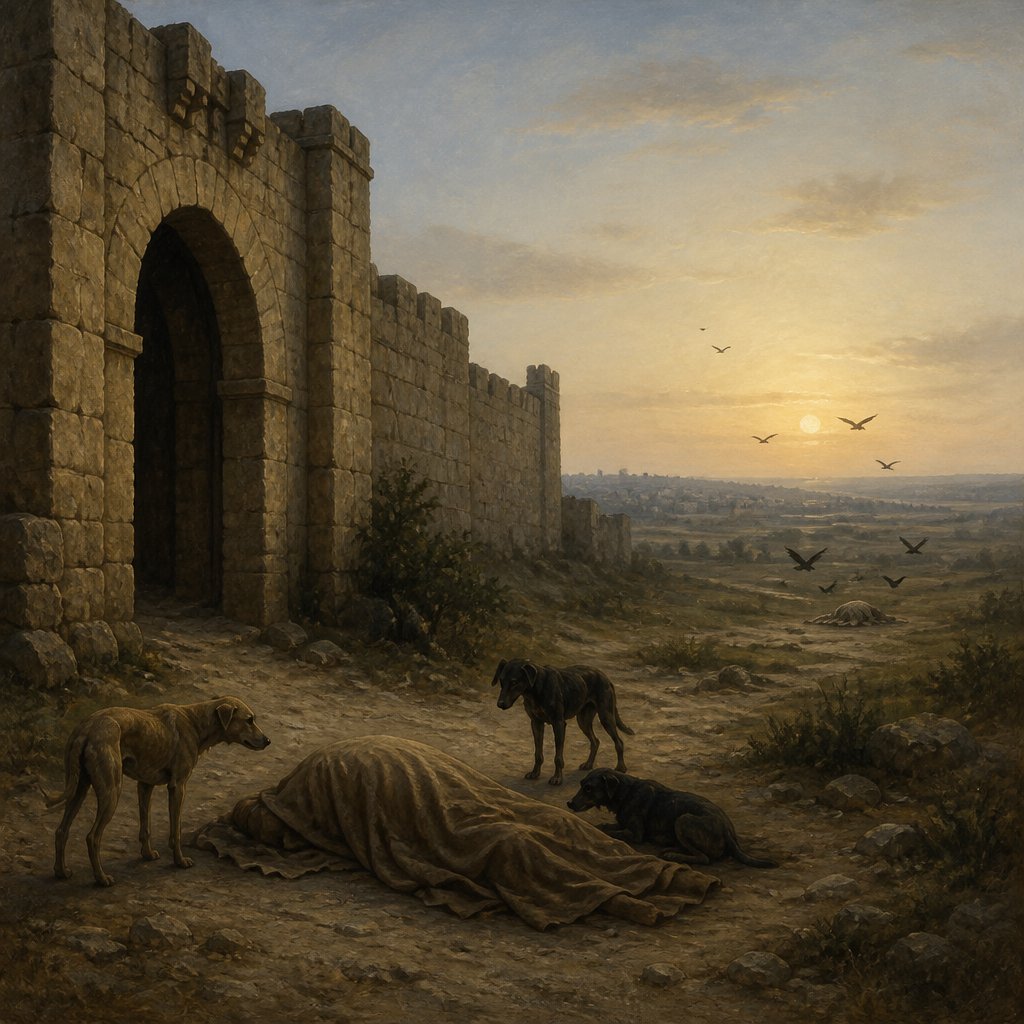
In the heart of the narrative set forth in 1 Kings lies a profound truth about fidelity to God. Our focus verse, 1 Kings 16:4 states, "Him that dieth of Baasha in the city shall the dogs eat; and him that dieth of his in the fields shall the fowls of the air eat." It is crucial to comprehend the weight that this verse carries within the broader context of Israel's tumultuous history, particularly regarding the reign of the Northern Kings.
To grasp the significance of this verse, we must consider the background of Baasha, who was the king of Israel after Jeroboam. Baasha's reign is characterized by violent usurpation and an aggressive opposition to the true worship of Yahweh. He is notable for leading the people further into idolatry, elevating foreign gods while neglecting the covenantal relationship intended between God and His people. Baasha followed the sinful pattern established by Jeroboam, leading to a spiral of moral decay and divine judgment among the people of Israel.
In this verse, the imagery of dogs eating the dead bodies symbolizes utter disgrace and a severe curse. In the ancient Near Eastern context, to die such a death, without proper burial, was not only considered a punishment but also a public denouncement of a life lived outside of God's will. It speaks to the fate of unfaithfulness and the severity of disobedience against Yahweh. Dogs, being scavengers, represent a ignominious end, void of honor, while the birds in the fields represent a similar fate for those who die outside the city, suggesting that regardless of location, death without God’s favor invokes divine judgment.
As we reflect deeper on this scripture, we are drawn to consider our own lives. Are we living in accordance with our covenant with God? Are there practices or ideologies we have embraced that distract us from true devotion? Baasha’s tragic narrative is not merely historical; it serves as a solemn warning for believers. God takes seriously the fidelity of His people. Just as Israel’s kings were held accountable for leading the nation astray, we, too, must examine our hearts against the standard of His Word.
This verse invites a moment of introspection and encourages us to reflect on the legacy we are creating in our lives. Are we opening ourselves to influences that lead us away from worshiping the one true God? The world around us is often akin to the culture Baasha fostered—one that promotes self-interest and idolatry in numerous forms. An uncommitted heart and a divided loyalty can lead to a legacy that reflects catastrophe rather than faithfulness.
God’s word to Baasha serves as a reminder that His justice prevails, and that those who lead others into disobedience, disregarding God’s covenant, will stand before Him in judgment. However, it also carries a hopeful promise: that there is still room for repentance among the living. Unlike Baasha and the kings who followed him, we have the opportunity to align our lives with God’s calling, to forsake unrighteous paths, and pursue holiness, knowing that by grace we can be redeemed.
As you meditate on 1 Kings 16:4 today, ask yourself: What does my life reflect? Am I leading others—my children, my friends, my community—towards a holy God or away from Him? Choosing faithfulness to God can seem daunting, especially in a culture rife with distractions. Yet, the path of obedience is also the one that leads to true peace and purpose.
In conclusion, may your prayer be for a heart that is steadfast, seeking after God's own. May it be a heart that courageously confronts any Baasha-like tendencies for the sake of impacting both your life and those around you for the Kingdom of God.
Want to reflect more on 1 Kings 16:4?
Continue your spiritual journey with Bible Chat — an AI-powered tool for exploring God's Word through conversation. Ask questions, discover connections, and deepen your understanding.
Get Our Apps


1 Kings 16:4 Artwork

1 Kings 16:4 - "Him that dieth of Baasha in the city shall the dogs eat; and him that dieth of his in the fields shall the fowls of the air eat."
"Him that dieth of Baasha in the city shall the dogs eat; and him that dieth of his in the fields shall the fowls of the air eat." - 1 Kings 16:4

1 Kings 4:16 - "Baanah the son of Hushai was in Asher and in Aloth:"

"Baanah the son of Hushai was in Asher and in Aloth:" - 1 Kings 4:16

2 Kings 16:4 - "And he sacrificed and burnt incense in the high places, and on the hills, and under every green tree."

1 Kings 20:16 - "And they went out at noon. But Ben-hadad was drinking himself drunk in the pavilions, he and the kings, the thirty and two kings that helped him."

1 Kings 16:14 - "Now the rest of the acts of Elah, and all that he did, are they not written in the book of the chronicles of the kings of Israel?"

1 Kings 4:1 - "So king Solomon was king over all Israel."

1 Kings 1:16 - "And Bath-sheba bowed, and did obeisance unto the king. And the king said, What wouldest thou?"

1 Kings 16:1 - "Then the word of the LORD came to Jehu the son of Hanani against Baasha, saying,"

1 Kings 16:5 - "Now the rest of the acts of Baasha, and what he did, and his might, are they not written in the book of the chronicles of the kings of Israel?"

1 Kings 16:20 - "Now the rest of the acts of Zimri, and his treason that he wrought, are they not written in the book of the chronicles of the kings of Israel?"

1 Timothy 6:15-16 – "God, the blessed and only Ruler, the King of kings and Lord of lords."

1 Timothy 6:15-16 – "God, the blessed and only Ruler, the King of kings and Lord of lords."
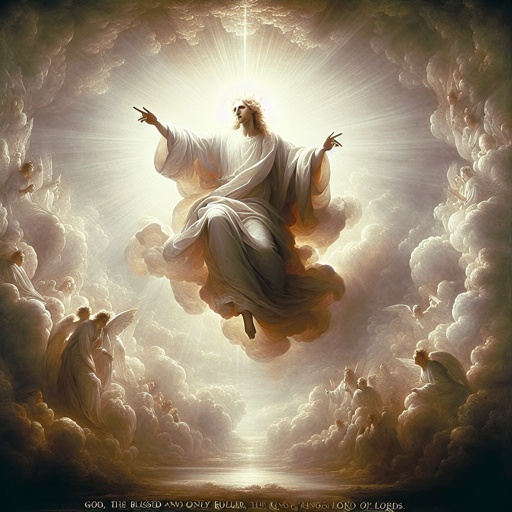
1 Timothy 6:15-16 – "God, the blessed and only Ruler, the King of kings and Lord of lords."

Ephesians 4:16

1 Timothy 6:15-16 – "God, the blessed and only Ruler, the King of kings and Lord of lords."

1 Kings 15:16 - "¶ And there was war between Asa and Baasha king of Israel all their days."

1 Timothy 6:15-16 – "God, the blessed and only Ruler, the King of kings and Lord of lords."

1 Kings 4:4 - "And Benaiah the son of Jehoiada was over the host: and Zadok and Abiathar were the priests:"

1 Kings 1:4 - "And the damsel was very fair, and cherished the king, and ministered to him: but the king knew her not."

1 Kings 3:16 - "¶ Then came there two women, that were harlots, unto the king, and stood before him."

1 Kings 16:27 - "Now the rest of the acts of Omri which he did, and his might that he shewed, are they not written in the book of the chronicles of the kings of Israel?"

1 Kings 4:18 - "Shimei the son of Elah, in Benjamin:"

1 Kings 4:17 - "Jehoshaphat the son of Paruah, in Issachar:"

1 Kings 16:33 - "And Ahab made a grove; and Ahab did more to provoke the LORD God of Israel to anger than all the kings of Israel that were before him."

4:16–17 in 1 Thessalonians

1 Kings 4:8 - "And these are their names: The son of Hur, in mount Ephraim:"

1 Kings 4:14 - "Ahinadab the son of Iddo had Mahanaim:"

2 Kings 16:1 - "In the seventeenth year of Pekah the son of Remaliah Ahaz the son of Jotham king of Judah began to reign."